- Information Classification
Automotive OEM Hardware Engineering Guide
The global automotive industry is undergoing a rapid transformation driven by electrification, intelligent systems, and stricter safety regulations. At the center of this transformation lies automotive oem hardware, which forms the physical and functional backbone of vehicle systems. From structural components to precision electronic interfaces, OEM hardware determines not only performance but also long-term reliability and safety.
As vehicles evolve into complex electro-mechanical systems, manufacturers must ensure that every component meets stringent engineering specifications, production standards, and lifecycle requirements. The development and management of automotive oem hardware have therefore become highly specialized disciplines that integrate engineering design, manufacturing processes, and global supply chain coordination.
Zhengqiang Technology Group is a high-tech enterprise specializing in precision components, electronic parts, and intelligent manufacturing systems. With strong R&D capabilities and global production experience, the company provides comprehensive solutions for automotive hardware development and supply. Learn more at https://www.zqatech.com/

Automotive OEM Hardware: Definition and System Scope
Automotive oem hardware refers to all physical components manufactured according to OEM specifications and integrated directly into vehicle systems. These components must meet strict requirements related to safety, durability, and compatibility.
Classification of Automotive OEM Hardware
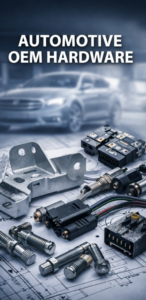
- Structural components (brackets, housings, frames)
- Fasteners (bolts, clips, rivets)
- Electrical connectors and terminals
- Precision stamped metal parts
- Motor and actuator components
- Sensor housings and mounting systems
Each category of automotive oem hardware must be engineered for specific vehicle functions, often requiring customized design and manufacturing processes.
Engineering Design Requirements for Automotive OEM Hardware
Functional Design and System Integration
Designing automotive oem hardware requires a system-level understanding of vehicle architecture. Components must integrate seamlessly with mechanical, electrical, and electronic systems.
Tolerance and Dimensional Accuracy
Automotive applications demand extremely tight tolerances. Even minor dimensional variations can lead to misalignment, vibration, or system failure.
Material Engineering
Material selection is critical in automotive oem hardware design. Engineers must consider:
- Mechanical strength
- Thermal resistance
- Corrosion resistance
- Weight optimization
Common materials include high-strength steel, aluminum alloys, copper, and advanced polymers.
Environmental and Durability Requirements
Components must withstand:
- Extreme temperatures
- Continuous vibration
- Moisture and chemical exposure
These conditions make automotive hardware design significantly more demanding than standard industrial components.
Manufacturing Technologies for Automotive OEM Hardware
Precision Stamping Technology
Precision stamping is one of the most widely used processes in automotive oem hardware production. It enables high-volume manufacturing with consistent accuracy.
CNC Machining and Advanced Fabrication
CNC machining is used for complex geometries and high-precision components, especially in low-volume or prototype production.
Injection Molding and Hybrid Materials
Plastic components and hybrid structures are produced using injection molding, supporting lightweight design goals.
Surface Treatment and Finishing
Surface processes such as electroplating, anodizing, and coating improve durability and resistance to corrosion.
Zhengqiang Technology Group integrates advanced manufacturing technologies to ensure consistent and high-quality automotive oem hardware production. Learn more at https://www.zqatech.com/
Quality Systems and Automotive Standards
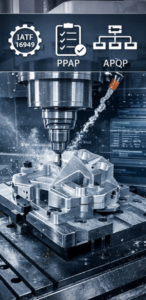
IATF 16949 Quality Management
This standard defines quality requirements for automotive production and ensures consistency across the supply chain.
APQP (Advanced Product Quality Planning)
APQP ensures that quality is built into the design and development process of automotive oem hardware.
PPAP (Production Part Approval Process)
PPAP validates that components meet all customer and engineering requirements before mass production.
FMEA (Failure Mode and Effects Analysis)
FMEA is used to identify potential risks and improve product reliability.
Supply Chain Structure for Automotive OEM Hardware
Tiered Supplier System
The automotive supply chain is structured into multiple tiers:
- OEM manufacturers
- Tier 1 suppliers
- Tier 2 and Tier 3 suppliers
Each level contributes to the production of automotive oem hardware.
Supplier Qualification and Evaluation
Suppliers are evaluated based on:
- Quality performance (DPPM, yield rates)
- Production capacity
- Certification compliance
- Cost competitiveness
Logistics and Delivery Systems
Efficient logistics are essential to ensure timely delivery and avoid production delays.
Cost Engineering and Optimization
Design for Manufacturability (DFM)
DFM ensures that components are designed for efficient production, reducing cost and improving quality.
Value Engineering (VE)
Value engineering focuses on optimizing performance while minimizing cost.
Cost Breakdown Analysis
Cost elements include:
- Material cost
- Tooling cost
- Manufacturing cost
- Logistics cost
Understanding these factors helps optimize automotive oem hardware production.
Performance Testing and Validation
Mechanical Testing
- Tensile strength
- Fatigue testing
- Impact resistance
Environmental Testing
- Thermal cycling
- Corrosion resistance
- Humidity testing
Electrical Testing
For electronic hardware, testing ensures signal integrity and conductivity.
Applications in Modern Automotive Systems
Powertrain Systems
Hardware components are critical for engine and transmission functionality.
Electronic Control Systems
Modern vehicles rely heavily on electronic components and connectors.
Safety Systems
Brake systems, airbags, and structural components require high-reliability hardware.
Electric Vehicles (EV)
EVs require advanced automotive oem hardware for battery systems, motors, and power electronics.
Industry Trends and Future Developments
Electrification
The shift toward electric vehicles is increasing demand for advanced hardware solutions.
Lightweight Design
Reducing weight improves energy efficiency and performance.
Smart Manufacturing
Automation and digital technologies are transforming production processes.
Sustainability
Eco-friendly materials and processes are becoming essential in automotive manufacturing.
Why Choose Zhengqiang Technology Group?
Zhengqiang Technology Group offers comprehensive solutions for automotive oem hardware, including:
- Advanced manufacturing capabilities
- Strong engineering expertise
- Strict quality control systems
- Reliable global supply chain
With a focus on precision, innovation, and reliability, the company helps customers achieve high-performance automotive solutions. Visit https://www.zqatech.com/ to learn more.
Conclusion
Automotive oem hardware is a critical component of modern vehicle systems, supporting performance, safety, and reliability. As the automotive industry continues to evolve, the demand for high-quality and precision-engineered hardware will only increase.
By integrating advanced engineering design, manufacturing technologies, and supply chain strategies, companies can optimize production and improve competitiveness. Partnering with experienced manufacturers ensures long-term success in a rapidly changing global market.
FAQ About Automotive OEM Hardware
What is automotive oem hardware?
It refers to components designed specifically for original equipment manufacturers in the automotive industry.
What materials are used?
Steel, aluminum, copper, and advanced polymers.
What standards apply?
IATF 16949, APQP, PPAP, and FMEA.
Why is precision important?
It ensures safety, performance, and system compatibility.
Where can I find reliable suppliers?
Visit https://www.zqatech.com/
📩 Contact Us
Looking for high-quality automotive oem hardware solutions with reliable manufacturing and global supply capabilities?
Zhengqiang Technology Group is ready to support your project with precision engineering and industry expertise.
👉 Visit https://www.zqatech.com/ today and get your quote!