- Information Classification
OEM Automotive Hardware Engineering & Manufacturing Guide
In today’s automotive industry, component reliability is not optional—it is a fundamental requirement that directly impacts vehicle safety, performance, and lifecycle cost. While advanced systems such as electric drivetrains and intelligent electronics continue to evolve, the foundational integrity of every vehicle still depends on oem automotive hardware.
These components—including brackets, fasteners, clips, and structural supports—serve as the mechanical interface that ensures proper assembly, load transfer, and durability under real-world operating conditions. High-performance oem automotive hardware must meet strict engineering, validation, and manufacturing standards defined by OEMs and Tier 1 suppliers.
Zhengqiang Technology Group is a high-tech manufacturer specializing in precision stamping, hardware components, and intelligent manufacturing systems. With strong OEM project experience and advanced engineering capabilities, the company delivers reliable, high-quality solutions for global automotive customers. Learn more at https://www.zqatech.com/
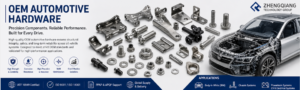
Definition and Scope of OEM Automotive Hardware
OEM automotive hardware refers to mechanical components produced strictly according to original equipment manufacturer specifications, drawings, and validation standards. These parts are integrated into vehicle systems and must maintain consistent performance across high-volume production.
Functional Scope
- Fastening (bolts, nuts, screws, rivets)
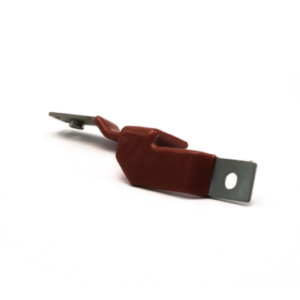
- Structural support (brackets, reinforcements)
- Positioning and alignment (clips, retainers)
- Load transfer and vibration control
Unlike aftermarket parts, oem automotive hardware must pass rigorous validation before entering mass production.
Engineering Requirements and Design Standards
Mechanical Performance Criteria
Engineering design must address:
- Tensile strength and yield strength requirements
- Shear and torsional load capacity
- Safety factor (typically 1.5–3.0 depending on application)
Fatigue and Durability Design
Automotive components are subjected to repeated stress cycles. Engineers evaluate durability through:
- S-N curve analysis
- Load spectrum simulation
- Accelerated life testing
Corrosion Protection Requirements
To ensure long-term reliability, oem automotive hardware must meet:
- Salt spray resistance (ASTM B117, 240–1000+ hours)
- Thermal cycling performance
- Chemical resistance to oils, fuels, and road salts
Dimensional Accuracy and GD&T
Precision is essential for assembly:
- Typical stamping tolerance: ±0.05 mm to ±0.1 mm
- Critical dimensions controlled using GD&T
- Fit and alignment validated during prototype stages
NVH (Noise, Vibration, Harshness) Control
Improper hardware design can lead to:
- Loosening under vibration
- Noise generation
- Structural resonance
Engineers must ensure correct preload, locking features, and damping solutions.
Materials and Surface Engineering
Common Material Grades
- Carbon steel (SAE 1010–1045)
- Alloy steel (e.g., 10B21 fastener grade)
- Stainless steel (SUS304, SUS410)
- Aluminum alloys (5052, 6061)
Material Selection Criteria
- Strength-to-weight ratio
- Corrosion resistance
- Formability and machinability
- Cost-performance balance
Surface Treatment Systems
To enhance durability, oem automotive hardware typically undergoes:
- Zinc plating (clear, trivalent, black)
- Zinc-nickel coating (high corrosion resistance)
- Dacromet / Geomet coating
- Phosphate treatment
Coating selection depends on OEM specifications and environmental requirements.
Manufacturing Processes and Process Capability
Precision Stamping
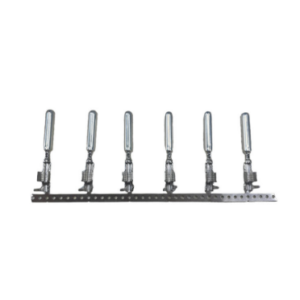
Stamping is the primary process for producing oem automotive hardware, offering:
- High production efficiency
- Excellent repeatability
- Cost advantages for large volumes
Cold Heading and Forming
Used mainly for fasteners, improving grain structure and mechanical strength.
CNC Machining
Applied for complex geometries or tight tolerance components.
Heat Treatment
Includes:
- Quenching and tempering
- Carburizing
- Induction hardening
These processes enhance mechanical properties and wear resistance.
Process Capability Control
Automotive production requires strict statistical control:
- Cp ≥ 1.33
- Cpk ≥ 1.33 (or higher for critical features)
Zhengqiang Technology Group applies advanced process monitoring systems to ensure stable production. Learn more at https://www.zqatech.com/
Quality Assurance and OEM Compliance
Quality Management Systems
Suppliers must comply with:
- IATF 16949
- ISO 9001
- ISO 14001
Inspection and Testing
- Dimensional inspection (CMM)
- Mechanical testing (tensile, hardness)
- Torque and clamp load testing
- Coating thickness and corrosion testing
APQP and PPAP
OEM projects require structured processes:
- APQP (planning and risk control)
- PPAP (production approval)
These ensure that oem automotive hardware meets all design and quality requirements before mass production.
Traceability Systems
Full traceability includes:
- Raw material tracking
- Production batch identification
- Inspection records
OEM Development Workflow
1. Project Initiation
- Review customer drawings
- Conduct feasibility analysis
2. Tooling Design and Prototyping
- Develop stamping tools
- Produce initial samples
3. Validation and Testing
- Functional testing
- Durability validation
4. Mass Production
- Process optimization
- Continuous quality monitoring
Failure Analysis and Risk Control
Common Failure Modes
- Fatigue cracking
- Corrosion degradation
- Hydrogen embrittlement
- Loosening under vibration
Root Cause Analysis Tools
- FMEA (Failure Mode and Effects Analysis)
- Metallurgical analysis
- Process data evaluation
Preventive Measures
- Improved material selection
- Optimized design geometry
- Advanced coating technologies
Cost Engineering and Procurement Strategy
Cost Structure
- Raw material (30–50%)
- Tooling investment
- Manufacturing and processing
- Quality assurance
Cost Optimization
- Standardization of components
- Reduction of complexity
- Automation and process improvement
Total Cost of Ownership (TCO)
OEMs evaluate suppliers based on:
- Quality consistency
- Delivery reliability
- Lifecycle performance
High-quality oem automotive hardware reduces long-term risks and operational costs.
Applications in Automotive Systems
Body-in-White (BIW)
Structural joints and reinforcement components.
Chassis Systems
Suspension mounts and load-bearing parts.
Powertrain Systems
Engine brackets and mounting hardware.
Electric Vehicle Systems
Battery enclosures, electrical supports, and lightweight structures.
Global Supply Chain and Manufacturing Advantages
China is a key global hub for oem automotive hardware due to:
- Mature manufacturing ecosystem
- Skilled engineering workforce
- Competitive production costs
- Scalable capacity
Industry Trends
Electrification
New hardware requirements for EV platforms.
Lightweight Design
Increased use of aluminum and advanced alloys.
Smart Manufacturing
Automation improves efficiency and traceability.
Sustainability
Green manufacturing and environmental compliance are becoming essential.
Why Choose Zhengqiang Technology Group?
Zhengqiang Technology Group is a trusted supplier of oem automotive hardware, offering:
- Engineering-driven development support
- Advanced manufacturing capabilities
- Strict automotive quality systems
- Reliable global supply chain solutions
With strong OEM experience and commitment to quality, the company supports automotive customers worldwide. Visit https://www.zqatech.com/ to learn more.
Conclusion
OEM automotive hardware is a critical component category that ensures structural integrity, safety, and performance in modern vehicles. Through precise engineering, controlled manufacturing processes, and strict quality systems, manufacturers can deliver reliable solutions that meet global automotive standards.
FAQ
What is OEM automotive hardware?
Components manufactured according to OEM specifications for automotive systems.
What standards are required?
IATF 16949, ISO 9001, and OEM-specific standards.
How is quality validated?
Through APQP, PPAP, and comprehensive testing.
What affects performance?
Material selection, design accuracy, and manufacturing quality.
Where can I find a qualified supplier?
Visit https://www.zqatech.com/
📩 Contact Us
Looking for a reliable supplier of oem automotive hardware with proven engineering and global delivery capability?
Zhengqiang Technology Group is ready to support your project.
👉 Visit https://www.zqatech.com/ today and get your quote!