- Information Classification
Motor Brushless vs Brushed Performance Comparison Guide
Electric motors are essential components in modern industrial systems, automotive technologies, home appliances, robotics, and intelligent automation equipment. Among the most widely discussed motor technologies, the comparison between motor brushless vs brushed systems remains a critical engineering topic for OEM manufacturers, product designers, and procurement professionals.
The choice between brushed and brushless motor technologies directly affects efficiency, maintenance requirements, thermal performance, operational lifespan, acoustic noise, and overall system reliability. As industries continue moving toward energy-efficient and intelligent manufacturing systems, understanding the engineering principles behind motor brushless vs brushed technologies becomes increasingly important.
Zhengqiang Technology Group is a high-tech enterprise specializing in motor manufacturing, precision components, intelligent equipment, and electronic technologies. With advanced engineering capabilities and global manufacturing experience, the company provides customized motor solutions for automotive, industrial, and OEM applications. Learn more at https://www.zqatech.com/
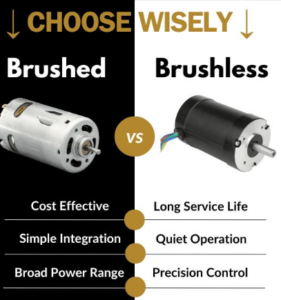
Understanding Motor Brushless vs Brushed Technologies
The primary difference in motor brushless vs brushed systems lies in how electrical current is transferred to generate rotational motion.
What Is a Brushed Motor?
A brushed motor uses mechanical contact between carbon brushes and a commutator to regulate current flow inside the motor.
Main Components
- Rotor (armature)
- Stator
- Carbon brushes
- Mechanical commutator
The brushes continuously switch current direction as the rotor rotates.
Advantages of Brushed Motors
- Simple design structure
- Lower manufacturing cost
- Strong starting torque
- Easy speed control
Because of their cost efficiency and simple control systems, brushed motors remain widely used in portable devices and basic industrial equipment.
What Is a Brushless Motor?
A brushless motor eliminates physical brushes and instead uses electronic commutation systems.
Main Components
- Permanent magnet rotor
- Stator windings
- Electronic controller
- Hall-effect sensors or sensorless control system
Electronic switching replaces mechanical commutation.
Advantages of Brushless Motors
- Higher operating efficiency
- Longer service life
- Reduced maintenance requirements
- Lower electrical noise
As automation and energy efficiency requirements continue increasing, brushless motors are becoming more common in advanced industrial systems.
Structural Differences Between Motor Brushless vs Brushed Systems
One of the most important engineering distinctions in motor brushless vs brushed technologies is structural configuration.
Mechanical Structure of Brushed Motors
Brushed motors rely on physical contact between brushes and the commutator.
Engineering Characteristics
- Continuous mechanical friction
- Brush wear during operation
- Increased heat generation
- Electrical arcing effects
Although mechanically simple, brush wear limits long-term durability.
Mechanical Structure of Brushless Motors
Brushless motors use electronic switching instead of mechanical brush contact.
Structural Advantages
- Reduced friction
- Improved rotational stability
- Better high-speed capability
- Lower maintenance frequency
The elimination of brush contact significantly improves reliability and efficiency.
Efficiency Analysis of Motor Brushless vs Brushed Technologies
Efficiency is one of the most significant differences between motor brushless vs brushed systems.
Efficiency of Brushed Motors
Typical brushed motor efficiency ranges between:
- 70%–80% depending on operating conditions
Energy losses are caused by:
- Brush friction
- Heat dissipation
- Mechanical resistance
As brushes wear, efficiency may decrease further.
Efficiency of Brushless Motors
Brushless motors commonly achieve:
- 85%–95% efficiency
Advantages include:
- Reduced friction loss
- Precise electronic control
- Improved thermal management
Higher efficiency reduces energy consumption and operating cost.
Thermal Performance and Heat Management
Thermal stability is another important consideration in motor brushless vs brushed applications.
Heat Characteristics of Brushed Motors
Mechanical contact generates:
- Friction heat
- Electrical sparking
- Increased operating temperature
Excessive heat can shorten motor lifespan and reduce reliability.
Heat Characteristics of Brushless Motors
Brushless motors generally operate at lower temperatures because they eliminate brush friction.
Thermal Advantages
- Better cooling efficiency
- Stable continuous-duty operation
- Improved high-speed performance
These advantages make brushless motors suitable for demanding industrial applications.
Reliability and Operational Lifespan
Reliability is a key factor when comparing motor brushless vs brushed technologies.
Lifespan of Brushed Motors
The lifespan of brushed motors is limited primarily by brush wear and commutator degradation.
Maintenance Requirements
- Brush replacement
- Commutator cleaning
- Inspection for electrical wear
Frequent maintenance increases operational downtime.
Lifespan of Brushless Motors
Brushless motors provide significantly longer operational life because there are no brushes to wear out.
Reliability Benefits
- Lower maintenance frequency
- Reduced mechanical wear
- Higher long-term stability
These advantages are critical for automation and continuous-duty systems.
Noise and Electromagnetic Performance
Noise and EMI characteristics are important in motor brushless vs brushed applications.
Noise Characteristics of Brushed Motors
Brush contact creates:
- Mechanical vibration
- Acoustic noise
- Electromagnetic interference (EMI)
These effects may interfere with sensitive electronic systems.
Noise Characteristics of Brushless Motors
Brushless motors operate more quietly because electronic commutation eliminates direct friction contact.
Advantages
- Lower acoustic noise
- Reduced vibration
- Lower EMI levels
This is especially important in robotics, medical equipment, and consumer electronics.
Speed Control and Precision Motion Systems
Motion control capability is another major difference in motor brushless vs brushed technologies.
Speed Control in Brushed Motors
Brushed motors are relatively simple to control using voltage adjustment.
However:
- Speed precision may fluctuate under load changes
- Efficiency decreases at higher speeds
Speed Control in Brushless Motors
Brushless motors support advanced control systems:
- Closed-loop feedback
- Precision positioning
- Variable speed optimization
These systems are widely used in industrial automation and CNC machinery.
Torque Performance Comparison
Torque Characteristics of Brushed Motors
Brushed motors provide:
- Strong starting torque
- Good low-speed response
- Cost-effective power delivery
These features are useful in portable tools and automotive accessories.
Torque Characteristics of Brushless Motors
Brushless motors offer:
- Stable torque output
- Better high-speed operation
- Higher torque efficiency
This improves overall system performance in industrial applications.
Manufacturing Technologies for Modern Motor Systems
The performance of motor brushless vs brushed systems depends heavily on manufacturing accuracy and process consistency.
Precision Stamping and Rotor Manufacturing
Key production processes include:
- Precision metal stamping
- Rotor balancing
- CNC machining
These directly affect vibration performance and efficiency.
Magnet Assembly and Coil Winding
Brushless motors require highly precise:
- Magnet positioning
- Coil winding
- Electronic integration
Zhengqiang Technology Group integrates advanced manufacturing technologies to support high-performance motor production for OEM and industrial customers. Learn more at https://www.zqatech.com/
Applications of Motor Brushless vs Brushed Technologies
Automotive Applications
Used in:
- Cooling fans
- Electric pumps
- Power windows
- EV auxiliary systems
Industrial Automation
Brushless motors are widely used in:
- Robotics
- CNC machinery
- Conveyor systems
- Automated production lines
Consumer Electronics
Applications include:
- Vacuum cleaners
- Drones
- Smart appliances
Medical Equipment
Brushless systems support:
- Ventilation equipment
- Surgical devices
- Laboratory systems
Cost Analysis of Motor Brushless vs Brushed Systems
Initial Cost Comparison
Brushed motors generally provide:
- Lower initial purchase cost
- Simpler control architecture
Brushless motors require:
- Electronic controllers
- More advanced assembly processes
Long-Term Cost Efficiency
Although brushless motors cost more initially, they typically reduce:
- Maintenance expenses
- Energy consumption
- Downtime cost
This often results in lower total cost of ownership over time.
Industry Trends and Future Development
Electrification and Energy Efficiency
Industries increasingly prioritize:
- Energy-saving systems
- High-efficiency motor technologies
- Reduced carbon emissions
Smart Motor Control Systems
Modern motor systems now support:
- Predictive maintenance
- Real-time diagnostics
- Intelligent monitoring
Miniaturization and High Power Density
Manufacturers continue developing:
- Smaller motor platforms
- Higher output density
- Improved thermal performance
Sustainable Manufacturing
Energy-efficient brushless systems contribute to environmental sustainability and regulatory compliance.
Why Choose Zhengqiang Technology Group?
Zhengqiang Technology Group provides advanced motor manufacturing solutions, including:
- Brushed motor systems
- Brushless motor technologies
- Precision metal components
- Intelligent manufacturing support
With strong engineering expertise and global production capabilities, the company supports OEM and industrial customers worldwide. Visit https://www.zqatech.com/ to learn more.
Conclusion
The comparison of motor brushless vs brushed technologies involves much more than simple cost considerations. Efficiency, lifespan, thermal stability, maintenance requirements, and motion precision all influence optimal motor selection.
While brushed motors remain suitable for cost-sensitive and intermittent-use applications, brushless motors provide superior efficiency, reliability, and performance for advanced industrial and automotive systems.
FAQ
What is the main difference in motor brushless vs brushed systems?
Brushed motors use mechanical brushes and commutators, while brushless motors use electronic commutation systems.
Which motor type is more efficient?
Brushless motors generally offer higher efficiency.
Which motor requires less maintenance?
Brushless motors require less maintenance because they eliminate brush wear.
Are brushed motors more affordable?
Yes, brushed motors typically have lower initial cost.
Where can I find reliable motor manufacturing solutions?
Visit https://www.zqatech.com/
📩 Contact Us
Looking for reliable brushed or brushless motor manufacturing solutions with strong engineering and global supply capabilities?
Zhengqiang Technology Group is ready to support your OEM and industrial projects.
👉 Visit https://www.zqatech.com/ today and get your quote!