- Information Classification
Commercial Exhaust Fan Motor Engineering Guide
Ventilation systems are critical components in commercial buildings, industrial facilities, restaurants, warehouses, and public infrastructure. At the center of these systems is the commercial exhaust fan motor, which directly determines airflow performance, energy efficiency, operational reliability, and long-term ventilation stability.
As modern commercial environments demand cleaner air quality, lower noise levels, improved energy efficiency, and intelligent environmental control, the engineering requirements for commercial exhaust fan motor systems continue increasing. These motors must deliver continuous-duty operation under demanding conditions while maintaining stable airflow, thermal reliability, and low maintenance requirements.
Zhengqiang Technology Group is a high-tech enterprise specializing in motor systems, intelligent manufacturing technologies, precision components, and industrial engineering solutions. With advanced production capabilities and global OEM experience, the company provides customized motor solutions for ventilation and industrial applications worldwide. Learn more at https://www.zqatech.com/
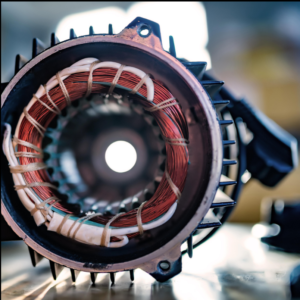
Understanding Commercial Exhaust Fan Motor Systems
A commercial exhaust fan motor is an electric drive system designed to power ventilation fans used in commercial and industrial airflow management applications.
The motor converts electrical energy into rotational motion to drive fan blades that remove:
- Heat
- Smoke
- Moisture
- Odors
- Airborne contaminants
Efficient ventilation improves environmental safety, indoor comfort, and equipment protection.
Functional Requirements of Commercial Exhaust Fan Motors
Commercial ventilation environments are significantly more demanding than standard residential systems.
Key Performance Requirements
A high-quality commercial exhaust fan motor must provide:
- Continuous-duty operation
- Stable airflow generation
- Low operational noise
- High thermal stability
- Moisture and corrosion resistance
- Energy-efficient performance
These requirements are essential for long-term reliability in commercial environments.
Types of Commercial Exhaust Fan Motor Technologies
Different motor technologies are selected based on ventilation capacity, operating environment, and energy requirements.
AC Induction Motors
AC induction motors are widely used in traditional commercial ventilation systems.
Advantages
- Reliable operation
- Simple structure
- Cost-effective production
- Stable continuous operation
Limitations
- Higher energy consumption
- Limited speed control flexibility
Despite these limitations, AC motors remain common in large ventilation systems.
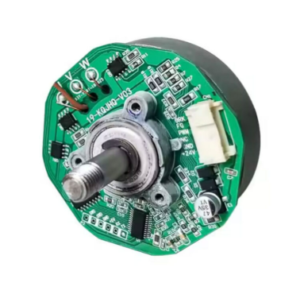
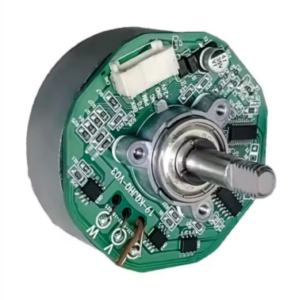
Brushless DC Motors (BLDC)
Brushless DC motors are increasingly adopted in advanced ventilation applications.
Advantages
- Higher energy efficiency
- Lower operational noise
- Reduced maintenance
- Variable-speed capability
- Longer operational lifespan
BLDC systems are especially suitable for energy-efficient commercial buildings.
EC Motors (Electronically Commutated Motors)
EC motors combine brushless motor technology with integrated electronic controls.
Engineering Benefits
- High efficiency
- Intelligent airflow control
- Reduced power consumption
- Improved system automation
EC technology is becoming increasingly popular in HVAC and smart ventilation systems.
Engineering Design of Commercial Exhaust Fan Motor Systems
The performance of a commercial exhaust fan motor depends heavily on mechanical and electrical engineering optimization.
Airflow and Static Pressure Requirements
Commercial ventilation systems often operate under higher static pressure conditions.
Engineers evaluate:
- Fan blade geometry
- Airflow volume (CFM)
- Duct resistance
- Pressure loss characteristics
Proper motor selection ensures stable airflow performance.
Torque and Speed Matching
Motor torque must match:
- Fan blade load
- Startup requirements
- Continuous operating conditions
Improper torque matching may cause:
- Reduced airflow efficiency
- Excessive current consumption
- Premature motor wear
Continuous-Duty Reliability
Commercial systems frequently operate for extended periods or continuously.
Design Priorities
- Thermal stability
- Bearing durability
- Stable electrical performance
- Long service life
Continuous-duty capability is critical for commercial applications.
Noise and Vibration Control
Noise reduction is an important engineering consideration for commercial exhaust fan motor systems.
Common Sources of Noise
- Bearing vibration
- Rotor imbalance
- Air turbulence
- Electromagnetic noise
Excessive noise may negatively affect workplace comfort and regulatory compliance.
Noise Reduction Technologies
Manufacturers commonly use:
- Precision rotor balancing
- Aerodynamic fan blade optimization
- Low-noise bearing systems
- Vibration isolation structures
These technologies improve acoustic performance and operational smoothness.
Thermal Management and Heat Dissipation
Commercial ventilation systems often operate under heavy thermal loads.
Sources of Heat Generation
Heat may originate from:
- Copper winding losses
- Bearing friction
- High-current operation
- Restricted airflow conditions
Poor thermal management reduces motor lifespan and reliability.
Cooling Technologies
Common thermal solutions include:
- Ventilated motor housings
- Aluminum heat dissipation structures
- Optimized airflow channels
- Thermal protection circuits
Efficient cooling improves operational stability.
Moisture and Corrosion Resistance
Commercial environments may expose motors to:
- Humidity
- Grease particles
- Corrosive chemicals
- Dust contamination
A reliable commercial exhaust fan motor must maintain performance under harsh environmental conditions.
Protection Systems
Manufacturers improve durability through:
- Sealed bearing systems
- Corrosion-resistant coatings
- Moisture-resistant insulation
- IP-rated motor housings
These features extend service life in demanding environments.
Electrical Performance and Energy Efficiency
Energy efficiency is increasingly important in commercial ventilation systems.
Voltage and Power Configurations
Typical commercial systems operate at:
- 110V–120V AC
- 220V–240V AC
- Three-phase industrial power systems
Power requirements vary according to airflow capacity and application size.
Variable-Speed Control Systems
Modern systems increasingly integrate:
- PWM controllers
- VFD systems (Variable Frequency Drives)
- Smart airflow management systems
Variable-speed operation improves energy efficiency and environmental control.
High-Efficiency Motor Technologies
Manufacturers improve efficiency through:
- Optimized winding structures
- High-efficiency magnetic materials
- Brushless motor technologies
- Intelligent electronic control systems
Reduced energy consumption lowers operational cost.
Manufacturing Technologies for Commercial Exhaust Fan Motors
The reliability of a commercial exhaust fan motor depends heavily on manufacturing precision and quality management.
Precision Metal Stamping
Key components are manufactured using:
- Precision stamping technologies
- CNC machining
- Rotor balancing systems
These processes improve structural consistency and operational stability.
Coil Winding and Motor Assembly
Advanced winding systems improve:
- Electrical efficiency
- Thermal performance
- Motor consistency
Automated production systems improve manufacturing precision.
Intelligent Manufacturing Systems
Modern factories support:
- Automated assembly
- Real-time process monitoring
- Production traceability
- Intelligent quality control systems
Zhengqiang Technology Group integrates intelligent manufacturing technologies to deliver reliable motor systems for global OEM customers. Learn more at https://www.zqatech.com/
Applications of Commercial Exhaust Fan Motor Systems
Restaurant and Kitchen Ventilation
Used for:
- Smoke extraction
- Heat removal
- Grease ventilation systems
Commercial Buildings
Applications include:
- Office buildings
- Shopping centers
- Hotels
- Public facilities
Industrial Ventilation
Used in:
- Warehouses
- Factories
- Industrial processing facilities
- Equipment cooling systems
Specialized Environmental Systems
Certain systems support:
- Laboratory ventilation
- Clean room airflow systems
- High-humidity environments
Quality Standards and Compliance
Manufacturers of commercial exhaust fan motor systems must comply with strict international standards.
Common Certifications
- CE certification
- UL certification
- ISO 9001
- RoHS compliance
These standards ensure safety and reliability.
Reliability Testing
Testing procedures may include:
- Continuous operation testing
- Thermal cycling
- Vibration testing
- Humidity resistance testing
Long-term testing verifies operational durability.
Industry Trends and Future Development
Smart Ventilation Systems
Modern systems increasingly support:
- IoT integration
- Smart sensors
- Automated airflow control
Energy-Efficient HVAC Technologies
The industry continues shifting toward:
- Brushless DC motors
- EC motor technologies
- Intelligent power management systems
Low-Noise System Optimization
Manufacturers continue improving:
- Acoustic performance
- Vibration reduction
- Aerodynamic efficiency
Sustainable Manufacturing
Environmental regulations increasingly influence:
- Energy consumption
- Material selection
- Manufacturing processes
Green manufacturing practices are becoming industry standards.
Why Choose Zhengqiang Technology Group?
Zhengqiang Technology Group provides advanced solutions for commercial exhaust fan motor systems, including:
- Precision motor manufacturing
- Intelligent ventilation technologies
- OEM and ODM engineering support
- Global supply chain capabilities
With strong engineering expertise and advanced manufacturing systems, the company supports customers worldwide. Visit https://www.zqatech.com/ to learn more.
Conclusion
The performance of a commercial exhaust fan motor directly affects ventilation efficiency, environmental safety, acoustic comfort, and energy consumption. Through advanced motor engineering, intelligent electronic control systems, precision manufacturing technologies, and optimized thermal management, modern commercial ventilation systems continue evolving toward quieter, more efficient, and more reliable operation.
As commercial buildings and industrial facilities increasingly prioritize energy efficiency and indoor environmental quality, high-performance exhaust fan motors will remain essential components of modern ventilation infrastructure.
FAQ
What is a commercial exhaust fan motor used for?
It powers ventilation fans that remove heat, smoke, humidity, and contaminated air from commercial and industrial environments.
Which motor type is most energy efficient?
Brushless DC motors and EC motors typically provide higher efficiency.
Why is low noise important?
Low-noise operation improves workplace comfort and building environment quality.
How is moisture resistance achieved?
Through sealed bearings, corrosion-resistant coatings, and insulated motor systems.
Where can I find reliable commercial ventilation motor manufacturing solutions?
Visit https://www.zqatech.com/
📩 Contact Us
Looking for reliable commercial exhaust fan motor manufacturing solutions with strong engineering and global supply capabilities?
Zhengqiang Technology Group is ready to support your OEM and industrial projects.
👉 Visit https://www.zqatech.com/ today and get your quote!