- Information Classification
Stamping Mould Die Engineering and Manufacturing Guide
In modern industrial manufacturing, precision tooling systems play a critical role in ensuring production efficiency, dimensional consistency, and long-term operational reliability. Among the most important tools used in high-volume metal forming operations is the stamping mould die, which serves as the core component for shaping, cutting, forming, and processing metal materials into precise industrial parts.
As manufacturing industries continue evolving toward tighter tolerances, lightweight materials, and automated production systems, the engineering requirements for stamping mould die technologies have become increasingly sophisticated. Automotive manufacturers, electronics suppliers, appliance producers, and industrial equipment companies all rely heavily on high-performance stamping die systems to achieve stable production quality and cost-effective manufacturing performance.
Zhengqiang Technology Group is a high-tech enterprise specializing in precision stamping, mold engineering, intelligent manufacturing systems, and precision hardware solutions. With advanced tooling technologies and global OEM experience, the company provides customized manufacturing solutions for industrial customers worldwide. Learn more at https://www.zqatech.com/
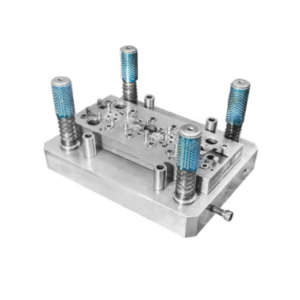
Understanding Stamping Mould Die Systems
A stamping mould die is a precision-engineered tooling system used in metal stamping operations to cut, bend, form, or shape sheet metal materials into defined geometries.
The tooling operates within a stamping press and applies controlled force to transform raw material into finished components with high repeatability.
Core Functions of Stamping Mould Die Systems
Modern stamping dies perform multiple manufacturing operations.
Main Functional Processes
- Blanking
- Punching
- Bending
- Deep drawing
- Coining
- Forming
These operations enable high-volume manufacturing with consistent dimensional accuracy.
Main Types of Stamping Mould Die
Different production requirements require different die structures and engineering designs.
Progressive Die Systems
Progressive dies perform multiple operations within a continuous stamping process.
Advantages
- High production efficiency
- Reduced labor requirements
- Excellent repeatability
- Suitable for mass production
Progressive tooling is widely used in automotive and electronics manufacturing.
Transfer Die Systems
Transfer dies move workpieces between different forming stations.
Engineering Benefits
- Suitable for complex geometries
- Improved forming flexibility
- Better control of multi-stage operations
These systems are commonly used for larger automotive structural parts.
Single-Stage Dies
Single-stage dies perform one operation per press cycle.
Characteristics
- Simpler structure
- Lower tooling cost
- Suitable for lower-volume production
Compound Dies
Compound dies combine multiple cutting operations into a single stroke.
Advantages
- High precision
- Reduced processing time
- Improved alignment consistency
These dies are commonly used for precision electronic hardware production.
Engineering Design of Stamping Mould Die Systems
The performance of a stamping mould die depends heavily on engineering optimization and structural precision.
Design for Manufacturability (DFM)
Engineers evaluate:
- Product geometry
- Material thickness
- Production volume
- Tolerance requirements
- Material flow characteristics
Proper DFM improves production efficiency and reduces manufacturing defects.
Material Flow Analysis
Advanced simulation systems analyze:
- Stress distribution
- Metal deformation behavior
- Wrinkling risks
- Cracking conditions
- Springback effects
Simulation technologies improve tooling accuracy and reduce development time.
Structural Rigidity and Stability
A high-performance stamping mould die must maintain dimensional stability under high-load operating conditions.
Engineering Priorities
- Structural rigidity
- Alignment precision
- Vibration resistance
- Load distribution optimization
Stable structures improve tooling lifespan and product consistency.
Materials Engineering for Stamping Mould Die
Material selection directly affects tooling durability and production performance.
Common Tooling Materials
Widely used materials include:
- SKD11
- D2 tool steel
- DC53
- High-speed steel
- Tungsten carbide
These materials provide excellent hardness and wear resistance.
Mechanical Performance Requirements
Engineers evaluate:
- Hardness
- Toughness
- Thermal stability
- Fatigue resistance
- Wear resistance
Balancing hardness and toughness is critical for long tool life.
Surface Coating Technologies
Advanced coatings improve tooling performance and durability.
Common Coating Types
- TiN (Titanium Nitride)
- TiCN coatings
- DLC coatings
- CrN coatings
These coatings reduce friction and improve wear resistance.
Manufacturing Processes for Stamping Mould Die
High-quality tooling systems require advanced manufacturing technologies.
CNC Precision Machining
Modern CNC systems support:
- High dimensional precision
- Complex geometry processing
- Stable repeatability
Precision machining is essential for accurate tooling production.
Electrical Discharge Machining (EDM)
EDM enables:
- Fine contour machining
- Sharp corner processing
- Precision cavity manufacturing
EDM technology is widely used for complex die structures.
Grinding and Surface Finishing
Surface finishing processes improve:
- Dimensional consistency
- Surface roughness
- Friction performance
High-quality finishing improves tooling lifespan and operational smoothness.
Heat Treatment Processes
Heat treatment enhances:
- Hardness
- Structural stability
- Wear resistance
Typical processes include:
- Vacuum hardening
- Tempering
- Cryogenic treatment
Proper heat treatment is essential for tooling durability.
Precision Tolerance and Quality Control
A reliable stamping mould die requires strict precision and inspection systems.
Dimensional Tolerance Control
Typical tooling tolerances may range from:
- ±0.005 mm to ±0.02 mm depending on application requirements
High precision improves product consistency and production efficiency.
Inspection Technologies
Manufacturers commonly use:
- Coordinate Measuring Machines (CMM)
- Optical measurement systems
- Laser inspection technologies
These systems verify tooling precision.
Process Capability Management
Manufacturers monitor:
- Tool wear
- Machining stability
- Production consistency
- Surface quality
Stable process control improves long-term manufacturing reliability.
Zhengqiang Technology Group integrates advanced quality management systems to ensure reliable tooling manufacturing performance. Learn more at https://www.zqatech.com/
Applications of Stamping Mould Die Systems
Automotive Industry
Applications include:
- Structural brackets
- Reinforcement components
- EV battery hardware
- Connector systems
Electronics Industry
Used in:
- Precision terminals
- Shielding components
- Connector hardware
- Micro electronic structures
Home Appliance Industry
Applications include:
- Appliance structural hardware
- Ventilation components
- Mounting systems
Industrial Equipment Manufacturing
Stamping dies support:
- Mechanical assemblies
- Automation equipment
- Industrial hardware systems
Tool Lifecycle and Maintenance
The lifespan of a stamping mould die depends heavily on operating conditions and maintenance quality.
Factors Affecting Tool Life
- Material hardness
- Production speed
- Lubrication quality
- Alignment precision
- Operating environment
Preventive Maintenance Systems
Maintenance procedures include:
- Regular inspection
- Surface polishing
- Lubrication management
- Wear component replacement
Preventive maintenance reduces downtime and improves productivity.
Cost Engineering and Production Efficiency
Manufacturers continuously optimize tooling systems to improve production economics.
Cost Optimization Strategies
- Standardized tooling structures
- Automated machining systems
- Improved material utilization
- Reduced maintenance frequency
Efficient tooling systems improve overall return on investment.
Industry Trends and Future Development
Intelligent Tooling Systems
Modern tooling increasingly integrates:
- Sensor monitoring
- Predictive maintenance
- Real-time production analysis
High-Precision Manufacturing
Industries increasingly demand:
- Micron-level tolerances
- Complex geometries
- Stable mass-production quality
Smart Factory Integration
Advanced factories now support:
- Automated machining systems
- Intelligent inspection technologies
- Digital production management
Sustainable Manufacturing
Environmental priorities increasingly influence:
- Material efficiency
- Energy consumption
- Eco-friendly manufacturing processes
Green manufacturing practices continue expanding globally.
Why Choose Zhengqiang Technology Group?
Zhengqiang Technology Group provides advanced solutions for stamping mould die systems, including:
- Precision tooling engineering
- CNC machining and EDM processing
- Advanced heat treatment systems
- OEM and ODM manufacturing support
- Global supply chain capabilities
With strong engineering expertise and intelligent manufacturing technologies, the company supports industrial customers worldwide. Visit https://www.zqatech.com/ to learn more.
Conclusion
The performance of a stamping mould die directly affects tooling precision, production efficiency, product quality, and operational reliability. Through advanced engineering design, high-quality materials, precision manufacturing technologies, and strict quality management systems, modern stamping die systems continue supporting the evolving demands of automotive, electronics, industrial, and consumer manufacturing industries.
As intelligent manufacturing and precision engineering technologies continue advancing globally, high-performance stamping die systems will remain essential to modern industrial production.
FAQ
What is a stamping mould die?
It is a precision tooling system used for cutting, forming, and shaping metal materials during stamping operations.
What industries use stamping dies?
Automotive, electronics, appliance, and industrial equipment industries all use stamping die systems.
What materials are commonly used?
SKD11, D2 tool steel, carbide, and high-speed steel are commonly used.
Why is precision important?
High precision improves production consistency, product quality, and tooling lifespan.
Where can I find reliable stamping mould die manufacturing solutions?
Visit https://www.zqatech.com/
📩 Contact Us
Looking for reliable stamping mould die manufacturing solutions with strong engineering and global supply capabilities?
Zhengqiang Technology Group is ready to support your OEM and industrial projects.
👉 Visit https://www.zqatech.com/ today and get your quote!