- Information Classification
Electric Motor for Exhaust Fan Design and Manufacturing Guide
In modern residential, commercial, and industrial ventilation systems, the electric motor for exhaust fan plays a critical role in ensuring effective air circulation, smoke removal, temperature control, and indoor air quality improvement. Whether used in kitchens, bathrooms, factories, warehouses, or commercial buildings, the performance of the motor directly determines the efficiency, noise level, and energy consumption of the entire exhaust system.
As global demand for energy-efficient and low-noise ventilation solutions continues to grow, manufacturers are increasingly focusing on high-performance electric motor for exhaust fan designs that combine durability, efficiency, and stable operation under continuous load conditions.
Zhengqiang Technology Group is a high-tech enterprise specializing in motor manufacturing, precision hardware, intelligent equipment, and industrial automation solutions. With strong engineering capabilities and global OEM experience, the company provides reliable electric motor for exhaust fan solutions for worldwide ventilation applications. Learn more at https://www.zqatech.com/
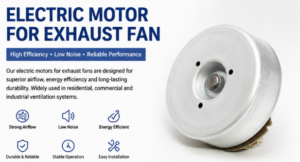
What Is an Electric Motor for Exhaust Fan?
An electric motor for exhaust fan is the core driving component that converts electrical energy into mechanical rotation, powering fan blades to move air efficiently.
Main Functions
- Air extraction and ventilation
- Smoke and odor removal
- Heat dissipation
- Moisture control
- Indoor air quality improvement
Without a reliable motor, the exhaust fan cannot achieve stable airflow performance.
Importance of Electric Motor for Exhaust Fan Systems
Airflow Efficiency
The motor determines:
- Air volume (CFM)
- Static pressure capability
- Overall ventilation efficiency
A high-quality motor ensures stable and strong airflow.
Energy Efficiency
Modern ventilation systems require motors that:
- Consume less power
- Maintain high output efficiency
- Reduce long-term operational cost
Energy-efficient motors are essential for sustainable building systems.
Noise Reduction
Motor design strongly affects noise performance.
Advanced electric motor for exhaust fan systems offer:
- Low vibration
- Smooth rotation
- Reduced acoustic noise
This is especially important for residential environments.
Types of Electric Motor for Exhaust Fan
AC Induction Motors
Advantages:
- Stable performance
- Low cost
- Easy maintenance
Commonly used in traditional exhaust systems.
Brushless DC Motors (BLDC)
Advantages:
- High efficiency
- Low noise
- Long service life
- Precise speed control
Widely used in modern smart ventilation systems.
Shaded Pole Motors
Features:
- Simple structure
- Low cost
- Suitable for small fans
Used in basic ventilation applications.
Capacitor-Run Motors
Advantages:
- Improved starting torque
- Stable operation
- Better efficiency than shaded pole motors
Key Components of Electric Motor for Exhaust Fan
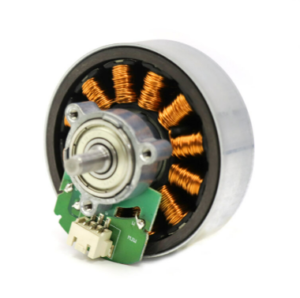
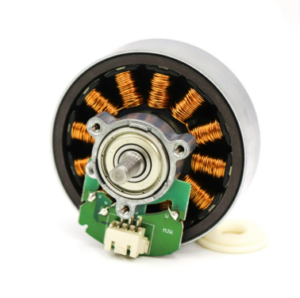
Stator
Generates electromagnetic field for motor operation.
Key features:
- Copper windings
- Laminated steel core
- Thermal insulation
Rotor
Responsible for mechanical rotation.
Performance depends on:
- Balance accuracy
- Material quality
- Structural design
Bearings
Ensure smooth rotation and long lifespan.
Benefits:
- Reduced friction
- Lower noise
- Improved durability
Shaft Assembly
Transfers rotational force to fan blades.
Must ensure:
- High precision alignment
- Mechanical stability
Engineering Design Considerations
Torque Performance
Torque determines the ability of the motor to overcome resistance and maintain airflow under load.
Thermal Management
Motors generate heat during operation, especially in continuous-use environments.
Design considerations include:
- Heat-resistant materials
- Ventilation structure
- Winding temperature control
Efficiency Optimization
Engineers improve efficiency through:
- Low-loss magnetic materials
- Optimized winding design
- Reduced mechanical friction
Moisture and Grease Resistance
Especially important for kitchen exhaust applications:
- Sealed bearings
- Anti-corrosion coatings
- Protective housings
Manufacturing Process
Precision Winding
Ensures:
- Stable electromagnetic performance
- Consistent torque output
- Reduced energy loss
Rotor Balancing
Improves:
- Smooth operation
- Reduced vibration
- Longer bearing life
Automated Assembly
Provides:
- High consistency
- Reduced human error
- Scalable production
Testing and Validation
Each electric motor for exhaust fan is tested for:
- Speed performance
- Noise level
- Temperature rise
- Airflow efficiency
Zhengqiang Technology Group applies advanced motor manufacturing systems and strict quality control to ensure stable and efficient performance. Learn more at https://www.zqatech.com/
Applications of Electric Motor for Exhaust Fan
Residential Ventilation
Used in:
- Kitchen range hoods
- Bathroom exhaust systems
- Home air circulation systems
Commercial Buildings
Used in:
- Office ventilation
- Shopping malls
- Hotels and restaurants
Industrial Ventilation
Used in:
- Factories
- Warehouses
- Production workshops
Special Environments
Includes:
- Laboratories
- Clean rooms
- Underground facilities
Industry Trends
Smart Ventilation Systems
Modern systems integrate:
- Sensors
- Automatic speed control
- IoT connectivity
Energy Efficiency Standards
Governments and industries are pushing for:
- Lower power consumption
- Higher efficiency motors
- Green building compliance
Low-Noise Technology
Focus areas include:
- Improved bearing systems
- Aerodynamic optimization
- Reduced vibration structures
Why Choose Zhengqiang Technology Group?
Zhengqiang Technology Group provides professional electric motor for exhaust fan solutions, including:
- Custom motor design
- AC and BLDC motor manufacturing
- Precision hardware integration
- OEM/ODM services
- Global supply chain support
With advanced engineering and manufacturing capabilities, the company delivers reliable and energy-efficient ventilation motor solutions for global customers.
Visit https://www.zqatech.com/ to learn more.
Conclusion
The electric motor for exhaust fan is a key component in modern ventilation systems, directly affecting airflow efficiency, energy consumption, noise levels, and system reliability. With advancements in motor technology, modern designs are becoming more efficient, quieter, and more durable, supporting a wide range of residential, commercial, and industrial applications.
As demand for healthier and more energy-efficient environments continues to grow, high-performance exhaust fan motors will remain essential in global ventilation solutions.
FAQ
What is an electric motor for exhaust fan?
It is the motor that drives fan blades to circulate air and remove smoke, heat, and odors.
Which motor type is best for exhaust fans?
Brushless DC motors (BLDC) are widely preferred for their efficiency, low noise, and long lifespan.
Where are exhaust fan motors used?
Residential, commercial, industrial, and special environment ventilation systems.
How is motor performance improved?
Through better materials, optimized winding design, and advanced thermal management.
Where can I find a reliable supplier?
Visit https://www.zqatech.com/
📩 Contact Us
Looking for a reliable electric motor for exhaust fan manufacturer with advanced engineering and OEM capability?
Zhengqiang Technology Group is ready to support your ventilation projects.
👉 Visit https://www.zqatech.com/ today and request your quotation!