- Information Classification
ODM Ceramic Parts Supplier: Custom Ceramic Components for Industrial Applications - Guangdong Zhengqiang Technology Group
Choosing a reliable ODM Ceramic Parts Supplier is an important step for manufacturers that require customized ceramic components for industrial equipment, electronics, medical devices, automotive systems, energy applications, and other specialized products.
Ceramic materials offer unique properties that conventional metals and plastics cannot always provide. Depending on the material selected, engineered ceramic components can deliver excellent hardness, wear resistance, electrical insulation, heat resistance, chemical stability, and long-term durability.
However, the performance of a ceramic component depends not only on the material itself. Product design, material formulation, dimensional accuracy, manufacturing processes, surface finishing, and quality control can all affect the final result.
A professional ODM Ceramic Parts Supplier can support customers from the early design stage through material selection, prototype development, production, inspection, and final delivery. This article explains how custom ceramic parts are manufactured, where they are used, and how OEM and ODM buyers can select the right manufacturing partner.
What Is an ODM Ceramic Parts Supplier?
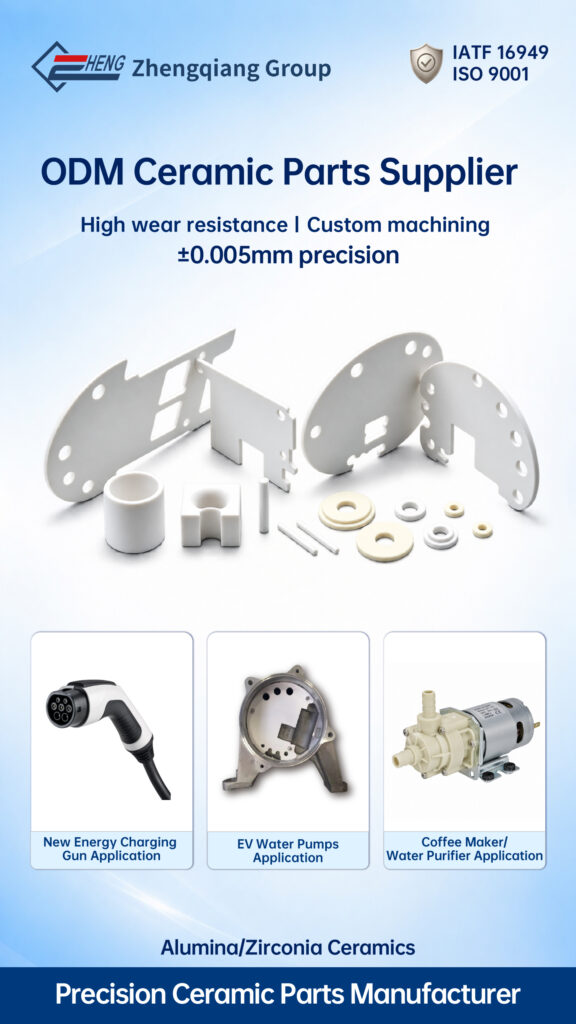
An ODM Ceramic Parts Supplier develops and manufactures ceramic components according to customer requirements while also providing engineering and product development support.
ODM, or Original Design Manufacturing, generally involves a deeper level of supplier participation than standard component purchasing. In addition to manufacturing parts, the supplier may assist with product structure, material recommendations, manufacturing feasibility, dimensional optimization, and production processes.
Depending on the project, an ODM ceramic manufacturer may support:
- Product design optimization
- Material selection
- Technical drawing review
- Prototype development
- Mold and tooling development
- Custom shaping
- Precision machining
- Surface finishing
- Quality inspection
- Small-batch production
- Large-volume manufacturing
This approach can be particularly valuable when customers require ceramic components that cannot be produced efficiently using standard catalog parts.
Why Choose an ODM Ceramic Parts Supplier?
Ceramic components are often used in demanding environments. A part may need to withstand high temperatures, repeated friction, corrosive chemicals, electrical voltage, or continuous mechanical stress.
For this reason, selecting a manufacturing partner involves more than comparing product prices.
A capable ODM Ceramic Parts Supplier should understand how material properties and production processes affect the final application.
Customized Material Selection
Different ceramic materials provide different physical and chemical characteristics.
A manufacturer may recommend a suitable material according to the intended application, operating temperature, mechanical load, electrical requirements, and environmental conditions.
Improved Manufacturing Feasibility
Some component designs may be difficult or expensive to manufacture.
An experienced supplier can review the design and identify potential improvements before mass production begins.
Better Dimensional Consistency
Precision ceramic components often require tight dimensional control.
Proper manufacturing processes and inspection systems can help maintain consistency between production batches.
Integrated Project Support
ODM manufacturing can simplify the supply chain by combining engineering support, tooling, production, and quality control.
Common Types of Ceramic Materials
Material selection is one of the most important stages of ceramic component development.
Alumina Ceramic
Alumina is one of the most widely used technical ceramic materials.
Depending on its composition and purity, alumina ceramic can provide:
- High hardness
- Good wear resistance
- Electrical insulation
- Heat resistance
- Chemical stability
It is commonly used in industrial equipment, electrical systems, electronic components, and wear-resistant applications.
Zirconia Ceramic
Zirconia is known for its mechanical strength and toughness compared with many other ceramic materials.
Potential advantages include:
- High strength
- Good wear resistance
- Fracture resistance
- Corrosion resistance
Zirconia components can be considered for applications involving mechanical stress and repeated contact.
Silicon Carbide Ceramic
Silicon carbide is often selected for demanding environments requiring high-temperature performance and wear resistance.
Its properties can make it suitable for industrial processing and specialized engineering applications.
Silicon Nitride Ceramic
Silicon nitride can provide a combination of mechanical strength, thermal resistance, and wear performance.
It is used in selected industrial and high-performance applications where conventional materials may not provide the required characteristics.
Steatite Ceramic
Steatite is commonly used in electrical insulation applications.
Its electrical and thermal characteristics can make it suitable for certain electrical components and industrial equipment.
A professional ODM Ceramic Parts Supplier can help customers compare material options based on the actual application rather than selecting a material based on a single property.
ODM Ceramic Parts Supplier for Custom Manufacturing
Standard ceramic components may not always meet the requirements of specialized equipment.
Custom manufacturing allows buyers to develop parts according to specific dimensions, shapes, tolerances, and functional requirements.
Custom Shapes
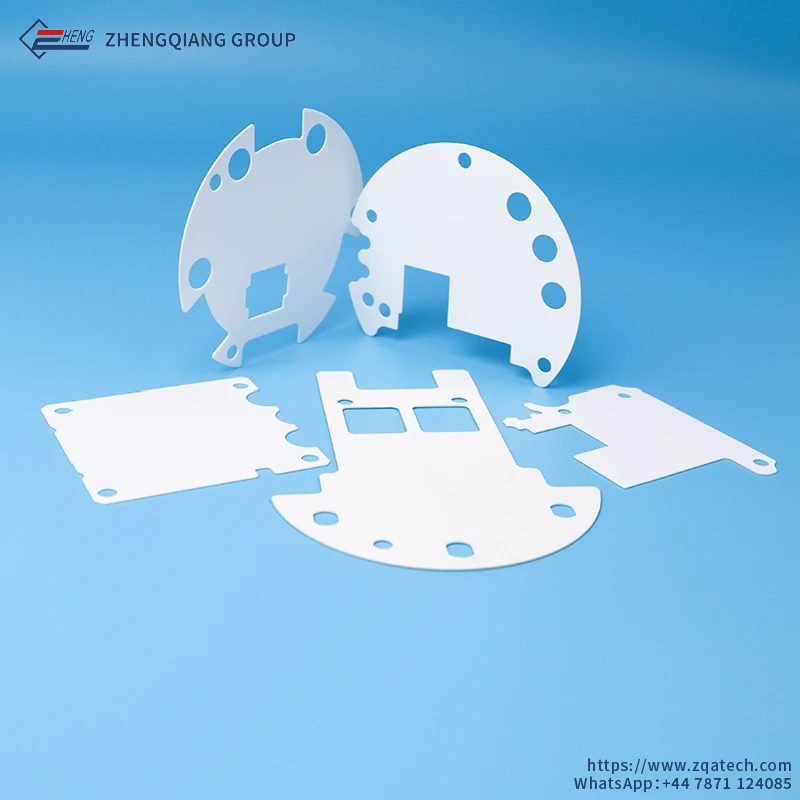
Ceramic components can be manufactured in various shapes, including:
- Rings
- Tubes
- Rods
- Plates
- Blocks
- Bushings
- Nozzles
- Insulators
- Sleeves
- Custom structural components
The production method depends on the material, geometry, tolerance requirements, and production volume.
Custom Dimensions
Dimensions may be customized according to the customer’s equipment or assembly requirements.
Important specifications can include:
- Outer diameter
- Inner diameter
- Length
- Thickness
- Flatness
- Concentricity
- Surface requirements
Custom Tolerances
Technical ceramic applications often require tighter dimensional control than conventional ceramic products.
Precision requirements should be clearly defined during the design stage.
An experienced ODM Ceramic Parts Supplier can evaluate whether the requested tolerances are achievable with the selected material and manufacturing process.
Ceramic Parts Manufacturing Process
The production of technical ceramic components generally involves multiple stages.
Raw Material Preparation
The manufacturing process begins with the selection and preparation of ceramic raw materials.
Powders may be processed according to the material formulation and manufacturing requirements.
Material consistency is important because it can influence the properties of the finished component.
Forming
Different forming methods may be used depending on the part geometry.
Common approaches can include:
- Dry pressing
- Isostatic pressing
- Injection molding
- Extrusion
- Slip casting
- Other specialized forming processes
The selected process should be appropriate for the material and final component design.
Drying and Pre-Processing
After forming, the component may require controlled drying or pre-processing before high-temperature treatment.
Careful process control can help reduce the risk of deformation or defects.
Sintering
Sintering is a critical stage in ceramic manufacturing.
The component is exposed to high temperatures under controlled conditions to achieve the required material structure and mechanical properties.
Temperature control, time, atmosphere, and material characteristics can all influence the final result.
Precision Machining
After sintering, ceramic components may require additional processing.
Because technical ceramics are extremely hard, specialized machining methods may be necessary.
Processes can include:
- Grinding
- Polishing
- Cutting
- Drilling
- Surface finishing
Precision machining is particularly important for components with tight tolerances or complex assembly requirements.
Key Applications for Custom Ceramic Parts
A reliable ODM Ceramic Parts Supplier can provide components for a wide range of industrial applications.
Electronics and Electrical Equipment
Ceramics are widely used in electrical applications because many materials provide excellent insulation and thermal stability.
Typical applications may include:
- Electrical insulators
- Ceramic substrates
- High-temperature components
- Electrical housings
- Specialized electronic parts
Industrial Machinery
Industrial equipment may use ceramic components in areas exposed to friction, wear, or high temperatures.
Potential applications include:
- Wear-resistant liners
- Ceramic guides
- Bushings
- Sealing components
- Industrial nozzles
Automotive Applications
Technical ceramics can be used in selected automotive systems where heat resistance, wear resistance, and electrical performance are important.
The specific material and component design depend on the application environment.
Medical Equipment
Certain ceramic materials are used in medical and healthcare equipment because of their material stability and performance characteristics.
Components must be developed according to the specific regulatory and application requirements.
Energy and Power Equipment
Ceramic components can be used in electrical and energy-related systems that require insulation, heat resistance, or specialized material performance.
Chemical Processing
Chemical resistance can make certain ceramic materials suitable for demanding processing environments.
Material selection should always be based on the specific chemicals, temperature, pressure, and operating conditions.
Important Factors When Choosing an ODM Ceramic Parts Supplier
Selecting a supplier should involve a detailed evaluation of technical and manufacturing capabilities.
Material Knowledge
The supplier should understand the differences between alumina, zirconia, silicon carbide, silicon nitride, and other ceramic materials.
The right material should be selected according to the final application.
Custom Manufacturing Capability
A capable supplier should be able to evaluate customized drawings, samples, or technical specifications.
Customization requirements may involve:
- Shape
- Size
- Material
- Tolerance
- Surface finish
- Functional requirements
Tooling and Mold Development
Some ceramic parts require customized molds or tooling.
The manufacturer should have the ability to support the required production process.
Precision Machining
Post-sintering machining can be important for technical ceramic components with tight dimensional requirements.
A professional ODM Ceramic Parts Supplier should have appropriate equipment and technical knowledge for precision processing.
Quality Control
Quality management should cover the complete production process.
Inspection may include:
- Dimensional inspection
- Appearance inspection
- Material verification
- Surface inspection
- Functional testing
- Batch quality control
Production Capacity
The supplier should be able to support both sample development and future production requirements.
For long-term OEM projects, production consistency is particularly important.
How to Start a Custom Ceramic Parts Project
Clear communication at the beginning of a project can reduce development time.
Step 1: Provide a Technical Drawing
A detailed drawing can help the manufacturer understand the part geometry and dimensional requirements.
Step 2: Define the Application
Explain how and where the component will be used.
Important information may include:
- Operating temperature
- Mechanical load
- Chemical exposure
- Electrical requirements
- Assembly conditions
Step 3: Select the Material
The material should be selected based on the application’s actual requirements.
A qualified ODM Ceramic Parts Supplier may provide recommendations when the customer is uncertain about the most suitable ceramic material.
Step 4: Confirm Tolerances
Tight tolerances may require additional processing.
Customers should clearly identify critical dimensions before production begins.
Step 5: Develop Samples
Samples or prototypes can be used to evaluate dimensions, material performance, and assembly compatibility.
Step 6: Validate the Design
Testing should confirm that the component performs as required in the actual application.
Step 7: Begin Mass Production
After sample approval, production parameters can be finalized for volume manufacturing.
Quality Control for Ceramic Components
Quality is particularly important in technical ceramic manufacturing because small variations in dimensions or material structure can affect the final application.
Raw Material Inspection
Incoming materials should be evaluated before production.
Consistent raw material quality supports stable manufacturing results.
Process Inspection
Key production stages should be monitored to identify potential problems before final manufacturing is completed.
Dimensional Inspection
Finished components may be checked against the approved drawings and tolerance requirements.
Surface Inspection
Surface defects can affect both the appearance and functionality of ceramic parts.
Inspection may identify:
- Cracks
- Chips
- Surface irregularities
- Processing marks
Final Quality Verification
The required testing methods depend on the specific product and application.
A reliable ODM Ceramic Parts Supplier should establish inspection procedures based on the customer’s technical requirements.
Benefits of ODM Ceramic Component Manufacturing
ODM manufacturing can provide several advantages for OEM customers.
Reduced Development Complexity
Working with a supplier that supports both engineering and manufacturing can simplify the development process.
Improved Material Matching
Supplier expertise can help customers select a material that matches the actual operating conditions.
More Flexible Product Development
Custom dimensions and designs can be developed according to the requirements of the final equipment.
Better Production Coordination
A coordinated development process can reduce communication problems between design, tooling, manufacturing, and quality teams.
Long-Term Supply Support
For products with stable demand, an established manufacturing relationship can help support consistent future production.
How Ceramic Parts Compare With Metal and Plastic Components
Ceramic is not always the best material for every application.
The material should be selected according to performance requirements.
Ceramic vs. Metal
Ceramics can provide higher hardness, heat resistance, electrical insulation, or chemical stability in certain applications.
Metals may provide better ductility and easier machining.
Ceramic vs. Plastic
Ceramic components can generally withstand higher temperatures and offer greater hardness than many plastics.
However, plastics may provide advantages in weight, flexibility, and production cost.
Selecting the Right Material
The best solution depends on the complete application.
A professional ODM Ceramic Parts Supplier should evaluate the working environment rather than recommending one material for every project.
Frequently Asked Questions About ODM Ceramic Parts
What does an ODM Ceramic Parts Supplier do?
An ODM Ceramic Parts Supplier provides customized ceramic component development and manufacturing. Services may include material selection, product design support, tooling, prototyping, production, precision machining, and quality inspection.
What materials are commonly used for custom ceramic parts?
Common technical ceramic materials include alumina, zirconia, silicon carbide, silicon nitride, and steatite. The correct material depends on the application requirements.
Can ceramic parts be customized?
Yes. Ceramic components can be customized according to shape, dimensions, material, tolerances, surface finish, and functional requirements.
What industries use custom ceramic parts?
Ceramic components are used in electronics, industrial machinery, automotive systems, medical equipment, energy equipment, electrical systems, and specialized chemical processing applications.
What information should I provide when requesting a quote?
Customers should provide a technical drawing, dimensions, material requirements, tolerance requirements, application details, estimated order quantity, and any special quality requirements.
Can an ODM Ceramic Parts Supplier help with material selection?
Yes. A technically capable supplier can recommend a suitable ceramic material based on operating temperature, mechanical stress, electrical requirements, chemical exposure, and other application conditions.
Conclusion
A reliable ODM Ceramic Parts Supplier can provide valuable support for manufacturers developing specialized components for demanding applications.
Technical ceramics offer a combination of hardness, wear resistance, heat resistance, electrical insulation, and chemical stability that can make them suitable for many industrial environments.
However, successful ceramic component development requires more than selecting a material. Product design, forming methods, sintering, precision machining, dimensional control, and quality inspection all contribute to the performance of the finished part.
For OEM and industrial buyers, working with an experienced ODM Ceramic Parts Supplier can simplify the transition from an initial concept to prototype development and mass production.
Before starting a project, customers should clearly define their application requirements, material expectations, critical dimensions, tolerances, operating conditions, and production needs. This information helps establish a stronger foundation for successful custom ceramic component manufacturing.