- Information Classification
Alumina Color: What Color Is Al2O3? 5 Factors That Affect It
Alumina Color: What Color Is Al2O3? 5 Factors That Affect It
Alumina color can provide useful information about the material, but color alone does not determine the performance or quality of an alumina ceramic component. Alumina ceramics are commonly white or off-white, while different formulations, purity levels and manufacturing conditions can produce variations in appearance.
For engineers and purchasers, understanding what color alumina is and why its appearance can change is useful when selecting alumina ceramic materials for electrical insulation, precision components, wear-resistant parts and other technical applications.
What Color Is Alumina?
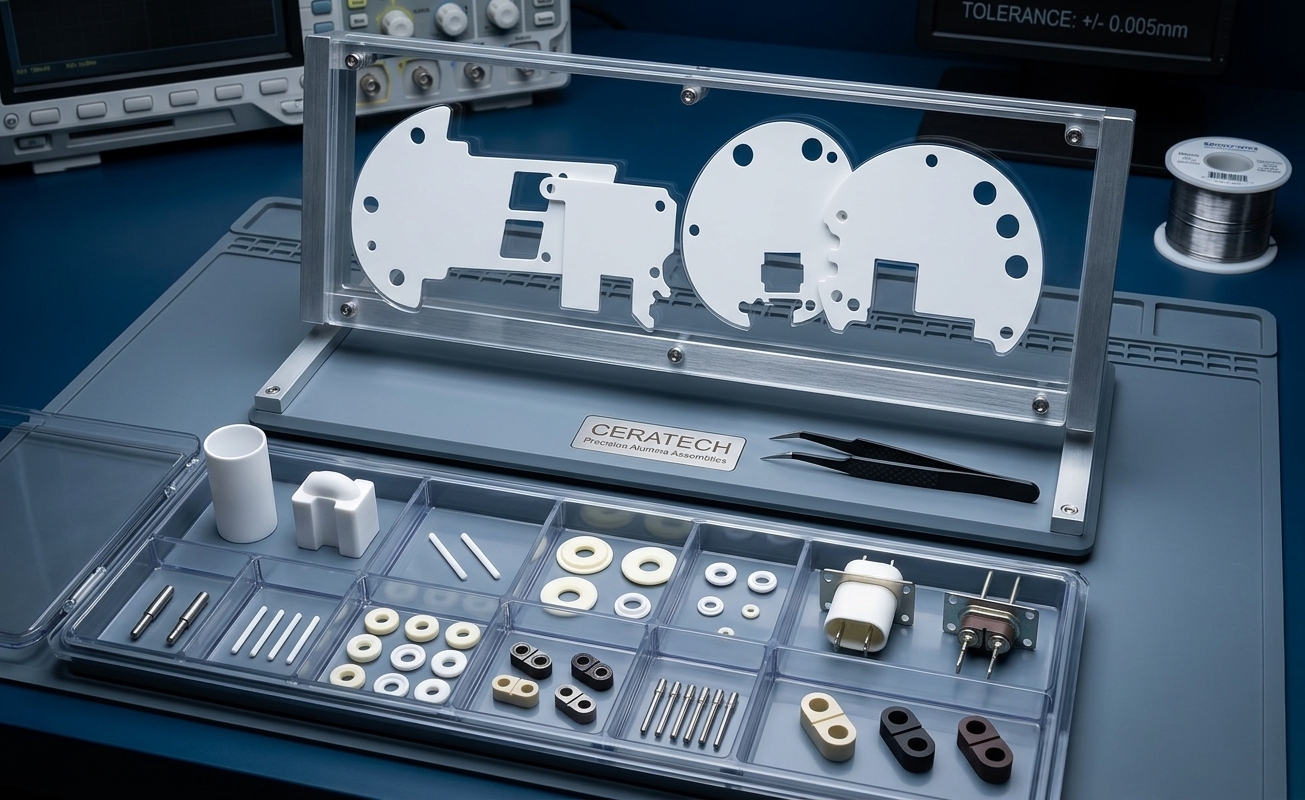
What color is alumina? In its common ceramic form, alumina (Al2O3) is typically white, off-white or light cream.
High-purity alumina ceramics are generally manufactured with a clean white appearance. Lower-purity grades or materials containing additives, impurities or secondary phases may show slightly different colors.
The appearance of a finished alumina ceramic component can therefore depend on more than the Al2O3 percentage. Powder composition, additives, forming, sintering and surface condition can all influence the final appearance.
What Does the Color of Al2O3 Mean?
The color of Al2O3 can vary slightly between ceramic grades and manufacturing processes. However, color should be treated as a visual characteristic rather than a standalone quality indicator.
Two alumina components with slightly different colors may still have similar mechanical or electrical performance, while components with a similar appearance can have different material properties.
For technical ceramic components, material grade, density, purity, porosity, mechanical properties, electrical insulation and manufacturing tolerances should be checked according to the application requirements.
5 Factors That Affect Alumina Color
1. Alumina Purity
Alumina purity is one of the factors that can influence the appearance of a ceramic component.
Higher-purity alumina generally contains fewer impurities and secondary phases. As a result, high-purity alumina is commonly associated with a cleaner and more uniform white appearance.
Lower-purity materials may contain more additives or secondary phases, which can slightly change the final ceramic color.
2. Additives and Secondary Phases
Alumina ceramics may contain controlled additives or sintering aids to achieve specific manufacturing and performance requirements.
These materials can influence the microstructure and appearance of the finished ceramic. Depending on the formulation, an alumina component may appear white, cream, grayish or slightly colored.
For this reason, the Al2O3 color should not be evaluated separately from the material specification.
3. Sintering Conditions
Sintering is a critical step in alumina ceramic manufacturing. During sintering, the formed ceramic body is heated to develop its final density and microstructure.
Temperature, holding time, atmosphere and furnace conditions can influence the final ceramic structure and appearance.
Consistent sintering conditions are therefore important for maintaining stable appearance and reliable material properties from batch to batch.
4. Contamination During Processing
Ceramic powders and components need to be processed under controlled conditions. Unwanted contamination from equipment, handling or the production environment may affect the appearance of the final component.
For precision alumina ceramic parts, controlled processing and cleaning can help maintain consistent surface quality and appearance.
5. Surface Condition and Finishing
The final appearance of an alumina component can also change after grinding, polishing, machining or other finishing processes.
A smooth, clean surface may appear different from a rough or unfinished ceramic surface even when the underlying material is the same.
For precision components, surface finish should therefore be evaluated together with dimensional tolerance and application requirements.
Why Does Alumina Ceramic Turn Yellow?
A common question is why alumina ceramic turns yellow after processing or during use.
A yellow, cream or darker appearance does not necessarily mean that the Al2O3 material itself has fundamentally changed. Color variation may be associated with impurities, additives, processing conditions, contamination or changes in the surface condition.
If a component changes color unexpectedly, manufacturers should evaluate the material grade, processing history, firing conditions, surface contamination and operating environment rather than judging quality from color alone.
Alumina Color by Purity Grade
Different alumina grades are developed for different combinations of electrical, mechanical, thermal and chemical properties. Their appearance may also vary depending on formulation and processing.
| Alumina Grade | Typical Appearance | General Characteristics |
|---|---|---|
| 95% Alumina | White to off-white | Balanced mechanical, electrical and cost performance |
| 96% Alumina | White to light cream | Good insulation and balanced performance |
| 99% Alumina | Generally white | Higher purity and stable technical performance |
| 99.5%+ Alumina | Typically clean white | High-purity applications and precision components |
Note: Actual color depends on material formulation, additives, processing conditions, sintering and surface finish. Color alone should not be used to identify alumina purity.
Does Alumina Color Indicate Quality?
Not necessarily.
A brighter white appearance does not automatically mean that an alumina ceramic is higher quality. The performance of an alumina component depends on measurable technical properties such as purity, density, porosity, hardness, mechanical strength, electrical insulation, thermal performance and chemical stability.
For engineering applications, these properties should be specified and verified according to the component requirements.
Alumina Ceramic Color and Material Selection
When selecting an alumina ceramic material, engineers should focus on the requirements of the final component rather than color alone.
Important considerations include:
- Alumina purity and material grade
- Density and porosity
- Mechanical strength and hardness
- Electrical insulation requirements
- Thermal conductivity and temperature conditions
- Chemical and environmental resistance
- Dimensional tolerance
- Surface finish
For example, an electrical insulation component may prioritize dielectric performance, while a ceramic shaft may require high hardness, wear resistance, dimensional accuracy and a suitable surface finish.
Applications of Alumina Ceramic Components
Alumina ceramics are widely used for precision components where electrical insulation, hardness, wear resistance and dimensional stability are important.
- EV charging connector insulation components
- Ceramic housings and insulating parts
- Ceramic shafts and rotating components
- Wear-resistant ceramic parts
- Electronic and electrical components
- Precision industrial ceramic components
For different applications, the appropriate alumina grade should be selected according to performance requirements rather than appearance alone.
Custom Alumina Ceramic Components
We manufacture customized alumina ceramic components according to customer drawings, samples and application requirements.
Our alumina ceramic products include:
- Alumina ceramic housings
- Electrical insulation components
- Ceramic shafts
- Ceramic sleeves
- Ceramic rings
- Precision alumina ceramic parts
Material selection can be evaluated according to alumina purity, required performance, component geometry, dimensional tolerance and manufacturing process.
For ODM projects, customers can provide drawings, samples or technical specifications for engineering evaluation.
Conclusion
Alumina color is typically white, off-white or light cream, but its appearance can vary according to purity, additives, sintering conditions, contamination and surface finishing.
Color can provide a useful visual reference, but it should not be used as the only method for determining alumina grade or ceramic quality. For technical applications, measurable properties such as purity, density, hardness, electrical insulation and dimensional stability are much more important.
If you are selecting an alumina ceramic material for a precision component, provide your drawing, sample or application requirements so the appropriate material grade and manufacturing process can be evaluated.
Need Custom Alumina Ceramic Components?
Send us your drawing, sample or technical requirements for an engineering review and customized ODM ceramic solution.