- Information Classification
Zirconia Ceramic Rings for Water Pumps: Design Guide
Zirconia ceramic rings are annular components made from zirconium dioxide (ZrO₂). They can be considered for industrial applications requiring wear resistance, mechanical strength, dimensional stability and resistance to demanding operating environments.
In water pump systems, ceramic rings may be used in selected positions involving contact, wear, fluid exposure or structural support. Their suitability depends on the pump design, component geometry, operating conditions and surrounding materials.
When developing a custom zirconia ceramic ring, engineers need to consider more than material selection. Inner diameter, outer diameter, thickness, contact conditions, assembly requirements and manufacturing feasibility all influence the final design.
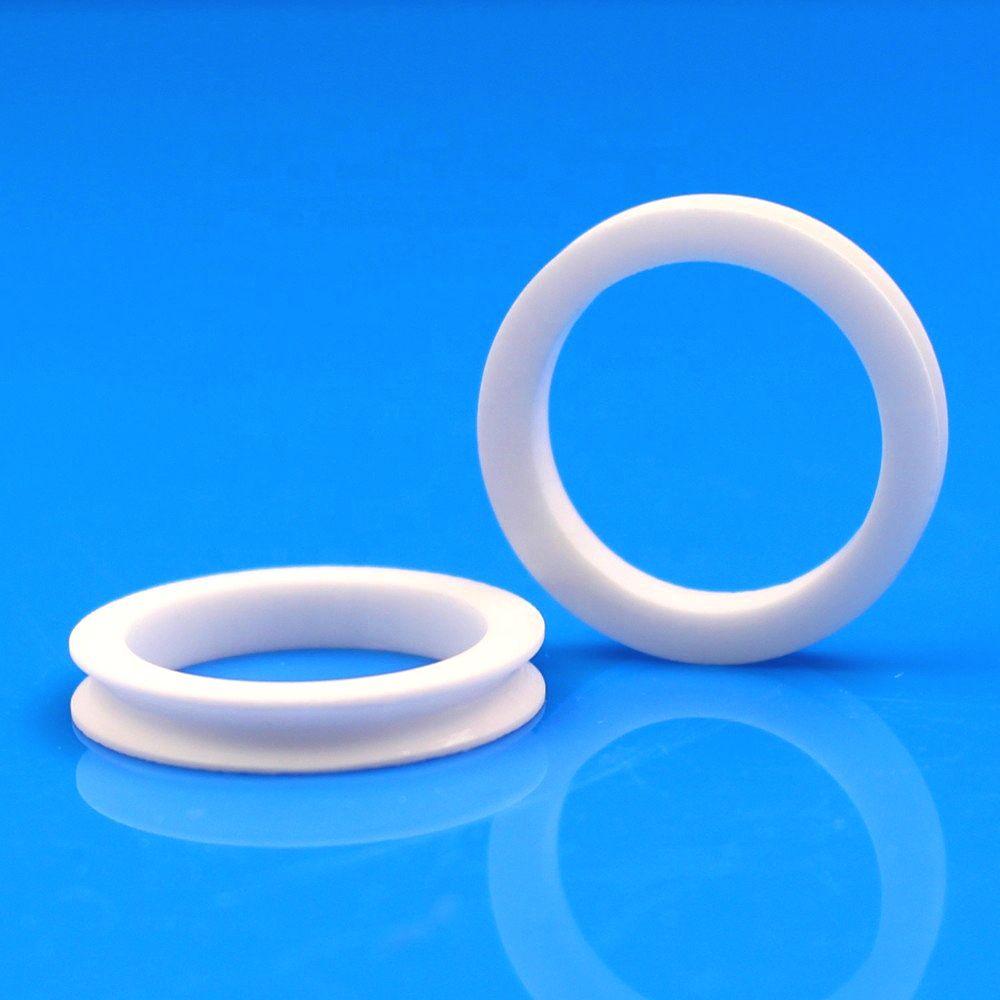
What Is a Zirconia Ceramic Ring?
A zirconia ceramic ring is a hollow, circular component manufactured from zirconium dioxide ceramic (ZrO₂).
Its annular structure allows it to be installed around a shaft or positioned between other components, depending on the mechanical design.
Depending on the application, zirconia ceramic rings may be considered for:
- Wear-related components
- Mechanical contact interfaces
- Structural support components
- Precision ceramic assemblies
- Selected water pump components
- Custom industrial ceramic applications
The actual function of a ceramic ring depends on its position within the assembly, the contact conditions and the requirements of the complete system.
Why Choose Zirconia Ceramic for Ring Components?
Zirconia (ZrO₂) is an important technical ceramic material. It is often selected when a component requires a combination of mechanical strength, fracture toughness and wear resistance.
1. High Wear Resistance
Wear resistance is an important consideration for components exposed to repeated contact or relative movement.
Zirconia ceramic offers high hardness and good wear resistance, making it worth evaluating for selected mechanical interfaces and wear-related applications.
In water pump assemblies, the actual wear performance depends on factors such as:
- Contact pressure
- Relative movement and sliding conditions
- Surface condition
- Mating component material
- Operating temperature
- Fluid or coolant environment
Material hardness alone does not guarantee long service life. The complete contact system must be considered.
2. Strength and Fracture Toughness
Compared with many conventional technical ceramics, zirconia can offer higher fracture toughness and mechanical strength.
These characteristics make zirconia an option for ceramic components that experience mechanical contact or loading.
However, zirconia remains a ceramic material and can still fracture under excessive impact, uneven loading or unsuitable assembly conditions.
3. Corrosion and Chemical Resistance
Water pump components may be exposed to water, coolant and other operating fluids.
Zirconia offers good chemical stability and resistance to many corrosive environments.
Before selecting a material, engineers should evaluate the actual fluid composition, temperature, concentration and exposure conditions.
4. Dimensional Stability
Dimensional consistency is important when a ceramic ring must fit between other components or maintain a defined clearance.
Inner diameter, outer diameter, thickness and geometric relationships should be specified according to the assembly requirements.
For custom ceramic rings, identifying critical dimensions in the engineering drawing helps establish appropriate manufacturing and inspection requirements.
Applications of Zirconia Ceramic Rings in Water Pump Systems
Water pumps operate under different mechanical and environmental conditions. Depending on the pump architecture, ceramic rings may be considered for locations involving contact, wear or structural support.
1. Electric Vehicle Water Pumps
Electric vehicle water pumps are used in thermal management systems that circulate coolant to help regulate the temperature of batteries, motors and electronic components.
Depending on the pump design, ceramic components may be evaluated where wear resistance, corrosion resistance and dimensional stability are important.
Zirconia ceramic rings may be considered for suitable mechanical or wear-related positions, provided that the component geometry and operating conditions are compatible with the material.
Explore our 96% zirconia ceramic solution for new energy vehicle water pumps.
2. Small Water Pump Assemblies
Compact water pumps used in household appliances and circulation systems may contain components with limited installation space and specific dimensional requirements.
For these applications, a ceramic ring may be evaluated according to:
- Available installation space
- Contact and wear conditions
- Operating fluid
- Assembly clearance
- Mechanical loading
The final material and component geometry should be selected according to the actual pump design.
3. Industrial Mechanical Components
Outside water pump applications, zirconia ceramic rings may also be considered for selected industrial assemblies requiring wear resistance and mechanical stability.
Potential applications depend on the component’s function, operating conditions and manufacturing feasibility.
Key Dimensions for Custom Zirconia Ceramic Rings
When designing a custom zirconia ceramic ring, the engineering drawing should clearly define the geometry and functional requirements.
1. Outer Diameter (OD)
The outer diameter determines how the ring fits within its surrounding housing or mounting structure.
Engineers should consider the available installation space, fitting conditions and required clearance.
2. Inner Diameter (ID)
The inner diameter determines the opening through which a shaft or other component may pass.
It is important to define the required clearance and identify whether the inner diameter is a critical functional dimension.
3. Ring Thickness
Thickness affects the component’s geometry, contact area and available structural section.
The design should consider the operating load, installation conditions and required dimensional stability.
4. Flatness and Parallelism
For rings installed between two contacting components, flatness and parallelism may affect contact distribution and assembly stability.
These requirements should be specified according to the actual functional needs rather than applying unnecessarily tight tolerances to every surface.
5. Edge Geometry
Sharp edges may be vulnerable to chipping during handling and assembly.
Where the design permits, suitable chamfers or radii can be considered to reduce unnecessary edge damage and improve assembly conditions.
6. Dimensional Tolerances
Not every dimension has the same functional importance.
Identify critical dimensions, mating interfaces and assembly tolerances clearly in the engineering drawing.
Important Design Considerations for Water Pump Ceramic Rings
A zirconia ceramic ring does not operate independently. Its performance is influenced by the surrounding components and the operating environment.
Contact Pressure and Loading
Excessive or uneven contact pressure can create localized stress within a ceramic ring.
Engineers should evaluate the load distribution, contact area and supporting structure.
Mating Material Compatibility
The material in contact with the ceramic ring can influence friction, wear and long-term performance.
Consider the hardness, surface condition and mechanical behavior of the mating component.
Assembly and Fitting Conditions
Interference fits, excessive installation force and misalignment may introduce stress into ceramic components.
Because zirconia is hard but still brittle, assembly methods should be evaluated carefully.
Fluid and Operating Environment
Water pump components may be exposed to different fluids and temperatures.
Material compatibility should be evaluated against the actual coolant or fluid chemistry, operating temperature and service conditions.
Thermal Expansion and Dimensional Compatibility
When a ceramic ring is installed in a metal housing, differences in thermal expansion may affect the fitting condition as temperature changes.
The selected material, dimensions, clearance and assembly method should therefore be considered together.
Zirconia vs. Alumina Ceramic Rings
Zirconia (ZrO₂) and alumina (Al₂O₃) are two important technical ceramic materials, but they have different characteristics.
The appropriate choice depends on the component’s mechanical, electrical, thermal and economic requirements.
| Factor | Zirconia (ZrO₂) | Alumina (Al₂O₃) |
|---|---|---|
| Mechanical Strength | Generally high | Depends on grade and design |
| Fracture Toughness | Generally higher | Generally lower than zirconia |
| Hardness | High | Very high |
| Wear Resistance | Good | Good |
| Electrical Insulation | Insulating ceramic | Widely used for electrical insulation |
| Typical Selection Focus | Strength, toughness and wear-related applications | Electrical insulation, hardness and cost considerations |
These are general material characteristics. Actual performance varies with material grade, composition, density and operating conditions.
For applications requiring greater fracture toughness and mechanical strength, zirconia may be worth evaluating.
Where electrical insulation, hardness and cost considerations are more important, alumina may be another suitable option.
Material selection should always be based on the actual engineering requirements.
Read our Alumina vs. Zirconia Ceramics comparison guide for more information.
How Are Custom Zirconia Ceramic Rings Made?
At Zhengqiang, powder pressing is the confirmed forming process for our custom technical ceramic components.
For suitable zirconia ceramic ring geometries, the general production route involves powder preparation, die filling, compaction, green body formation and sintering.
1. Zirconia Powder Preparation
Prepared zirconia ceramic powder is used as the starting material.
Powder characteristics and preparation influence the filling and compaction behavior during forming.
2. Die Filling and Powder Compaction
The ceramic powder is introduced into a forming die and compacted under pressure to create the basic ring geometry.
For annular components, the relationship between the inner opening, outer diameter and wall section must be considered during tooling evaluation.
3. Green Body Formation
After compaction, the pressed component is removed from the die. This is known as the green body.
At this stage, the component has its basic geometry but has not yet developed the final ceramic structure.
4. Sintering
The green body undergoes high-temperature sintering, during which ceramic particles bond together and the material densifies.
Dimensional shrinkage generally occurs during this stage. The final dimensions must therefore be considered together with the forming and sintering conditions.
Important: Not every ring geometry is automatically suitable for powder pressing. Inner diameter, outer diameter, thickness, tooling arrangement and demolding requirements must be evaluated before confirming production feasibility.
Custom Zirconia Ceramic Ring Drawing Checklist
Before requesting a quotation for a custom zirconia ceramic ring, prepare the following engineering information:
- 2D engineering drawing: Include all major dimensions and tolerances.
- 3D model: Provide a 3D file if available.
- Material: Specify zirconia (ZrO₂) and the required grade if known.
- Outer diameter: Define the required external dimension.
- Inner diameter: Specify the opening and fitting requirements.
- Thickness: Identify the nominal thickness and critical dimensional requirements.
- Edge geometry: Specify chamfers, radii and other important edge features.
- Operating conditions: Include temperature, fluid chemistry and mechanical loading.
- Mating components: Identify the surrounding materials and assembly method.
- Quantity: Provide sample requirements and estimated annual demand.
If some dimensions or material specifications are not yet finalized, provide the available drawing and application information for an initial engineering review.
Frequently Asked Questions About Zirconia Ceramic Rings
What are zirconia ceramic rings used for?
Zirconia ceramic rings may be used in selected industrial and mechanical applications requiring wear resistance, mechanical strength and dimensional stability. Depending on the equipment design, they may be considered for water pump components and other contact or wear-related structures.
Why choose zirconia instead of alumina for a ceramic ring?
Zirconia generally offers higher fracture toughness and mechanical strength than alumina. It may be considered when mechanical loading and toughness are important. Alumina may be preferable for other applications where electrical insulation, hardness and cost are key considerations.
Can zirconia ceramic rings be used in EV water pumps?
They may be evaluated for suitable positions within EV water pump assemblies. The final decision depends on the pump architecture, operating fluid, contact conditions, temperature and mechanical requirements.
What dimensions are important for a custom ceramic ring?
The main dimensions include outer diameter, inner diameter, thickness, flatness, parallelism and relevant edge geometry. Critical tolerances should be identified according to the assembly requirements.
Can zirconia ceramic rings be made by powder pressing?
Powder pressing can be considered for suitable annular geometries. However, feasibility depends on the ring dimensions, wall section, tooling arrangement and demolding conditions. An engineering drawing review is required before confirming production.
Can zirconia ceramic rings replace metal rings?
In selected applications, zirconia may be considered as an alternative to metal where wear resistance, corrosion resistance or mechanical characteristics are important. However, impact loading, assembly conditions, thermal expansion and mating materials must be evaluated before substitution.
Custom Zirconia Ceramic Components for ODM Projects
Zhengqiang focuses on drawing-based ODM development of custom alumina (Al₂O₃) and zirconia (ZrO₂) ceramic components.
Our confirmed ceramic forming process is powder pressing. Each proposed component is evaluated according to its material requirements, geometry, application and manufacturing feasibility.
For custom zirconia ceramic rings, customers can provide engineering drawings, samples and operating specifications for an initial feasibility review.
Whether you are developing a water pump component or another industrial ceramic ring, our team can review the proposed design and discuss suitable ceramic material options.
Explore Our Zirconia Ceramic Solutions for EV Water Pumps
Explore Our Custom Alumina and Zirconia Ceramic Components
Send Your Drawing for an ODM Feasibility Review →