- Information Classification
Brushed Motor Speed Control Engineering Guide
Brushed motors remain one of the most widely used motor technologies in industrial equipment, automotive systems, household appliances, and portable electronic devices. Although brushless motor systems continue gaining popularity in high-efficiency applications, brushed motors still offer significant advantages in simplicity, cost efficiency, and ease of operation. Among the most important aspects of brushed motor engineering, brushed motor speed control plays a critical role in determining system stability, energy efficiency, operational reliability, and overall performance.
An optimized brushed motor speed control system directly affects torque output, acceleration characteristics, thermal behavior, energy consumption, and motion precision. In industrial and OEM applications, selecting the correct speed control method is essential for achieving consistent performance under varying load conditions.
Zhengqiang Technology Group is a high-tech enterprise specializing in motors, electronic control systems, intelligent manufacturing equipment, and precision engineering solutions. With strong engineering expertise and global manufacturing capabilities, the company provides customized motor solutions for industrial and OEM customers worldwide. Learn more at https://www.zqatech.com/
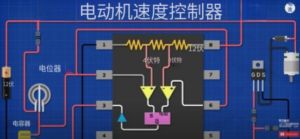
Understanding Brushed Motor Speed Control
Brushed motor speed control refers to the process of regulating the rotational speed of a brushed DC motor by controlling electrical input parameters such as voltage, current, or pulse modulation signals.
Because brushed motors use mechanical commutation through carbon brushes and a commutator, their speed characteristics are relatively straightforward compared to more complex brushless systems.
Basic Operating Principles of Brushed Motors
A brushed motor converts electrical energy into mechanical rotation through electromagnetic interaction.
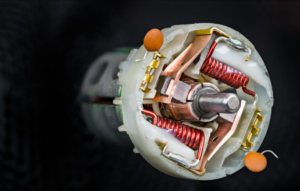
Main Structural Components
- Rotor (armature)
- Stator
- Carbon brushes
- Commutator
The commutator continuously changes current direction within the armature windings, allowing continuous rotational movement.
Relationship Between Voltage and Speed
In most brushed DC motors:
- Motor speed is approximately proportional to input voltage
- Torque is related to current flow
Therefore, controlling voltage is one of the primary methods used in brushed motor speed control systems.
Common Methods of Brushed Motor Speed Control
Several control strategies are widely used depending on application requirements and system complexity.
Voltage Control
Voltage control is one of the simplest forms of brushed motor speed control.
Operating Principle
- Increasing voltage increases motor speed
- Reducing voltage decreases motor speed
Advantages
- Simple implementation
- Low system cost
- Suitable for basic applications
Limitations
- Reduced efficiency at low speeds
- Higher heat generation in some conditions
Voltage control remains common in low-cost motor systems.
PWM (Pulse Width Modulation) Speed Control
PWM is one of the most efficient and widely used methods for brushed motor speed control.
How PWM Works
PWM rapidly switches power on and off at high frequency.
The average voltage delivered to the motor is controlled by adjusting the duty cycle.
Advantages of PWM Control
- Higher efficiency
- Reduced power loss
- Better low-speed performance
- Improved torque stability
PWM systems are widely used in modern industrial and automotive applications.
Closed-Loop Speed Control
Closed-loop systems use feedback mechanisms to maintain stable speed under varying load conditions.
Typical Feedback Devices
- Encoders
- Tachometers
- Hall-effect sensors
Benefits
- Precise speed regulation
- Improved load compensation
- Better operational consistency
Closed-loop systems are common in automation and robotics.
Electrical Characteristics in Brushed Motor Speed Control
The performance of a brushed motor speed control system depends heavily on electrical parameters.
Voltage Characteristics
Typical operating voltages include:
- 6V–24V for portable devices
- 24V–90V for industrial equipment
- Higher voltages for specialized systems
Stable voltage supply improves speed consistency.
Current and Torque Relationship
Motor torque is directly related to current.
Excessive current may lead to:
- Overheating
- Brush wear
- Reduced lifespan
Proper current management is essential for reliable operation.
Starting Current Considerations
Brushed motors often generate high startup current.
Control systems must prevent:
- Excessive current spikes
- Thermal overload
- Power supply instability
Soft-start systems are frequently used to reduce startup stress.
Thermal Management and Heat Dissipation
Thermal performance is an important engineering consideration in brushed motor speed control systems.
Sources of Heat Generation
Heat is generated by:
- Brush friction
- Electrical resistance
- Commutator contact losses
High temperatures may reduce motor efficiency and durability.
Cooling Solutions
Common thermal management methods include:
- Ventilation systems
- Aluminum heat sinks
- Forced-air cooling
- Thermal monitoring circuits
Efficient cooling improves operational lifespan.
Brush Wear and Maintenance Considerations
One of the defining characteristics of brushed motors is mechanical brush wear.
Causes of Brush Wear
- Mechanical friction
- Electrical arcing
- High-speed operation
- Excessive current load
Maintenance Requirements
Routine maintenance may include:
- Brush replacement
- Commutator cleaning
- Electrical inspection
Proper maintenance improves system reliability and lifespan.
EMI and Noise Control
Mechanical commutation in brushed motors may generate electromagnetic interference (EMI).
Sources of EMI
- Brush arcing
- Rapid current switching
- Electrical noise
Improper EMI management may affect nearby electronic devices.
EMI Suppression Techniques
Typical solutions include:
- Capacitor filtering
- Ferrite suppression components
- Shielded wiring
- Optimized PCB layout
Good EMI control improves overall system stability.
Manufacturing Technologies for Brushed Motor Systems
The reliability of brushed motor speed control systems depends heavily on manufacturing quality.
Precision Stamping and Rotor Manufacturing
Key manufacturing processes include:
- Precision stamping
- Rotor balancing
- CNC machining
These directly affect vibration performance and efficiency.
Electronic Control Assembly
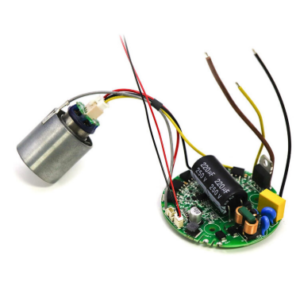
Modern speed control systems integrate:
- MOSFET driver circuits
- PWM controllers
- Protection systems
- PCB assemblies
Advanced SMT assembly improves electronic consistency.
Intelligent Manufacturing Systems
Modern production technologies support:
- Automated testing
- Real-time quality monitoring
- Production traceability
Zhengqiang Technology Group integrates intelligent manufacturing technologies to deliver reliable motor and control system solutions. Learn more at https://www.zqatech.com/
Applications of Brushed Motor Speed Control Systems
Automotive Systems
Used in:
- Power windows
- Seat adjustment systems
- Windshield wipers
- HVAC actuators
Industrial Equipment
Applications include:
- Conveyor systems
- Small automation devices
- Power tools
- Packaging machinery
Consumer Electronics
Brushed motors are widely used in:
- Portable appliances
- Toys
- Personal care devices
- Small household equipment
Medical and Laboratory Equipment
Certain compact systems use brushed motors for:
- Fluid pumps
- Laboratory automation
- Portable diagnostic devices
Industry Trends and Future Development
Improved Electronic Controllers
Modern controllers continue improving:
- PWM efficiency
- Thermal performance
- Speed precision
Intelligent Monitoring Systems
Future systems increasingly integrate:
- Real-time diagnostics
- Predictive maintenance
- Smart current monitoring
Compact and Lightweight Designs
Manufacturers continue developing:
- Smaller control modules
- Higher power density
- Integrated motor-driver systems
Energy-Efficient Motion Systems
Energy-saving technologies continue influencing brushed motor system design and optimization.
Why Choose Zhengqiang Technology Group?
Zhengqiang Technology Group provides advanced solutions for brushed motor speed control systems, including:
- Precision motor manufacturing
- Electronic speed control systems
- Intelligent production technologies
- OEM and ODM engineering support
With strong engineering expertise and global manufacturing capabilities, the company supports industrial and automotive customers worldwide. Visit https://www.zqatech.com/ to learn more.
Conclusion
The performance of a brushed motor speed control system directly influences motor efficiency, thermal stability, reliability, and operational precision. Through optimized voltage regulation, PWM technologies, advanced thermal management, and intelligent electronic control systems, brushed motors continue supporting a wide range of industrial and consumer applications.
Although brushless technologies continue expanding, brushed motors remain highly valuable for cost-effective and straightforward motion control solutions.
FAQ
What is brushed motor speed control?
It is the process of regulating the rotational speed of a brushed motor using voltage or electronic control methods.
What is the most common speed control method?
PWM (Pulse Width Modulation) is one of the most widely used and efficient methods.
Why do brushed motors require maintenance?
Because brushes and commutators experience mechanical wear during operation.
What affects motor speed stability?
Voltage consistency, load variation, and control system quality all affect speed stability.
Where can I find reliable motor and control manufacturing solutions?
Visit https://www.zqatech.com/
📩 Contact Us
Looking for reliable brushed motor speed control manufacturing solutions with strong engineering and global supply capabilities?
Zhengqiang Technology Group is ready to support your OEM and industrial projects.
👉 Visit https://www.zqatech.com/ today and get your quote!