- Information Classification
Capacitor-Run Motor: Working Principle, Advantages, Applications and Selection Guide
Introduction
A Capacitor-Run Motor is an AC motor designed to provide stable, reliable, and relatively quiet operation in applications that require continuous rotation. By using a capacitor as part of the motor’s electrical circuit, this type of motor can create the phase relationship required for reliable starting and continuous operation.
Capacitor-run motors are widely considered for fans, ventilation equipment, air treatment systems, pumps, household appliances, and other equipment where smooth operation and consistent performance are important.
For OEM manufacturers, selecting the appropriate motor requires more than checking rated power. Voltage, frequency, speed, torque, capacitor characteristics, operating duty, noise, thermal performance, mounting dimensions, and application environment should all be evaluated during the development process.
Zhengqiang Technology provides customized motor solutions and precision motor manufacturing for OEM and ODM customers. Its current motor portfolio includes DC motors, brushless DC motors, shaded pole motors, series motors, synchronous motors, and AC capacitor-run motor products. The company also integrates precision winding technology, component manufacturing, assembly, and quality control to support different application requirements.
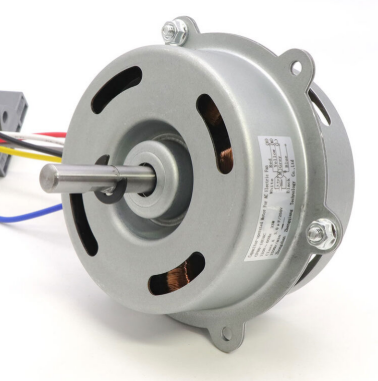
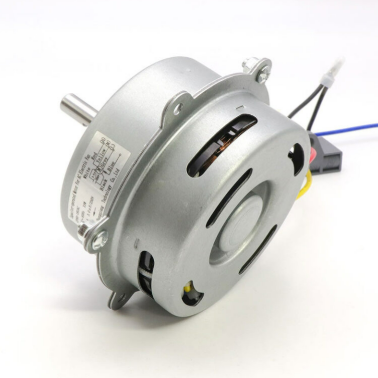
What Is a Capacitor-Run Motor?
A Capacitor-Run Motor is a type of single-phase AC motor that uses a capacitor to improve the phase relationship between the motor windings during operation.
In a typical design, the motor includes a main winding and an auxiliary winding. The capacitor is connected with the auxiliary winding to create a phase difference between the currents in the two windings.
This phase difference produces a rotating magnetic field that allows the motor to operate continuously.
Compared with some basic single-phase motor designs, capacitor-run configurations can provide smoother operation and improved operating characteristics, making them suitable for applications where continuous running performance is important.
How Does a Capacitor-Run Motor Work?
Main Winding and Auxiliary Winding
A capacitor-run design generally uses two winding circuits.
The main winding is connected directly to the AC power supply, while the auxiliary winding works through the capacitor.
Because the capacitor changes the phase relationship of the current in the auxiliary winding, the two windings produce magnetic fields with a phase difference.
The interaction between these magnetic fields creates the rotating magnetic field required to drive the rotor.
The Role of the Capacitor
The capacitor is an important part of the electrical system.
Its characteristics influence the motor’s operating performance, including:
- Phase difference
- Starting characteristics
- Running current
- Torque
- Efficiency
- Power factor
- Temperature rise
For this reason, capacitor selection should be considered together with the motor’s winding design rather than treated as an independent component.
Continuous Operation
One of the important characteristics of this motor configuration is its suitability for continuous-duty applications when the motor is properly designed and matched to the load.
For equipment that operates for extended periods, thermal management and electrical stability become particularly important.
Key Advantages of Capacitor-Run Motor Technology
Smooth and Stable Operation
The phase-shifted winding configuration helps create smoother motor operation, which can be beneficial for fans, blowers, and other rotating equipment.
Low Operating Noise
When the electromagnetic structure, rotor balance, bearings, and housing are properly designed, capacitor-run motors can provide relatively quiet operation.
This makes them suitable for equipment installed in residential, commercial, and indoor environments.
Continuous-Duty Capability
For applications that require the motor to operate for long periods, a properly engineered capacitor-run motor can provide stable continuous operation.
The final performance depends on rated load, ambient temperature, ventilation, winding design, and other application conditions.
Simple AC Power Integration
These motors can be designed for AC power systems commonly used in household and commercial equipment.
This can simplify integration into equipment where an AC motor is preferred.
Suitable for Compact Equipment
Small capacitor-run motor designs can provide a practical solution when installation space is limited.
Compact motor structures are especially useful in fans, air circulation equipment, ventilation products, and small appliances.
Capacitor-Run Motor vs. Other AC Motor Types
Different AC motor technologies provide different performance characteristics.
Capacitor-Run Motor vs. Shaded Pole Motor
Shaded pole motors are known for their simple construction and economical production.
Capacitor-run designs, however, can offer different performance characteristics in terms of efficiency, torque, noise, and continuous operation depending on the specific design.
The appropriate technology should therefore be selected according to the equipment requirements rather than simply choosing the lowest-cost motor.
Capacitor-Run Motor vs. Synchronous Motor
Synchronous motors operate at a speed synchronized with the AC supply frequency under their intended operating conditions.
They are useful for applications requiring relatively stable synchronous speed.
Capacitor-run motors are generally considered where continuous rotating operation with practical torque and speed characteristics is more important than strict synchronous operation.
Capacitor-Run Motor vs. BLDC Motor
BLDC motors use electronic commutation and typically require an electronic control system.
They can provide high efficiency, precise speed control, and long operating life.
A capacitor-run AC motor can be a more straightforward solution for equipment designed around AC power and applications where electronic commutation is not necessary.
Important Specifications When Selecting a Capacitor-Run Motor
Selecting the correct motor requires a complete understanding of the equipment.
Rated Voltage
The motor’s rated voltage must match the equipment’s electrical supply.
A mismatch can result in poor performance, overheating, excessive current, or premature failure.
Operating Frequency
AC motors are normally designed for specific supply frequencies.
Common specifications may include 50 Hz or 60 Hz depending on the target market and application.
Rated Power
Motor power should be selected according to the mechanical load.
Choosing an undersized motor may result in overheating and insufficient torque, while excessive motor capacity may increase system cost and energy consumption.
Operating Speed
The required rotational speed should be determined based on the final equipment design.
Fan and blower applications, for example, may require specific speed ranges to achieve the desired airflow.
Torque
Torque requirements depend on the mechanical load and operating conditions.
Starting torque and continuous running torque should both be evaluated where applicable.
Capacitor Specification
The capacitor must be matched to the motor’s electrical design.
Important parameters may include capacitance, rated voltage, temperature characteristics, and reliability.
Applications of Capacitor-Run Motors
Capacitor-run motors can be used in a variety of applications where reliable AC motor operation is required.
Fans and Blowers
Fans are one of the natural applications for small AC capacitor-run motors.
The motor can provide continuous rotation for air circulation, ventilation, and cooling equipment.
Zhengqiang’s current product portfolio includes the CP80-18UAC AC Capacitor-Run Motor, specified as a 120V, 60Hz, 33W continuous-duty and ultra-quiet fan motor.
Air Treatment Equipment
Air purification and air circulation systems require reliable motor operation for extended periods.
A compact AC motor can drive fans or other rotating components while maintaining a relatively simple electrical configuration.
Zhengqiang states that its motor products serve home appliance and medical-health applications, while its broader industrial application portfolio includes consumer electronics, healthcare, communication equipment, new energy, and other sectors.
Ventilation Systems
Ventilation equipment often operates continuously, making reliability, thermal performance, and noise important considerations.
A properly selected motor can provide stable fan operation while meeting the required airflow and pressure conditions.
Household Appliances
AC motors are widely used in household equipment where reliable rotating motion is required.
Depending on the appliance design, motor selection may consider:
- Noise
- Power consumption
- Installation dimensions
- Operating life
- Speed
- Thermal performance
Small Pumps and Mechanical Equipment
Certain small pump and mechanical applications can use capacitor-based AC motor configurations when their speed, torque, and load characteristics match the motor’s design.
The motor should always be evaluated under the actual operating load rather than based only on unloaded performance.
Factors That Affect Motor Performance
The performance of a capacitor-run motor depends on multiple design parameters.
Winding Design
The number of turns, wire size, winding arrangement, and electrical characteristics influence motor performance.
Rotor Design
Rotor structure affects torque, efficiency, vibration, and operating stability.
Bearing Selection
Bearing quality influences friction, noise, mechanical life, and long-term reliability.
Thermal Management
Heat generated by electrical losses must be effectively dissipated.
This becomes particularly important for motors operating continuously or in compact equipment with limited airflow.
Manufacturing Precision
Small variations in winding, rotor balance, shaft dimensions, and assembly alignment can affect motor performance.
Precision manufacturing therefore plays an important role in achieving consistent product quality.
Custom Capacitor-Run Motor Solutions for OEM Projects
Standard motors may not always fit specialized equipment.
OEM customers may require customization of:
- Voltage
- Frequency
- Power
- Speed
- Torque
- Shaft dimensions
- Mounting structure
- Motor housing
- Lead wires
- Connector configuration
- Capacitor specifications
- Noise performance
A customized solution allows the motor to be developed around the equipment rather than forcing the equipment to accommodate an unsuitable standard motor.
Zhengqiang Technology provides customized motor solutions and OEM/ODM manufacturing support. Its manufacturing capabilities include motor production together with precision hardware, stamping, tooling, and other component manufacturing.
Quality Control in Capacitor-Run Motor Manufacturing
Reliable motor production requires systematic quality control throughout the manufacturing process.
Incoming Material Inspection
Raw materials and components should be checked before entering production.
This can include dimensional inspection, material verification, and appearance inspection.
Winding Inspection
Winding resistance and electrical characteristics should be tested to ensure that the motor meets the required specifications.
Rotor Inspection
Rotor balance and mechanical dimensions can affect vibration and noise.
Accurate inspection helps maintain stable operating performance.
Electrical Performance Testing
Finished motors can be tested for:
- Voltage
- Current
- Speed
- Power
- Temperature rise
- Insulation
- Load performance
Noise and Vibration Testing
Noise and vibration measurements are particularly important for fans, air treatment systems, medical equipment, and other products used in noise-sensitive environments.
Zhengqiang reports full inspection combined with AI quality control and states that its manufacturing system follows international quality standards including ISO 9001 and IATF 16949.
Why Choose Zhengqiang Technology for Motor Manufacturing?
Zhengqiang Technology combines motor manufacturing with precision component production and engineering support.
The company reports an annual production capacity of 24 million motors and operates multiple manufacturing bases. Its motor portfolio includes DC motors, shaded pole motors, series motors, synchronous motors, and capacitor-run AC motor products.
Its capabilities include:
- AC motor manufacturing
- Capacitor-run motor development
- DC motor manufacturing
- BLDC motor solutions
- OEM and ODM services
- Precision winding
- Motor component manufacturing
- Metal stamping
- Precision hardware
- Tooling and mold development
- Assembly
- Quality inspection
This integrated manufacturing structure can help OEM customers coordinate motor development and precision component production through a single manufacturing partner.
Learn more about Zhengqiang’s motor solutions through its official motor product category.
Frequently Asked Questions About Capacitor-Run Motors
What is a capacitor-run motor?
A capacitor-run motor is an AC motor that uses a capacitor with an auxiliary winding to create the phase difference required for continuous motor operation.
What is the main advantage of a capacitor-run motor?
Its main advantages can include stable continuous operation, practical AC power integration, relatively quiet operation, and suitability for fans, ventilation equipment, appliances, and other rotating systems.
Is a capacitor-run motor suitable for continuous operation?
Yes, when the motor is specifically designed for continuous duty and correctly matched to its load, voltage, frequency, cooling conditions, and operating environment.
What applications use capacitor-run motors?
Typical applications include fans, blowers, air circulation equipment, ventilation systems, household appliances, air treatment equipment, and selected small mechanical or pump systems.
How do I select the correct capacitor-run motor?
Important parameters include voltage, frequency, power, speed, torque, duty cycle, installation dimensions, environmental conditions, and capacitor specifications.
Can capacitor-run motors be customized?
Yes. OEM manufacturers can customize electrical and mechanical specifications according to the equipment’s requirements, including voltage, power, speed, shaft dimensions, mounting structure, wiring, and other parameters.
Conclusion
A Capacitor-Run Motor can provide a practical solution for AC-powered equipment requiring stable and continuous rotation. Its phase-shifted winding configuration, compact construction, and suitability for applications such as fans, blowers, ventilation systems, and household equipment make it a useful option for many OEM product designs.
However, motor selection should always be based on the complete application. Voltage, frequency, speed, torque, power, capacitor characteristics, thermal conditions, noise requirements, and installation dimensions all need to be considered before finalizing the motor specification.
Zhengqiang Technology provides customized motor manufacturing and OEM/ODM support, with a portfolio covering capacitor-run AC motors as well as DC, BLDC, shaded pole, series, and synchronous motor technologies. Its integrated capabilities in motor manufacturing, precision hardware, stamping, tooling, and quality control provide a broader manufacturing platform for customers developing customized equipment.