- Information Classification
Ceramic Disc Capacitors Manufacturing & Application Guide
In modern electronic systems, stability, miniaturization, and reliability are essential requirements for component selection. Among the most widely used passive electronic components, ceramic disc capacitors play a critical role in signal filtering, voltage stabilization, noise suppression, and circuit protection across consumer electronics, industrial equipment, automotive systems, and power applications.
Due to their compact structure, cost efficiency, and strong electrical characteristics, ceramic disc capacitors remain one of the most practical capacitor technologies for high-volume electronic manufacturing. As electronic devices continue to evolve toward higher frequencies, improved efficiency, and increased environmental reliability, the engineering standards for capacitor performance have become increasingly demanding.
Zhengqiang Technology Group is a high-tech enterprise specializing in electronic components, ceramic materials, precision manufacturing, and intelligent production systems. With advanced manufacturing capabilities and strict quality management systems, the company provides reliable capacitor solutions for global OEM and ODM customers. Learn more at https://www.zqatech.com/
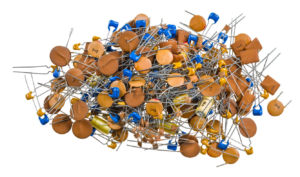
What Are Ceramic Disc Capacitors?
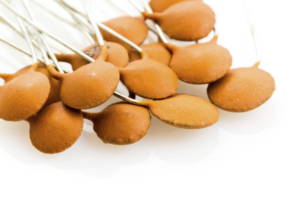
Ceramic disc capacitors are fixed-value capacitors that use ceramic materials as the dielectric medium. Their structure typically consists of a ceramic disc coated with conductive electrodes and encapsulated with protective insulation materials.
These capacitors are commonly used in electronic circuits requiring:
- Signal coupling and decoupling
- EMI and noise suppression
- Frequency filtering
- Voltage bypassing
- Pulse absorption
Because of their stable electrical properties and low production cost, ceramic disc capacitors are widely integrated into both consumer and industrial electronics.
Structural Design and Working Principle
Basic Structure
A standard ceramic disc capacitors design includes:
- Ceramic dielectric layer
- Silver or metal electrode coating
- Lead wires
- Epoxy resin protective coating
The ceramic dielectric determines the electrical characteristics of the capacitor, including capacitance stability, temperature coefficient, and voltage capability.
Operating Principle
When voltage is applied across the electrodes, electric charge accumulates on both sides of the ceramic dielectric, creating an electric field and storing energy.
The capacitance value depends on:
- Dielectric constant of the ceramic material
- Electrode area
- Thickness of the dielectric layer
Ceramic Materials and Dielectric Classification
The performance of ceramic disc capacitors is heavily influenced by ceramic composition.
Class 1 Ceramic Dielectrics
Examples:
- NP0 / C0G
Characteristics:
- Excellent temperature stability
- Low dielectric loss
- High precision
Applications:
- RF circuits
- Oscillators
- Precision timing circuits
Class 2 Ceramic Dielectrics
Examples:
- X7R
- Y5V
- Z5U
Characteristics:
- Higher capacitance density
- Lower cost
- Wider capacitance range
Applications:
- Power supplies
- General filtering
- Consumer electronics
Electrical Characteristics of Ceramic Disc Capacitors
Capacitance Range
Typical capacitance values range from:
- Picofarads (pF)
- Nanofarads (nF)
- Microfarads (μF) for some designs
Voltage Ratings
Common voltage ratings include:
- 50V
- 100V
- 250V
- 500V
- 1kV and above for high-voltage applications
Temperature Stability
Temperature performance depends on dielectric type.
Class 1 capacitors provide superior stability, while Class 2 capacitors prioritize capacitance density.
Dissipation Factor and ESR
Low ESR (Equivalent Series Resistance) improves:
- Efficiency
- Heat control
- High-frequency performance
Frequency Response
Ceramic disc capacitors perform well in high-frequency applications due to their low inductance characteristics.
Manufacturing Processes
Ceramic Powder Preparation
Raw ceramic materials are precisely mixed and processed to ensure stable dielectric properties.
Disc Forming
The ceramic material is pressed into disc shapes under controlled pressure conditions.
Electrode Application
Metal electrodes are applied to both sides of the ceramic disc.
Sintering Process
High-temperature sintering improves:
- Mechanical strength
- Dielectric density
- Electrical stability
Lead Attachment and Coating
Lead wires are attached, followed by protective epoxy coating for insulation and environmental protection.
Final Testing and Inspection
Each batch of ceramic disc capacitors undergoes:
- Capacitance testing
- Voltage testing
- Insulation resistance testing
- Temperature performance verification
Zhengqiang Technology Group applies advanced quality control systems to ensure stable and reliable capacitor performance. Learn more at https://www.zqatech.com/
Quality Standards and Reliability Testing
International Standards
Manufacturers typically comply with:
- IEC standards
- RoHS compliance
- REACH environmental standards
- ISO 9001 quality management systems
Reliability Tests
Common tests include:
- Thermal shock testing
- Humidity resistance
- High-voltage endurance
- Solderability testing
- Load life testing
Failure Prevention
Proper engineering design minimizes risks such as:
- Dielectric breakdown
- Cracking
- Capacitance drift
- Moisture penetration
Applications Across Industries
Consumer Electronics
Used in:
- TVs
- Audio systems
- Home appliances
- Chargers
Automotive Electronics
Applied in:
- ECU systems
- Sensors
- Ignition circuits
- EMI suppression systems
Industrial Equipment
Used in:
- Motor control systems
- Power supplies
- Industrial automation
Communication Equipment
Integrated into:
- RF circuits
- Signal filtering modules
- Networking devices
Advantages of Ceramic Disc Capacitors
Cost Efficiency
Mass production enables low manufacturing cost.
Compact Design
Small structure supports compact electronic designs.
High-Frequency Capability
Low inductance improves RF performance.
Reliable Electrical Stability
Suitable for long-term operation under various environments.
Limitations and Engineering Considerations
Although ceramic disc capacitors offer many advantages, engineers must consider:
- Capacitance variation under voltage
- Temperature sensitivity for Class 2 materials
- Mechanical cracking risks
Proper component selection is essential for stable circuit performance.
Industry Trends and Future Development
Miniaturization
Electronic devices continue moving toward smaller form factors.
Higher Voltage Capability
Demand for high-voltage ceramic capacitors is increasing in industrial and EV applications.
Improved Dielectric Materials
Advanced ceramic materials improve performance and reliability.
Smart Manufacturing
Automation improves consistency and production efficiency.
Why Choose Zhengqiang Technology Group?
Zhengqiang Technology Group is a trusted supplier of ceramic disc capacitors, offering:
- Advanced ceramic material technology
- Precision manufacturing systems
- Strict quality management
- OEM and ODM support
- Global supply chain capability
With strong technical expertise and stable manufacturing capacity, the company provides reliable capacitor solutions for global customers. Visit https://www.zqatech.com/ to learn more.
Conclusion
Ceramic disc capacitors remain one of the most widely used and reliable passive components in modern electronics. Through advanced ceramic materials, controlled manufacturing processes, and strict quality systems, these capacitors provide stable performance across a wide range of industrial and consumer applications.
As demand for miniaturization, high-frequency operation, and long-term reliability continues to grow, high-quality ceramic disc capacitors will remain essential to future electronic system development.
FAQ
What are ceramic disc capacitors used for?
They are used for filtering, coupling, decoupling, and noise suppression in electronic circuits.
What materials are used?
Ceramic dielectric materials such as NP0, X7R, and Y5V.
Are ceramic disc capacitors polarized?
No, most ceramic disc capacitors are non-polarized.
What affects capacitor reliability?
Material quality, manufacturing process, and operating environment.
Where can I find a reliable supplier?
Visit https://www.zqatech.com/
📩 Contact Us
Looking for a reliable supplier of ceramic disc capacitors with stable quality and global delivery capability?
Zhengqiang Technology Group is ready to support your project.
👉 Visit https://www.zqatech.com/ today and get your quote!