- Information Classification
Ceramic Shaft for Coffee Maker & Water Purifier | ODM
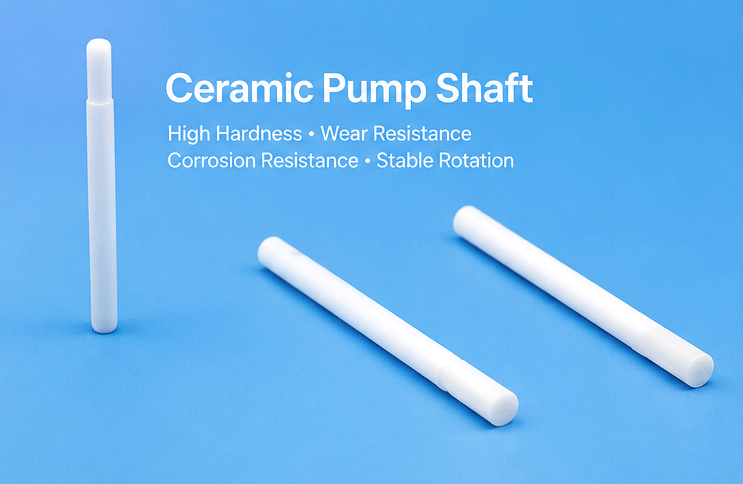
Ceramic Shaft for Coffee Maker and Water Purifier
A ceramic shaft is an important component in small water pumps used in coffee makers, water purifiers and other household appliances. Compared with conventional metal shafts, ceramic shafts can offer high hardness, excellent wear resistance, corrosion resistance and stable performance in water-contact environments.
For small pump manufacturers and appliance manufacturers, selecting the right ceramic shaft for water pump applications can help improve component durability and overall pump reliability.
This article explains the advantages, materials, applications and customization considerations of ceramic shafts for coffee makers and water purifiers.
What Is a Ceramic Shaft?
A ceramic shaft is a precision-machined ceramic component designed to transmit rotational movement inside a mechanical or pump assembly.
In small water pumps, the shaft works with rotating components to support stable operation. Depending on the pump design, the shaft may be exposed to water, cleaning fluids or other operating environments for long periods.
Ceramic materials are particularly suitable for these applications because they combine high hardness, wear resistance and chemical stability.
For manufacturers of coffee makers and water purifiers, a ceramic shaft can be an alternative to conventional metal shaft materials when long-term wear and corrosion resistance are important.
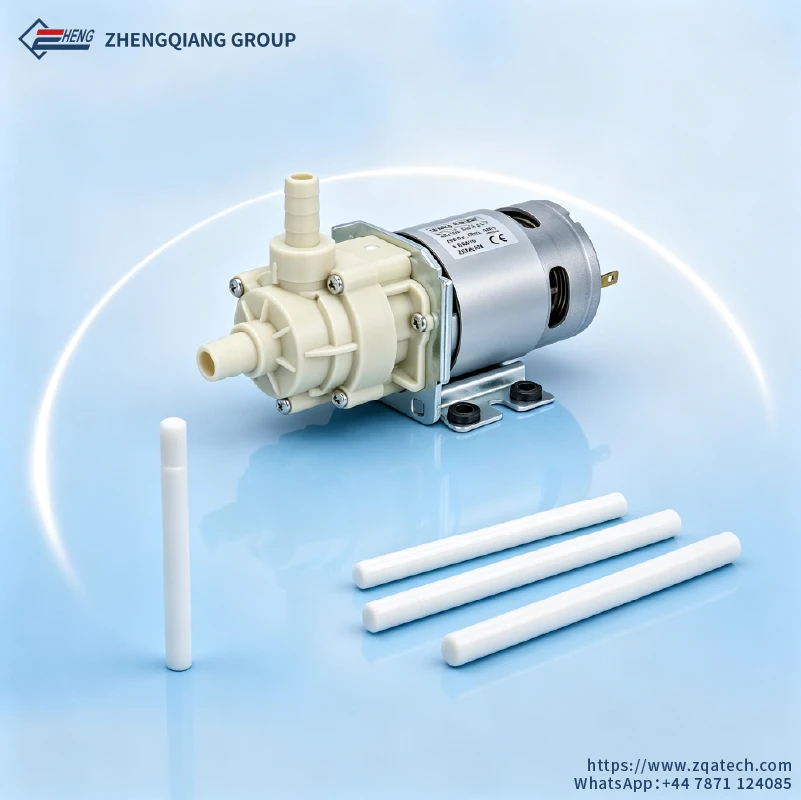
Why Use a Ceramic Shaft in a Small Water Pump?
Small water pumps in coffee makers and water purifiers may operate repeatedly during daily use. The shaft must therefore maintain stable dimensions and surface performance during continuous or repeated rotation.
High Hardness and Wear Resistance
Ceramic materials have high hardness and excellent resistance to surface wear.
For a small water pump, the shaft may experience repeated rotation and contact with other components. High wear resistance helps maintain the shaft surface during long-term operation.
This is one reason a ceramic shaft for water pump applications can be considered when durability is an important design requirement.
Excellent Corrosion Resistance
Water-contact components can be exposed to moisture and different water conditions for extended periods.
Unlike many conventional metal materials, advanced ceramics do not rust in the same way as steel. Alumina and zirconia ceramics also provide good chemical resistance for many appliance applications.
This makes ceramic shafts suitable for applications where corrosion resistance is required.
Stable Performance in Water-Contact Applications
Coffee makers and water purifiers frequently use small pumps to move water through the system.
The shaft material needs to maintain its dimensional stability and mechanical properties during repeated operation.
A properly selected ceramic material can provide stable performance in these environments.
Long Service Life
Wear and corrosion can gradually affect mechanical components.
Because ceramic materials provide high hardness and good corrosion resistance, a ceramic shaft can help reduce wear-related problems and contribute to longer component service life when properly designed and used.
Ceramic Shaft for Coffee Maker Applications
Coffee makers use small pumps to move water through different parts of the machine.
During operation, the pump may repeatedly start and stop as the machine heats and delivers water. The shaft therefore needs to withstand repeated rotation while maintaining stable performance.
A ceramic shaft for coffee maker applications can be designed according to the requirements of the pump and appliance manufacturer.
Typical considerations include:
- Shaft diameter
- Overall shaft length
- Step or shoulder dimensions
- Surface finish
- Dimensional tolerance
- Ceramic material
- Pump assembly requirements
For coffee maker manufacturers, the ceramic shaft can be customized according to drawings, samples or technical specifications.
Ceramic Shaft for Water Purifier Applications
Water purifiers and water filtration systems may also use compact pumps for water circulation and delivery.
In these applications, the shaft may operate in a water-contact environment for extended periods. Material selection is therefore important for maintaining reliable pump operation.
A ceramic shaft for water purifier applications can provide:
- High hardness
- Good wear resistance
- Corrosion resistance
- Stable dimensional performance
- Long-term reliability
The actual ceramic material and shaft design should be selected according to the pump structure, operating conditions and required performance.
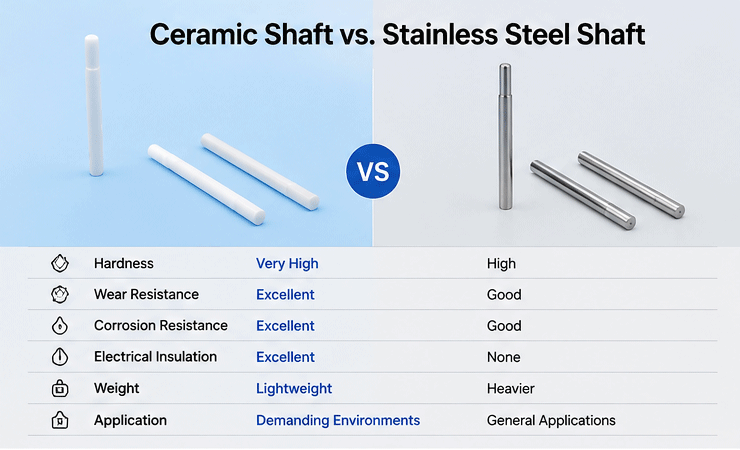
Ceramic Shaft vs. Stainless Steel Shaft
Both ceramic and stainless steel can be used for shaft components, but their properties are different.
| Property | Ceramic Shaft | Stainless Steel Shaft |
|---|---|---|
| Hardness | High | Moderate to high, depending on grade |
| Wear Resistance | Excellent | Good |
| Corrosion Resistance | Excellent | Good to excellent, depending on grade |
| Rust Resistance | Excellent | Depends on material grade and environment |
| Electrical Insulation | Excellent | Conductive |
| Weight | Lightweight | Heavier |
| Water-Contact Applications | Suitable | Suitable depending on grade |
| Customization | Available | Available |
The best material depends on the pump design, operating environment, required tolerance and target service life.
For small pumps used in coffee makers and water purifiers, ceramic can be an attractive option when high hardness, wear resistance and corrosion resistance are important.
Ceramic Materials for Small Water Pump Shafts
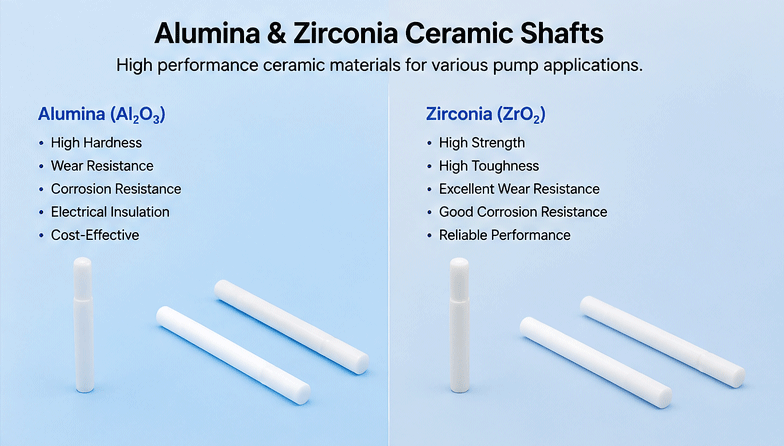
Different ceramic materials can be selected according to the application.
Alumina Ceramic
Alumina ceramic is widely used for precision ceramic components.
Its main advantages include:
- High hardness
- Good wear resistance
- Good corrosion resistance
- Excellent electrical insulation
- Good dimensional stability
- Suitable for many water-contact applications
Alumina is a practical material choice for many small ceramic shaft applications.
Zirconia Ceramic
Zirconia ceramic provides higher toughness and strength than many conventional technical ceramics.
It can be considered when the shaft design requires a combination of hardness, strength and toughness.
For customized ceramic shafts, material selection should be based on the actual pump structure and operating conditions.
How to Choose a Ceramic Shaft for a Water Pump
Choosing the right ceramic shaft requires more than simply selecting a ceramic material.
1. Shaft Dimensions
The shaft diameter, length and step dimensions need to match the pump design accurately.
2. Dimensional Tolerance
Precision is important for rotating components. The required tolerance should be defined according to the pump assembly and mating components.
3. Surface Finish
A suitable surface finish can help reduce friction and wear between mating components.
4. Ceramic Material
Alumina and zirconia are two common options for customized ceramic components. The appropriate material depends on the required mechanical and environmental performance.
5. Operating Environment
Consider the temperature, water conditions, rotation speed and operating cycle of the pump.
6. Pump Assembly
The shaft should be evaluated together with the other pump components rather than as an isolated part.
Custom Ceramic Shaft Manufacturing for ODM Applications
Every small water pump can have different shaft dimensions and assembly requirements. Standard shafts may therefore not always meet the requirements of a specific pump design.
For this reason, custom ceramic shaft manufacturing can be useful for coffee maker, water purifier and small water pump manufacturers.
An ODM ceramic shaft supplier can work from:
- Customer drawings
- 2D or 3D CAD files
- Existing samples
- Shaft dimensions
- Material requirements
- Dimensional tolerances
- Surface finish requirements
- Application conditions
The manufacturing process can then be adjusted according to the customer’s component requirements.
At Zhengqiang Technology, we focus on advanced ceramic components and provide ODM solutions for customized ceramic parts. Our ceramic shaft products can be developed according to customer drawings, samples and application requirements.
Applications of Ceramic Shafts
Ceramic shafts can be used in various compact mechanical and fluid-handling applications.
Common applications include:
- Coffee makers
- Water purifiers
- Water dispensers
- Small water pumps
- Household appliances
- Compact fluid circulation systems
For manufacturers developing new equipment, the ceramic shaft can be customized according to the mechanical structure and operating requirements of the final product.
Why Choose Ceramic for Small Pump Components?
The performance of a small pump depends on many components working together.
Although the shaft is a relatively small component, its surface hardness, dimensional accuracy, wear resistance and corrosion resistance can influence the long-term performance of the pump.
For applications such as coffee makers and water purifiers, ceramic materials can provide a combination of properties that makes them suitable for demanding small-pump environments.
The right ceramic material, dimensions, tolerance and surface finish should always be selected according to the actual application.
Conclusion
A ceramic shaft can be an effective solution for small water pumps used in coffee makers, water purifiers and other household appliances.
High hardness, wear resistance and corrosion resistance make ceramic materials suitable for applications where the shaft needs to operate reliably in water-contact environments.
Alumina and zirconia are two options for customized ceramic shafts, while the final material and dimensions should be selected according to the pump design and operating conditions.
For manufacturers looking for a ceramic shaft for water pump, ceramic shaft for coffee maker, or ceramic shaft for water purifier, custom ODM manufacturing can provide greater flexibility in dimensions, materials and tolerances.
Contact Zhengqiang Technology to discuss your ceramic shaft requirements and develop a customized ODM ceramic component for your application.