- Information Classification
Ceramic Tube: Types, Materials, Applications & Custom Solutions - Guangdong Zhengqiang Technology Group
Ceramic Tube: Types, Materials, Applications & Custom Solutions
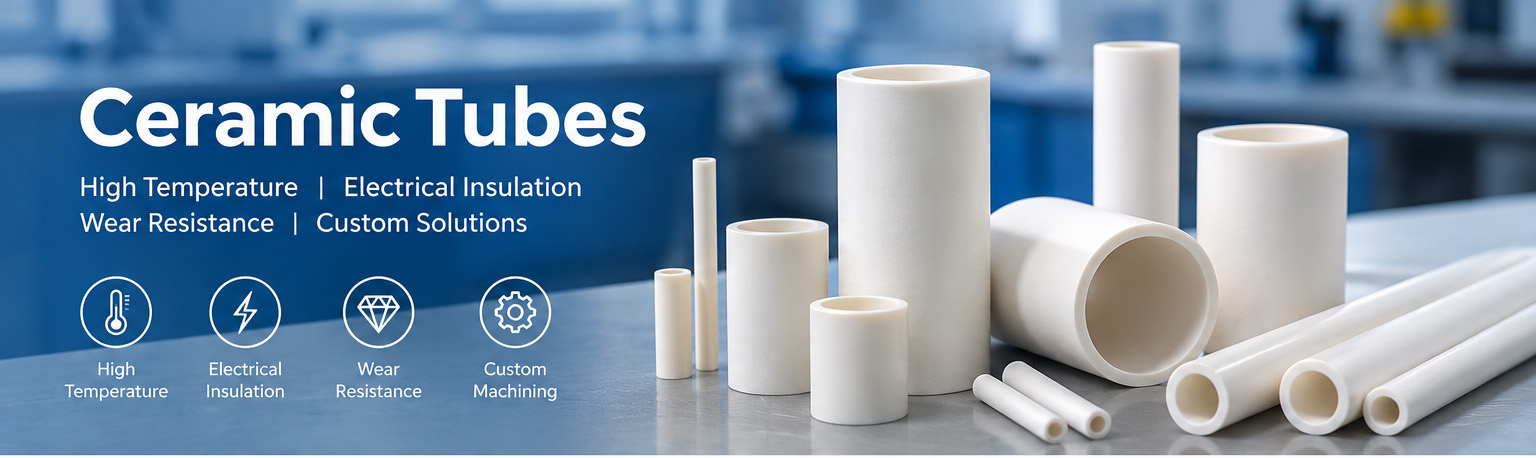
A ceramic tube is a technical ceramic component with a hollow cylindrical or multi-bore structure, widely used in applications where electrical insulation, high-temperature resistance, wear resistance or dimensional stability are required.
Compared with conventional plastic or metal tubing, ceramic tubing can offer a unique combination of thermal stability, electrical insulation and mechanical durability. This makes ceramic tubes suitable for electrical equipment, heating systems, sensors, industrial machinery, connector assemblies and other demanding environments.
Depending on the application, ceramic tubes can be manufactured from materials such as alumina, zirconia, mullite or steatite, with customized dimensions, holes, grooves, wall thicknesses and tolerance requirements.
What Is a Ceramic Tube?
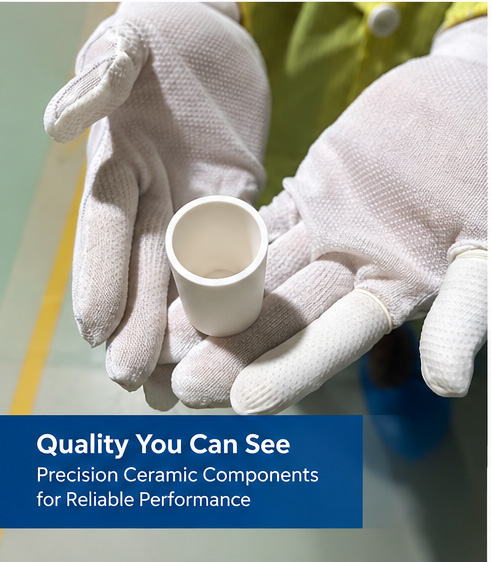
A ceramic tube is a tubular component made from engineered ceramic materials. Unlike ordinary glass or polymer tubes, technical ceramic tubes are designed for industrial environments where temperature, electrical stress, mechanical wear or chemical exposure may be significant.
Ceramic tubes can be supplied in simple straight shapes or customized into more complex designs with multiple holes, stepped structures, slots, grooves and precision-machined surfaces.
Typical functions include:
- Electrical insulation
- Thermal protection
- Mechanical support
- Wear-resistant guidance
- Sensor protection
- Heating-element support
- Precision spacing
- Protective sleeving
The performance of a ceramic tube depends not only on the ceramic material itself, but also on the tube geometry, manufacturing process, tolerance and final operating environment.
Common Types of Ceramic Tubes
There is no single standard design for all ceramic tubes. Different structures are used depending on the electrical, thermal and mechanical requirements of the final application.
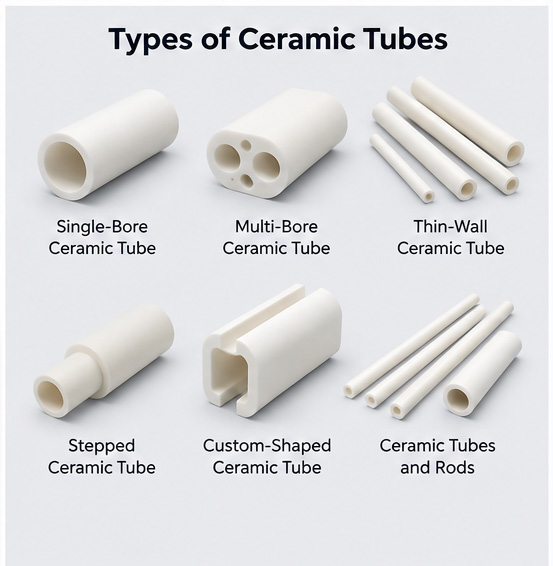
Single-Bore Ceramic Tube
A single-bore ceramic tube contains one central hole running through the component. It is commonly used as an insulating sleeve, guide tube, protective tube or structural support.
This is one of the most common ceramic tube designs because it is relatively simple and suitable for many electrical and industrial applications.
Multi-Bore Ceramic Tube
Multi-bore ceramic tubes contain two or more parallel holes. These designs can help separate wires, conductive elements, sensor leads or heating components within a compact ceramic body.
The number, position and diameter of the holes can be customized depending on the assembly requirements.
Precision Ceramic Tube
A precision ceramic tube is manufactured with tighter dimensional requirements on features such as inner diameter, outer diameter, straightness, concentricity or end-face geometry.
Precision grinding or machining may be required after sintering when the application demands greater dimensional accuracy.
Custom-Shaped Ceramic Tube
Not every ceramic tube needs to be perfectly cylindrical.
Depending on the project, a custom ceramic tube may include:
- Stepped outer diameters
- Different inner diameters
- Side holes
- Slots
- Grooves
- Flanges
- Chamfers
- Non-standard cross sections
These customized structures are often used in OEM, electrical and precision engineering applications.
Common Ceramic Tube Materials
The material used to manufacture a ceramic tube has a major influence on electrical insulation, mechanical strength, wear resistance, toughness and temperature performance.
| Material | Key Characteristics | Typical Applications |
|---|---|---|
| Alumina Ceramic | Excellent electrical insulation, hardness, heat resistance and dimensional stability | Electrical insulation, sensors, heating equipment and industrial components |
| Zirconia Ceramic | High toughness, wear resistance and mechanical strength | Precision mechanical components and wear-resistant applications |
| Mullite | Good high-temperature stability and thermal performance | Furnace, heating and thermal applications |
| Steatite | Good electrical insulation and economical processing | Electrical appliances and insulating components |
Alumina Ceramic Tube
An alumina ceramic tube is one of the most widely used types of technical ceramic tubing.
Alumina offers a strong balance between electrical insulation, hardness, thermal stability, dimensional consistency and production flexibility.
Depending on the required grade and application, alumina ceramic tubes can provide:
- High electrical resistivity
- Good dielectric performance
- High hardness
- Wear resistance
- Heat resistance
- Good dimensional stability
- Resistance to many corrosive environments
These characteristics make alumina suitable for electrical insulating sleeves, heating components, sensor protection, industrial machinery and customized structural ceramic parts.
Zirconia Ceramic Tube
A zirconia ceramic tube is typically selected when toughness and wear resistance are especially important.
Compared with alumina, zirconia generally offers higher fracture toughness and is often considered for precision mechanical applications involving impact, friction or repeated contact.
However, the correct material should always be selected based on the complete engineering requirements rather than choosing one ceramic solely because of a single property.
Alumina Ceramic Tube vs. Zirconia Ceramic Tube
| Property | Alumina Ceramic Tube | Zirconia Ceramic Tube |
|---|---|---|
| Electrical Insulation | Excellent | Good |
| Hardness | High | High |
| Fracture Toughness | Moderate | Higher |
| Wear Resistance | Very good | Excellent |
| Typical Focus | Electrical insulation and high-temperature industrial use | Precision mechanical and wear-resistant applications |
Why Are Advanced Ceramic Tubes Used?
Advanced ceramic tubes are used because they can provide several functional properties within a single component.
Excellent Electrical Insulation
Technical ceramics such as alumina can provide excellent electrical insulation.
For electrical assemblies, a ceramic tube can physically separate conductive parts and help maintain the required insulation distance.
This makes ceramic tubing suitable for electrical equipment, heating systems, sensors and connector assemblies.
High-Temperature Resistance
A high temperature ceramic tube can maintain functionality in environments where many conventional plastics may soften, deform or age more rapidly.
For this reason, ceramic tubes are frequently used near heating elements, furnaces, sensors and high-temperature electrical components.
Wear Resistance
Ceramic materials can provide strong resistance to abrasion and mechanical wear.
In suitable applications, ceramic tubes can function as guide sleeves, wear-resistant liners or protective components exposed to repeated movement.
Dimensional Stability
Stable geometry is important in precision assemblies.
Technical ceramic tubes can help maintain spacing, alignment and structural positioning in applications where thermal cycles or long-term use may affect conventional materials.
Corrosion Resistance
Many technical ceramics offer good resistance to chemical attack and environmental degradation.
This can make ceramic tubes useful in industrial environments where moisture, chemicals or corrosive media may be present.
Industrial Ceramic Tube Applications
An industrial ceramic tube can be used in many different sectors depending on the selected ceramic material and design.
Electrical Insulation
Ceramic tubes can isolate conductive rods, wires, terminals and other electrical components.
The ceramic structure provides electrical separation while also acting as a mechanical support.
Heating Equipment
Heating elements often require electrically insulating materials that can tolerate elevated temperatures.
Ceramic tubes can be used as insulating supports, protective sleeves and structural components within heating equipment.
Sensors and Thermocouple Protection
Ceramic tubing can be used to protect sensing elements from high temperatures, environmental exposure and electrical interference.
Depending on the application, ceramic tubes can also help position or separate sensor wires and internal conductors.
Industrial Machinery
In mechanical systems, ceramic tubes may be used as wear-resistant guides, insulating sleeves, spacers or precision structural components.
Electrical Connectors and Insulator Assemblies
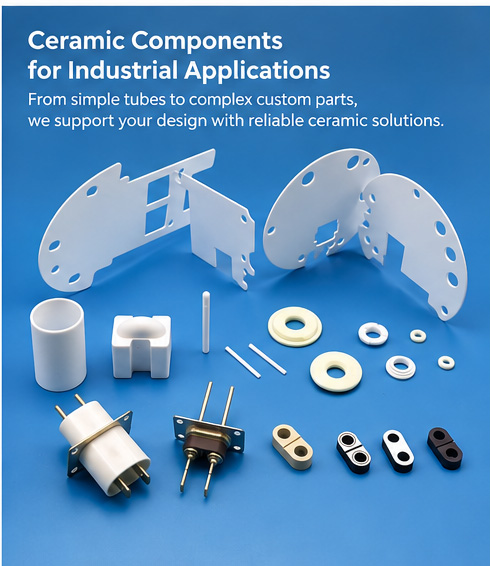
Custom ceramic tubes can also be integrated into connector assemblies where electrical insulation and thermal stability are important.
Depending on the connector design, the ceramic component may include special holes, grooves, stepped structures or precision mating surfaces.
Home Appliances
Technical ceramic tubes may also be used in appliances where electrical insulation, thermal stability or precision positioning is required.
The exact ceramic design depends on the operating conditions and assembly structure of the appliance.
Ceramic Tube vs. Metal Tube vs. Plastic Tube
| Property | Ceramic Tube | Metal Tube | Plastic Tube |
|---|---|---|---|
| Electrical Insulation | Excellent for suitable ceramic grades | Usually conductive | Generally good |
| High-Temperature Performance | Excellent | Depends on alloy | Generally more limited |
| Wear Resistance | High | Material dependent | Usually lower |
| Corrosion Resistance | Good in many environments | Depends on alloy | Good in many environments |
| Mechanical Toughness | Material dependent and generally more brittle | Generally high | Material dependent |
No material is universally better for every application. The correct choice depends on operating temperature, insulation requirements, load conditions, environment and cost.
How to Choose the Right Ceramic Tube
Choosing a ceramic tube requires more than selecting an outside diameter.
For engineering projects, several design factors should be evaluated before production.
1. Ceramic Material
Determine whether the application requires alumina, zirconia or another technical ceramic.
For electrical insulation and general industrial applications, alumina is often a practical starting point.
2. Outer Diameter and Inner Diameter
The outer diameter and inner diameter affect wall thickness, mechanical strength, insulation distance and assembly fit.
Critical dimensions should be clearly identified on the engineering drawing.
3. Wall Thickness
Wall thickness should balance space limitations, mechanical strength and electrical or thermal requirements.
Very thin ceramic walls may increase manufacturing difficulty, especially when tight tolerances are required.
4. Tube Length
Length can influence straightness, forming method, sintering behavior and handling during production.
Long ceramic tubes may require different manufacturing considerations than short precision sleeves.
5. Dimensional Tolerance
Not every ceramic surface requires the same tolerance.
Defining critical dimensions separately from non-critical dimensions can help improve manufacturing efficiency and control production cost.
6. Surface Finish
Some applications require precision-ground surfaces, while others can use as-fired ceramic surfaces.
The required surface finish should be determined according to the mating condition and functional requirements.
7. Operating Environment
Temperature, electrical voltage, chemicals, vibration, friction and repeated thermal cycling can all affect ceramic material selection and component design.
Standard Ceramic Tubes vs. Custom Ceramic Tubes
Standard ceramic tubing can be suitable for laboratory equipment, general insulation and common thermal applications.
However, many industrial and OEM projects require geometries that cannot be satisfied by standard catalog products.
A custom ceramic tube may require:
- Custom inner and outer diameters
- Special wall thickness
- Stepped diameters
- Multiple bores
- Side holes
- Grooves or slots
- Precision-ground surfaces
- Custom lengths
- Special ceramic grades
- Application-specific tolerance requirements
For this reason, custom ceramic tube projects should normally begin with an engineering drawing or clearly defined application requirements.
How Are Ceramic Tubes Manufactured?
The manufacturing process depends on the ceramic material, tube geometry, production quantity and tolerance requirements.
Typical production stages may include:
- Material preparation
- Forming
- Drying
- High-temperature sintering
- Precision grinding or machining when required
- Dimensional inspection
- Final quality inspection
Different forming methods may be selected depending on the component design and production volume.
For precision ceramic tubes, post-sintering machining or grinding may be necessary to achieve critical dimensions and surface requirements.
Custom Alumina and Zirconia Ceramic Tube Solutions
For B2B and OEM projects, selecting the correct ceramic tube is closely connected to the final assembly and operating environment.
We support customized alumina and zirconia ceramic components based on customer drawings, samples and application requirements.
Customization can include:
- Material selection
- Prototype development
- Custom dimensions
- Precision holes
- Grooves and slots
- Stepped structures
- Surface grinding
- Dimensional inspection
- Small-batch and mass-production support
For complex ceramic components, evaluating manufacturability during the design stage can help reduce unnecessary processing difficulty and improve production consistency.
What Information Should You Provide for a Ceramic Tube RFQ?
Providing complete engineering information helps improve quotation accuracy and shorten evaluation time.
For a custom ceramic tube quotation, it is helpful to provide:
- 2D drawing or 3D model
- Required ceramic material
- Ceramic purity if specified
- Outer diameter
- Inner diameter
- Tube length
- Wall thickness
- Dimensional tolerances
- Surface finish
- Operating temperature
- Electrical requirements
- Mechanical operating conditions
- Application environment
- Prototype quantity
- Expected annual quantity
If the ceramic material has not yet been finalized, providing the application conditions can help support the material evaluation process.
Frequently Asked Questions About Ceramic Tubes
What is a ceramic tube used for?
Ceramic tubes are used for electrical insulation, heating-element support, sensor protection, industrial machinery, wear-resistant sleeves, precision spacing and other applications requiring thermal stability or electrical isolation.
What is ceramic tubing made from?
Ceramic tubing can be manufactured from alumina, zirconia, mullite, steatite and other technical ceramic materials. The appropriate material depends on the operating environment and performance requirements.
Is alumina ceramic good for electrical insulation?
Yes. Alumina is widely used in electrical insulation applications because of its high electrical resistivity and good dielectric properties.
Can ceramic tubes withstand high temperatures?
Technical ceramic tubes can generally tolerate significantly higher temperatures than conventional polymer tubes. Actual usable temperature depends on ceramic material, design, loading conditions and surrounding environment.
What is the difference between alumina and zirconia ceramic tubes?
Alumina is commonly selected for electrical insulation, hardness and thermal stability, while zirconia is often selected when greater toughness and mechanical wear resistance are required.
Can ceramic tubes be customized?
Yes. Ceramic tubes can be customized in material, diameter, length, wall thickness, hole structure, grooves, slots, surface finish and dimensional tolerances according to the application.
Can ceramic tubes have multiple holes?
Yes. Multi-bore ceramic tubes can be manufactured with two or more holes for wire separation, heating elements, sensing components or specialized industrial assemblies.
Conclusion
A ceramic tube is not simply a hollow ceramic part. Its performance depends on material selection, geometry, wall thickness, tolerance, surface finish and manufacturing process.
For electrical insulation, high-temperature environments, wear-resistant systems and precision industrial assemblies, alumina ceramic tubes and zirconia ceramic tubes can provide reliable engineering solutions.
For applications that cannot be satisfied by standard ceramic tubing, custom technical ceramic components can be manufactured according to drawings and application requirements.
Looking for custom ceramic tubes?
Send us your drawing, material requirements, dimensions, tolerance and expected quantity for an engineering review and quotation.