- Information Classification
Customized Precision Stamping Parts Factories in China
Introduction to Customized Precision Stamping Parts Factories
In today’s competitive manufacturing environment, many industries require highly accurate metal components that can meet strict design and performance standards. Customized precision stamping parts factories play a vital role in producing these components by transforming raw metal sheets into complex shapes through advanced stamping technology.
Precision stamping is a highly efficient manufacturing process that uses specialized dies and high-speed stamping machines to form metal sheets into precise parts. Compared with traditional machining methods, stamping provides higher production efficiency, better dimensional consistency, and lower material waste. These advantages make it one of the most widely used production methods in modern manufacturing.
Across industries such as automotive manufacturing, electronics, home appliances, and industrial equipment, customized stamping parts are essential components in structural assemblies and mechanical systems. As global demand for customized metal components continues to increase, customized precision stamping parts factories are becoming increasingly important partners for companies seeking reliable and scalable manufacturing solutions.
What Are Customized Precision Stamping Parts?
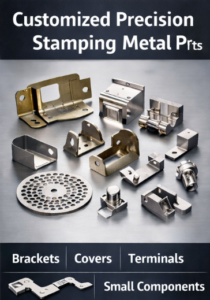
Customized precision stamping parts are metal components produced according to specific design requirements using precision stamping equipment. These parts are typically manufactured from materials such as stainless steel, aluminum, copper, brass, or carbon steel.
Unlike standard stamped parts, customized components are designed based on customer drawings, technical specifications, or 3D models. Customized precision stamping parts factories work closely with clients to develop molds, optimize production processes, and ensure the final product meets the required dimensions and performance standards.
Because stamping technology allows manufacturers to produce complex shapes with high repeatability, it is ideal for industries that require large volumes of identical components with strict tolerances.
Advantages of Working with Customized Precision Stamping Parts Factories
Companies around the world increasingly rely on customized precision stamping parts factories because they offer several important advantages.
High Production Efficiency
Stamping technology allows manufacturers to produce large quantities of parts quickly. Once the molds are developed, stamping machines can operate at high speeds, producing thousands of components per hour while maintaining consistent quality.
This efficiency makes precision stamping a cost-effective manufacturing solution for large-scale production projects.
Consistent Product Quality
One of the most significant advantages of working with professional stamping factories is consistent product quality. Precision molds ensure that each component is produced with the same dimensions and specifications.
Reliable customized precision stamping parts factories also implement strict quality control procedures, ensuring that every batch of products meets customer requirements and international manufacturing standards.
Flexible Customization
Customization is another key benefit. Manufacturers can produce parts with different shapes, sizes, materials, and surface treatments depending on the application.
This flexibility allows businesses to design unique components that fit their product structures perfectly.
Cost-Effective Manufacturing
Compared with machining processes that remove material through cutting, stamping forms metal sheets directly. This reduces material waste and lowers production costs.
For companies producing large volumes of metal components, working with customized precision stamping parts factories can significantly reduce manufacturing expenses.
Manufacturing Process in Customized Precision Stamping Parts Factories
The production of customized stamping parts involves multiple stages, each contributing to the quality and performance of the final product.
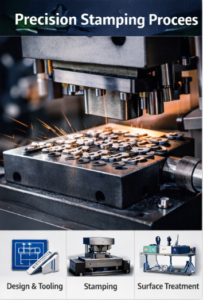
Product Design and Engineering
The process usually begins with product design. Customers provide technical drawings, CAD models, or design specifications. Engineers analyze these requirements and determine the best stamping method for production.
At this stage, customized precision stamping parts factories also evaluate factors such as material selection, production volume, and tolerance requirements.
Mold Design and Tooling Development
After finalizing the product design, engineers develop precision molds and dies. Mold design is one of the most important steps in the stamping process because it determines the accuracy and efficiency of production.
Advanced CAD/CAM software is often used to create detailed tooling designs that ensure precise shaping of the metal sheets.
Stamping and Forming
Once the molds are ready, the stamping process begins. Metal sheets are fed into stamping presses where they undergo operations such as:
-
Punching
-
Blanking
-
Bending
-
Drawing
-
Forming
These processes transform flat sheets into complex metal parts with precise dimensions.
Surface Treatment and Finishing
After stamping, components may undergo additional finishing processes to improve their durability and appearance. Common surface treatments include electroplating, powder coating, anodizing, polishing, and heat treatment.
These processes help protect the parts from corrosion, improve wear resistance, and enhance overall product performance.
Quality Inspection
Professional customized precision stamping parts factories implement strict quality inspection procedures throughout the production process. Inspection methods may include dimensional measurement, visual inspection, hardness testing, and functional testing.
Advanced inspection equipment such as coordinate measuring machines (CMM) and optical inspection systems are often used to ensure product accuracy.
Applications of Customized Precision Stamping Parts
Customized stamped components are used in many industries due to their strength, precision, and reliability.
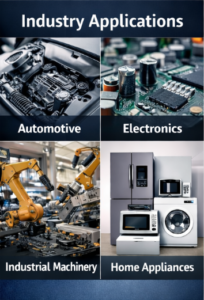
Automotive Industry
In the automotive sector, stamped metal parts are used in structural brackets, connectors, battery housings, and engine components. These parts must meet strict safety and durability standards.
Electronics and Electrical Equipment
Electronic devices require compact and precise metal components. Stamping technology is widely used to produce connectors, shielding covers, terminals, and internal structural frames.
Industrial Machinery
Industrial equipment relies on durable metal components for mechanical assemblies and structural support. Customized stamping parts help improve machine stability and reduce assembly costs.
Home Appliances
Household appliances such as refrigerators, washing machines, and air conditioners contain many stamped metal components in their internal structures.
How to Choose Reliable Customized Precision Stamping Parts Factories
Selecting the right manufacturing partner is crucial for ensuring consistent product quality and efficient production.
Manufacturing Experience
Factories with extensive industry experience can better understand product requirements and manufacturing challenges.
Advanced Equipment
Modern stamping machines and automated production lines improve production efficiency and ensure consistent product quality.
Strong Engineering Support
Professional engineers can assist with mold design, material selection, and production optimization.
Quality Control Systems
Reliable customized precision stamping parts factories implement strict quality management systems to ensure every product meets technical specifications.
Professional Manufacturing Solutions from Zhengqiang Technology Group
Zhengqiang Technology Group is a high-tech enterprise specializing in precision component manufacturing, intelligent equipment development, and global product supply. The company provides integrated manufacturing services including precision stamping, mold design, surface treatment, and component assembly.
With modern production facilities and experienced engineering teams, Zhengqiang Technology Group supports customers from multiple industries by delivering reliable and high-quality metal components.
Learn more about the company’s capabilities and manufacturing solutions by visiting the official website:
Working with an experienced manufacturer ensures stable production capacity, consistent product quality, and efficient project management.
Future Development of Customized Precision Stamping Parts Factories
As manufacturing technology continues to evolve, customized precision stamping parts factories are adopting new technologies such as automation, intelligent manufacturing systems, and digital production management.
These technologies help improve production efficiency, reduce manufacturing errors, and optimize resource utilization.
At the same time, industries such as electric vehicles, renewable energy equipment, and advanced electronics are creating new demand for high-precision metal components. Factories that invest in innovation and advanced manufacturing capabilities will continue to play a key role in the global supply chain.
Conclusion
Precision stamping has become one of the most efficient and reliable manufacturing methods for producing metal components. Customized precision stamping parts factories provide flexible and cost-effective solutions for companies that require high-quality, custom-designed metal parts.
With advanced equipment, experienced engineers, and strict quality control systems, professional stamping factories can deliver components that meet demanding industrial requirements.
If your business is looking for a reliable manufacturing partner, working with an experienced stamping factory can help transform your product designs into durable and high-performance components.
Contact Zhengqiang Technology Group today to discuss your project requirements and discover how our precision manufacturing solutions can support your next product development.
FAQ
What are customized precision stamping parts?
Customized precision stamping parts are metal components produced according to specific customer designs using precision stamping equipment.
What materials are used in stamping parts?
Common materials include stainless steel, aluminum, copper, brass, and carbon steel.
What industries use precision stamping components?
Industries such as automotive, electronics, industrial machinery, telecommunications, and home appliances widely use stamped metal components.
Can stamping parts be produced in large volumes?
Yes. Once molds are developed, stamping technology allows manufacturers to produce large quantities of parts quickly and efficiently.
Why choose customized precision stamping parts factories?
These factories provide cost-effective manufacturing, flexible customization, high production efficiency, and consistent product quality.