- Information Classification
Outer Rotor Motor: Advantages, Applications and OEM Selection Guide
Outer Rotor Motor technology is widely used in compact fans, air treatment equipment, ventilation systems, cooling products, industrial equipment, and other applications that require efficient rotary motion within a limited installation space.
Unlike conventional inner-rotor motor designs, an outer rotor configuration places the rotating component around the outside of the stator. This structural arrangement can provide advantages in terms of compact integration, torque characteristics, airflow applications, and overall equipment design.
For OEM manufacturers, selecting the correct motor requires more than comparing rated power. Voltage, speed, torque, efficiency, noise, dimensions, rotor structure, operating temperature, and installation requirements all need to be considered.
ZhengQiang Technology provides customized motor solutions and precision motor parts for global OEM and ODM customers. Its current motor portfolio includes DC brushless motors, outer rotor motors, shaded pole motors, synchronous motors, series motors, and other customized motor solutions. The company’s motor products are designed for applications including air treatment, industrial equipment, consumer products, and other precision equipment.
For more information about ZhengQiang Technology, visit the official website:https://www.zqatech.com/
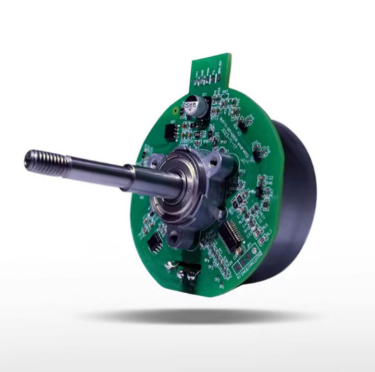
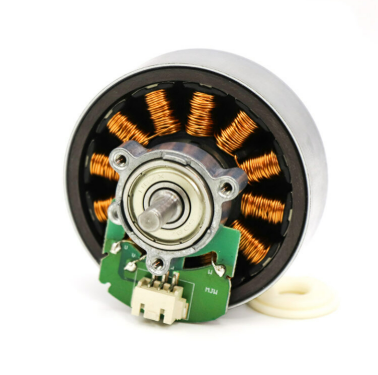
What Is an Outer Rotor Motor?
An Outer Rotor Motor is an electric motor in which the rotor is positioned outside the stator.
In a conventional inner-rotor motor, the rotor rotates inside the stationary stator. In an outer-rotor configuration, the stator is positioned inside while the rotor surrounds it and rotates around the outside.
This structural difference can influence the motor’s torque characteristics, physical dimensions, cooling arrangement, and integration into the final product.
A typical design may include:
- Stator
- Windings
- Permanent magnets
- Outer rotor
- Rotor housing
- Shaft
- Bearings
- Motor control system
- Electrical connections
The exact construction depends on whether the motor is designed as a brushless DC motor, AC motor, or another motor configuration.
How Does an Outer Rotor Motor Work?
Stator and Winding System
The stator remains stationary and contains the motor windings.
When electrical current passes through the windings, a magnetic field is generated.
In a brushless design, electronic commutation controls the magnetic field sequence and causes the rotor to rotate.
Outer Rotor Structure
The rotor surrounds the stator.
Permanent magnets are typically positioned around the inner surface of the rotating rotor assembly.
The interaction between the stator’s magnetic field and the rotor magnets generates rotational force.
Mechanical Output
As the outer rotor rotates, the mechanical energy can be transferred directly to a fan blade, impeller, pulley, or other rotating component.
This can make the design particularly useful for air movement applications where the rotor structure can be integrated with the fan assembly.
Key Advantages of Outer Rotor Motor Technology
Compact System Integration
One of the major advantages is the ability to integrate the rotating structure directly into compact equipment.
The external rotor configuration can allow manufacturers to optimize the available installation space.
High Torque Characteristics
The larger effective rotor diameter can provide useful torque characteristics for certain applications.
This can be beneficial in fan and air circulation systems where stable rotational force is required.
Suitable for Fan Applications
The structure is particularly suitable for applications where the motor needs to drive a fan or impeller.
The rotating outer housing can be integrated with the airflow component to create a compact overall assembly.
Low Noise Potential
When the rotor, bearings, stator, and control system are properly engineered, the motor can provide smooth operation with controlled noise and vibration.
Noise performance is especially important for air treatment equipment, household appliances, and indoor commercial systems.
Flexible Mechanical Design
OEM manufacturers can optimize the shaft, housing, rotor dimensions, mounting configuration, and electrical specifications according to the final equipment.
Outer Rotor Motor vs. Inner Rotor Motor
The primary difference is the position of the rotating component.
Inner Rotor Design
In a conventional inner rotor motor, the rotor rotates inside the stator.
This is a common configuration used in many types of DC, BLDC, and industrial motors.
Outer Rotor Design
In an outer rotor design, the rotor surrounds the stator.
This can provide different torque, size, and integration characteristics.
Neither design is universally better.
The appropriate configuration depends on:
- Required torque
- Required speed
- Available installation space
- Fan or impeller design
- Cooling requirements
- Noise requirements
- Mechanical structure
- Cost target
For OEM projects, the motor structure should be selected according to the complete equipment design.
Outer Rotor Motor Applications
An Outer Rotor Motor can be used in many products that require compact and reliable rotary motion.
Air Treatment Equipment
Air treatment is one of the important application areas for this motor structure.
Fans and blowers used in air purification, air circulation, ventilation, and cooling equipment require stable rotation and appropriate airflow performance.
ZhengQiang currently lists a 30W DC Brushless Outer Rotor Motor for Air Treatment Applications, demonstrating the company’s direct product focus in this area.
Ventilation Systems
Ventilation equipment requires motors that can operate reliably while driving fans or blowers.
Important factors include:
- Airflow
- Static pressure
- Speed
- Noise
- Power consumption
- Operating temperature
- Continuous-duty capability
A properly designed motor can help equipment manufacturers achieve the required airflow within a compact installation space.
Cooling Fans
Cooling fans are widely used in electronics, appliances, industrial equipment, and electrical systems.
The motor must provide sufficient speed and torque to maintain the required airflow.
For applications with strict noise requirements, motor balance, bearing selection, electronic control, and fan blade design all need to be considered together.
HVAC Equipment
Heating, ventilation, and air-conditioning equipment often requires compact motors to drive fans and blowers.
Motor selection should consider the complete operating environment, including ambient temperature, airflow requirements, duty cycle, and available installation space.
Industrial Equipment
Industrial equipment may use compact brushless motors for cooling, ventilation, pumping, and other mechanical functions.
A customized solution can be developed according to the equipment’s voltage, power, speed, torque, and mechanical interface.
Consumer Electronics
Compact motor solutions can also be used in consumer electronic products requiring controlled airflow or mechanical movement.
Low noise, compact dimensions, and stable performance can become important design requirements.
Outer Rotor Motor Specifications
When sourcing an Outer Rotor Motor, OEM buyers should provide as much application information as possible.
Rated Voltage
The rated voltage must match the electrical system of the final product.
Typical DC brushless motor configurations may include 12V, 24V, and other voltage options depending on the design.
Rated Power
Motor power should be selected based on the actual mechanical load.
For fan applications, power should be evaluated together with airflow, pressure, fan diameter, and rotational speed.
Speed
Motor speed directly influences the performance of rotating equipment.
Higher speed is not always better because increased speed can also influence noise, vibration, power consumption, and operating temperature.
Torque
Torque determines the motor’s ability to drive the mechanical load.
The required torque should be evaluated under actual operating conditions rather than based only on unloaded motor performance.
Motor Diameter
The diameter of the rotor and stator affects the overall size of the motor.
For outer rotor applications, the rotor diameter can also influence torque characteristics and mechanical integration.
Shaft Configuration
Shaft diameter, length, shape, and mounting method should be specified according to the final equipment.
Rotation Direction
Some equipment requires a specific clockwise or counterclockwise rotation direction.
This requirement should be confirmed during the development stage.
Brushless Outer Rotor Motor Technology
Many modern outer rotor designs use brushless DC technology.
A brushless motor eliminates traditional mechanical brushes and commutators.
Instead, an electronic controller manages the current supplied to the stator windings.
This can provide several advantages:
- Reduced mechanical wear
- Stable speed control
- Good efficiency
- Long operating life
- Low maintenance
- Compact construction
ZhengQiang’s current product range includes several brushless outer rotor motors, including a 48W high-performance version, a 30W air-treatment model, and a 24V high-speed outer rotor brushless motor.
How to Select an Outer Rotor Motor
Selecting the correct motor should begin with the final equipment requirements.
Step 1: Define the Power Supply
Determine the required voltage and whether the equipment uses DC or AC power.
Step 2: Determine Required Speed
Establish the required operating speed under actual load conditions.
Step 3: Calculate Torque Requirements
Determine starting torque and continuous running torque.
Step 4: Check Installation Space
Measure the available motor diameter, height, shaft dimensions, and mounting location.
Step 5: Evaluate Noise Requirements
For residential, medical, office, and indoor equipment, noise may be an important specification.
Step 6: Consider Operating Temperature
The motor should be capable of operating within the actual environmental temperature range.
Step 7: Confirm Duty Cycle
Determine whether the motor will operate continuously or intermittently.
Step 8: Select the Control System
For brushless designs, the controller and motor should be evaluated as one system.
Custom Outer Rotor Motor Solutions
Standard catalog motors may not always fit a specialized product.
For OEM projects, manufacturers may require customized electrical and mechanical specifications.
A professional motor supplier can provide customization for:
Electrical Parameters
- Voltage
- Power
- Speed
- Current
- Winding configuration
- Hall sensor configuration
- Control method
Mechanical Parameters
- Rotor diameter
- Motor height
- Shaft diameter
- Shaft length
- Mounting holes
- Housing structure
- Connector position
Performance Parameters
Customization may also focus on:
- Noise
- Vibration
- Efficiency
- Torque
- Temperature rise
- Operating life
- Waterproof requirements
The final specification should always be determined according to the actual application.
Outer Rotor Motor Manufacturing Process
Consistent manufacturing is essential for reliable motor performance.
Stator Production
The stator core is manufactured according to the electromagnetic design.
Material thickness, lamination quality, dimensional accuracy, and winding structure all influence motor performance.
Copper Winding
The copper wire is wound according to the specified design.
Consistent winding helps maintain stable electrical characteristics between production batches.
Magnet Assembly
Permanent magnets are installed in the rotor according to the required magnetic arrangement.
Magnet positioning and bonding quality are important for stable motor performance.
Rotor Assembly
The outer rotor is assembled around the stator while maintaining the required air gap.
Precision assembly can help reduce vibration and improve operating stability.
Bearing Installation
Bearing selection and assembly influence friction, noise, mechanical life, and rotor stability.
Electrical Testing
Finished motors can be tested for voltage, current, resistance, speed, power, insulation, and other electrical parameters.
Mechanical Testing
Depending on the application, testing can include:
- Vibration
- Noise
- Rotation
- Temperature rise
- Load performance
- Endurance
Quality Control for OEM Motor Production
Quality control is an important consideration when selecting a motor manufacturer.
ZhengQiang reports a production system incorporating full inspection and AI quality control, with a stated defect rate of no more than 0.12%. The company also reports 99.6% on-time delivery.
For OEM customers, quality management should cover the complete production chain.
Important areas include:
- Raw material inspection
- Component inspection
- Winding inspection
- Rotor inspection
- Assembly inspection
- Electrical testing
- Mechanical testing
- Final inspection
- Product traceability
Why Choose ZhengQiang Technology?
ZhengQiang Technology focuses on customized motor solutions and precision motor parts for industrial and OEM applications.
The company reports six subsidiaries, more than 17 years of industry experience, over 50 patented technologies, and annual motor production capacity of 24 million units.
Its manufacturing capabilities include:
- DC motors
- Brushless DC motors
- Outer rotor motors
- Shaded pole motors
- Series motors
- Synchronous motors
- Precision metal components
- Stamping
- Tooling
- CNC machining
- Assembly
- Quality inspection
The company also states that its integrated manufacturing system allows motor production to work together with in-house precision metal components and other manufacturing capabilities.
This can be particularly useful for OEM customers developing new products that require both motor assemblies and precision mechanical components.
OEM and ODM Outer Rotor Motor Development
For an OEM project, the motor should be developed around the complete product.
The development process may include:
- Application analysis
- Technical specification review
- Motor selection
- Engineering design
- Prototype development
- Sample testing
- Performance optimization
- Pilot production
- Quality validation
- Mass production
This approach helps reduce the risk of selecting a motor that technically fits the product but does not provide the required performance.
ZhengQiang provides custom motor solutions for OEM and ODM customers and supports projects from development through production.
Frequently Asked Questions
What is an Outer Rotor Motor?
An Outer Rotor Motor is a motor in which the rotor rotates around the outside of the stationary stator. This structure is often used in compact fan, blower, air treatment, and other applications.
What are the advantages of an Outer Rotor Motor?
The main advantages can include compact integration, useful torque characteristics, flexible mechanical design, and suitability for fan and airflow applications.
What is an Outer Rotor Motor used for?
Typical applications include air treatment equipment, ventilation systems, cooling fans, HVAC equipment, consumer electronics, and selected industrial systems.
Are Outer Rotor Motors brushless?
Many modern outer rotor motors use BLDC technology, although the outer rotor structure itself describes the mechanical arrangement and can be combined with different motor technologies.
Can an Outer Rotor Motor be customized?
Yes. OEM customers can customize voltage, power, speed, torque, rotor dimensions, shaft dimensions, mounting structure, wiring, sensor configuration, and other parameters.
How do I choose an Outer Rotor Motor?
Start with the equipment’s voltage, power, speed, torque, airflow or mechanical load, installation space, noise requirements, operating temperature, and duty cycle. These specifications allow the manufacturer to recommend an appropriate motor design.
Conclusion
An Outer Rotor Motor can provide a practical solution for equipment requiring compact mechanical integration, reliable rotation, and suitable torque characteristics.
Its structure is particularly attractive for fan, blower, air treatment, ventilation, HVAC, cooling, and other applications where the motor and rotating component need to be efficiently integrated.
For OEM manufacturers, the best solution depends on the complete system rather than one isolated specification. Voltage, power, speed, torque, dimensions, noise, thermal performance, control method, and operating conditions should all be evaluated during motor selection.
ZhengQiang Technology provides customized motor solutions and precision motor parts for OEM and ODM customers. Its portfolio includes DC brushless motors, outer rotor motors, shaded pole motors, synchronous motors, series motors, and other motor solutions.
With integrated capabilities covering motors, precision hardware, stamping, tooling, and component manufacturing, ZhengQiang can support customers looking for a coordinated manufacturing solution rather than a standalone motor supplier.
For customized motor development, visit: