- Information Classification
8 Powerful Progressive Die Stamping Benefits for High-Volume Manufacturing
Introduction
Progressive die stamping is one of the most efficient manufacturing methods for producing precision metal components in large quantities. By integrating multiple forming operations into a single die, this technology enables manufacturers to achieve exceptional production speed, repeatable accuracy, and lower unit costs.
As industries continue to demand lightweight products, tighter tolerances, and shorter delivery times, progressive die stamping has become a preferred solution for automotive, electronics, home appliances, medical devices, and industrial equipment. Compared with traditional fabrication methods, it reduces material waste while improving production consistency and operational efficiency.
At ZhengQiang Technology, we provide complete progressive die stamping solutions supported by advanced tooling, precision presses, and experienced engineering teams. From prototype development to mass production, we help customers optimize product quality and manufacturing performance.
Learn more about our manufacturing capabilities:
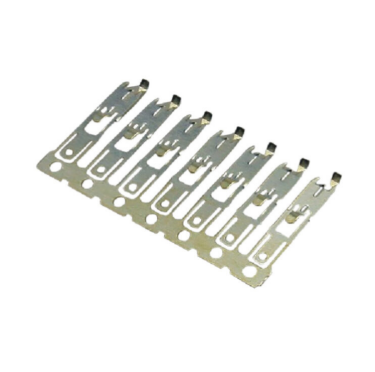
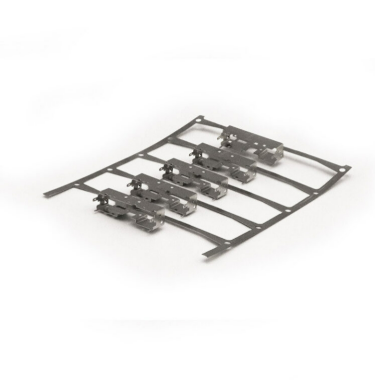
What Is Progressive Die Stamping?
Understanding Progressive Die Stamping
Progressive die stamping is a manufacturing process in which a continuous strip of metal moves through multiple stations inside a specially designed die. Each station performs a different operation, such as punching, bending, embossing, or forming, until the finished component is separated from the strip at the final station.
Because every press stroke completes a different stage of production simultaneously, manufacturers can produce thousands of identical components every hour while maintaining outstanding dimensional consistency.
This manufacturing approach is particularly suitable for products requiring complex geometries, high repeatability, and large production volumes.
How Progressive Die Stamping Works
Material Feeding
Production begins with a metal coil loaded into an automatic feeding system. The strip advances through each die station with precise positioning to ensure accurate processing throughout the manufacturing cycle.
Multiple Forming Operations
As the material progresses through the die, different manufacturing operations are completed in sequence. These may include:
- Blanking
- Piercing
- Punching
- Bending
- Coining
- Embossing
- Forming
- Cut-off
Each press stroke moves the strip to the next station until the finished part is completed.
Continuous Production
Unlike single-operation stamping, progressive die stamping performs multiple processes within one production cycle. This significantly reduces handling time and improves manufacturing efficiency, making it ideal for high-volume production.
Advantages of Progressive Die Stamping
Higher Production Efficiency
One of the greatest strengths of progressive die stamping is its ability to manufacture large quantities of parts at high speed. Since multiple operations occur simultaneously, production cycles are significantly shorter than conventional stamping methods.
Benefits include:
- Faster throughput
- Reduced labor requirements
- Stable production output
- Lower manufacturing costs
Excellent Dimensional Accuracy
Precision tooling and automated feeding systems help ensure that every component meets strict dimensional tolerances. This consistency minimizes rework and improves product reliability.
Reduced Material Waste
Optimized strip layouts maximize material utilization while minimizing scrap. Lower waste not only reduces raw material costs but also supports more sustainable manufacturing practices.
Cost-Effective for High-Volume Orders
Although progressive dies require an initial tooling investment, the reduced production time and lower labor costs result in a highly competitive cost per part over large production runs.
Materials Suitable for Progressive Die Stamping
Manufacturers commonly process a variety of metals depending on application requirements, including:
Carbon Steel
Suitable for structural components requiring strength and durability.
Stainless Steel
Ideal for products exposed to moisture, chemicals, or demanding environments.
Aluminum
Preferred for lightweight applications where corrosion resistance is important.
Copper and Brass
Widely used in electrical connectors, terminals, and conductive components because of their excellent electrical performance.
Industries That Use Progressive Die Stamping
The flexibility and efficiency of this process make it suitable for many industries:
- Automotive manufacturing
- Consumer electronics
- Medical devices
- Home appliances
- Renewable energy systems
- Electrical equipment
- Industrial automation
- Telecommunications
Each industry benefits from consistent quality, reduced production costs, and reliable large-scale manufacturing.
Why Choose ZhengQiang Technology?
At ZhengQiang Technology, we combine advanced progressive die technology with strict quality management to deliver reliable metal components for customers worldwide.
Our capabilities include:
- Progressive die design and manufacturing
- Precision metal stamping
- CNC machining
- Laser cutting
- Welding and assembly
- Surface finishing
- Comprehensive quality inspection
We work closely with customers from product development through mass production, helping reduce costs while ensuring outstanding product performance.
Explore our complete manufacturing services:
Frequently Asked Questions
What products are suitable for progressive die stamping?
Components with high production volumes, tight tolerances, and repeatable geometries are ideal for this manufacturing method.
What materials can be processed?
Carbon steel, stainless steel, aluminum, copper, brass, and other metal alloys can all be processed using progressive die technology.
Is progressive die stamping suitable for custom projects?
Yes. Custom tooling can be developed to manufacture components that match specific drawings, dimensions, and application requirements.
Conclusion
Progressive die stamping has become an essential manufacturing solution for companies seeking high productivity, precision, and cost efficiency. By combining multiple operations into a single automated process, manufacturers can achieve consistent quality while reducing waste and shortening production cycles.
Partnering with ZhengQiang Technology gives you access to advanced equipment, experienced engineers, and customized manufacturing solutions that support your project from concept to mass production.