- Information Classification
Range Exhaust Fan Motor Manufacturing and Ventilation Guide
Range Exhaust Fan Motor: Performance, Engineering Design, and Commercial Ventilation Applications
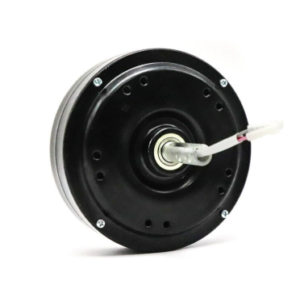
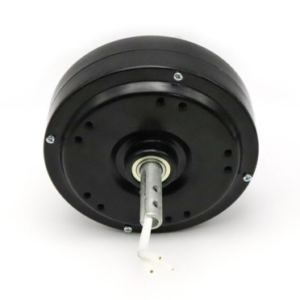
In modern residential and commercial kitchens, a high-quality range exhaust fan motor is one of the most important components responsible for maintaining air quality, removing smoke, controlling grease particles, and improving overall ventilation performance. Whether installed in home range hoods, restaurant exhaust systems, commercial kitchens, or industrial cooking facilities, the performance of the motor directly impacts airflow efficiency and system reliability.
As global demand for energy-efficient ventilation systems continues to grow, manufacturers increasingly require advanced range exhaust fan motor solutions that offer high airflow, low noise, long service life, and reduced power consumption. Modern ventilation equipment depends on precision motor engineering to meet increasingly strict efficiency and environmental standards.
Zhengqiang Technology Group is a high-tech enterprise specializing in motor manufacturing, precision hardware, intelligent equipment, and industrial automation solutions. With advanced engineering capabilities and global OEM experience, the company provides reliable range exhaust fan motor solutions for residential, commercial, and industrial ventilation applications worldwide. Learn more at https://www.zqatech.com/
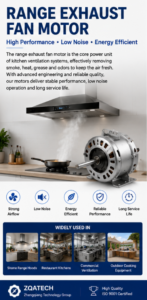
What Is a Range Exhaust Fan Motor?
A range exhaust fan motor is the power-driving component used in kitchen ventilation systems to rotate fan blades and generate airflow that removes:
- Cooking smoke
- Heat
- Steam
- Grease particles
- Odors
- Airborne contaminants
The motor converts electrical energy into mechanical motion, driving the exhaust fan to maintain a clean and comfortable cooking environment.
Importance of a High-Quality Range Exhaust Fan Motor
The effectiveness of any ventilation system depends heavily on motor performance.
Airflow Efficiency
A properly designed range exhaust fan motor provides:
- Stable airflow output
- Efficient smoke extraction
- Improved kitchen air quality
- Reduced indoor pollutants
Consistent airflow is essential for maintaining ventilation performance.
Energy Efficiency
Modern ventilation systems prioritize:
- Lower power consumption
- Reduced operating costs
- Environmental sustainability
High-efficiency motors help achieve these goals.
Noise Reduction
Motor design directly influences system noise.
Advanced motors provide:
- Smooth operation
- Reduced vibration
- Lower acoustic levels
Quiet performance is particularly important in residential kitchens.
Main Components of a Range Exhaust Fan Motor
A typical motor assembly consists of several critical components.
Stator Assembly
The stator generates the magnetic field required for motor operation.
Key features include:
- Precision copper windings
- Insulated laminations
- Thermal protection systems
Rotor Assembly
The rotor converts electromagnetic force into rotational motion.
Performance depends on:
- Rotor balance
- Material quality
- Manufacturing precision
Bearings
Bearings support the rotating shaft.
High-quality bearings improve:
- Motor lifespan
- Noise performance
- Operational stability
Cooling System
Proper cooling helps maintain motor efficiency.
Cooling methods include:
- Air cooling
- Ventilation channels
- Heat dissipation structures
Effective thermal management extends service life.
Types of Range Exhaust Fan Motors
Different applications require different motor technologies.
AC Induction Motors
Advantages include:
- Mature technology
- Reliable operation
- Cost-effective production
These motors are commonly used in standard kitchen ventilation systems.
Brushless DC Motors (BLDC)
BLDC motors offer:
- High efficiency
- Low noise
- Long lifespan
- Precise speed control
Modern premium range hoods increasingly utilize brushless technology.
Permanent Magnet Motors
Benefits include:
- Compact size
- Energy efficiency
- Stable performance
These motors are suitable for advanced ventilation systems.
Engineering Design Considerations
Successful range exhaust fan motor development requires careful engineering.
Airflow Requirements
Motor selection depends on:
- Fan diameter
- Static pressure requirements
- Air volume targets
Proper matching ensures maximum ventilation performance.
Torque Requirements
The motor must generate sufficient torque to:
- Start under load
- Maintain airflow stability
- Operate continuously
Torque optimization improves reliability.
Thermal Performance
Kitchen environments often involve elevated temperatures.
Engineers evaluate:
- Winding temperature rise
- Insulation class
- Heat dissipation efficiency
Thermal management directly affects motor durability.
Moisture and Grease Resistance
Range hood motors operate in demanding environments.
Protection features may include:
- Sealed bearings
- Corrosion-resistant materials
- Protective coatings
These features improve long-term reliability.
Manufacturing Technologies
Modern range exhaust fan motor production relies on advanced manufacturing processes.
Precision Stator Winding
Automated winding systems provide:
- Consistent electrical performance
- Improved efficiency
- Reduced production variation
Rotor Balancing
Dynamic balancing reduces:
- Vibration
- Noise
- Bearing wear
Balanced rotors improve operational stability.
Automated Assembly
Automation improves:
- Production efficiency
- Quality consistency
- Manufacturing accuracy
Performance Testing
Each motor may undergo:
- Voltage testing
- Current testing
- Speed verification
- Noise analysis
- Load testing
Comprehensive testing ensures product reliability.
Zhengqiang Technology Group utilizes intelligent manufacturing systems and advanced motor production technologies to ensure stable and reliable range exhaust fan motor performance. Learn more at https://www.zqatech.com/
Quality Control Systems
Reliable ventilation motors require strict quality management.
Raw Material Inspection
Manufacturers verify:
- Copper wire quality
- Magnet performance
- Bearing specifications
- Insulation materials
High-quality materials support long-term reliability.
Production Monitoring
Process control includes:
- Winding accuracy inspection
- Rotor balance verification
- Assembly quality checks
Continuous monitoring improves consistency.
Final Product Validation
Finished motors are tested for:
- Airflow performance
- Efficiency
- Temperature rise
- Durability
Testing ensures compliance with customer requirements.
Applications of Range Exhaust Fan Motors
Residential Range Hoods
Used in:
- Home kitchens
- Apartment ventilation systems
- Smart kitchen appliances
Quiet operation is particularly important.
Commercial Kitchens
Applications include:
- Restaurants
- Hotels
- Food processing facilities
Commercial systems require higher airflow and durability.
Industrial Ventilation Systems
Industrial environments often require:
- Continuous operation
- High-temperature resistance
- Heavy-duty motor designs
Performance reliability is critical.
Outdoor Cooking Equipment
Outdoor kitchens increasingly utilize high-performance exhaust systems for smoke and heat management.
Industry Trends
Energy-Efficient Ventilation
Global regulations encourage:
- Lower energy consumption
- Higher motor efficiency
- Reduced emissions
High-efficiency motors continue gaining market share.
Smart Ventilation Systems
Modern systems increasingly integrate:
- Variable speed control
- Smart sensors
- IoT connectivity
These technologies improve user experience and efficiency.
Low-Noise Engineering
Manufacturers continue developing:
- Improved bearing systems
- Advanced rotor balancing
- Optimized airflow designs
Noise reduction remains a major design objective.
Why Choose Zhengqiang Technology Group?
Zhengqiang Technology Group provides professional range exhaust fan motor solutions including:
- Custom motor engineering
- Brushless and AC motor manufacturing
- Precision hardware integration
- OEM and ODM services
- Advanced quality management
- Global supply chain support
With experienced engineering teams and modern manufacturing facilities, the company helps customers develop reliable and energy-efficient ventilation products.
Visit https://www.zqatech.com/ to learn more.
Conclusion
A high-performance range exhaust fan motor is essential for effective kitchen ventilation. By combining efficient airflow generation, low noise operation, durable construction, and advanced manufacturing technologies, modern motors help improve indoor air quality while reducing energy consumption.
As ventilation systems continue evolving toward smarter, quieter, and more energy-efficient designs, advanced motor technology will remain a key driver of performance and customer satisfaction.
FAQ
What does a range exhaust fan motor do?
It powers the exhaust fan that removes smoke, heat, grease, and odors from kitchen environments.
Which motor type is best for range hoods?
Brushless DC motors are increasingly preferred because of their high efficiency, low noise, and long service life.
How can motor lifespan be improved?
Using quality bearings, proper cooling systems, and regular maintenance can significantly extend motor life.
What industries use range exhaust fan motors?
Residential kitchens, commercial restaurants, hotels, food processing facilities, and industrial ventilation systems.
Where can I find a reliable range exhaust fan motor supplier?
Visit https://www.zqatech.com/
📩 Contact Us
Looking for a reliable range exhaust fan motor manufacturer with advanced engineering, OEM support, and global delivery capabilities?
Zhengqiang Technology Group is ready to support your ventilation and appliance projects.
👉 Visit https://www.zqatech.com/ today and request your quotation!