- Information Classification
Stamping Die Mould Engineering & Manufacturing Guide
In modern manufacturing, the efficiency, accuracy, and scalability of metal component production depend heavily on tooling systems. Among these, the stamping die mould is one of the most critical elements, enabling high-speed, high-precision forming of metal parts across industries such as automotive, electronics, and industrial equipment.
A well-designed stamping die mould not only determines part geometry but also directly impacts production stability, defect rates, and overall manufacturing cost. As industries demand tighter tolerances, more complex geometries, and higher production volumes, the importance of advanced die engineering continues to grow.
Zhengqiang Technology Group is a high-tech enterprise specializing in precision stamping, mould engineering, and intelligent manufacturing systems. With strong technical capabilities and global project experience, the company provides comprehensive solutions for OEM and ODM customers. Learn more at https://www.zqatech.com/
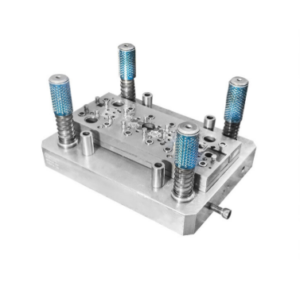
What Is a Stamping Die Mould?
A stamping die mould is a precision-engineered tool used in metal stamping processes to cut, form, and shape sheet metal into specific geometries. It operates within a stamping press and is designed for repeatable, high-volume production.
Functional Capabilities
- Blanking and piercing
- Bending and forming
- Drawing and shaping
- Trimming and finishing
The performance of a stamping die mould directly determines part quality and production efficiency.
Structural Components of a Stamping Die Mould
A typical stamping die mould consists of multiple integrated components:
Core Elements
- Punch (male forming tool)
- Die cavity (female shaping surface)
- Guide pillars and bushings
- Stripper plate
- Backing plates and support structures
Functional Integration
Each component must be precisely aligned to ensure:
- Consistent part geometry
- Smooth material flow
- Stable operation at high speed
Engineering Design Methodology
Design for Manufacturability (DFM)
DFM ensures that the stamping die mould can produce parts efficiently with minimal defects. Engineers evaluate:
- Material properties
- Part geometry
- Production volume
CAE Simulation and Forming Analysis
Simulation tools help predict:
- Material flow behavior
- Stress distribution
- Potential defects (cracking, wrinkling)
Springback Compensation
Springback is a key challenge in metal forming. Engineers compensate by:
- Adjusting die geometry
- Optimizing forming sequence
- Fine-tuning process parameters
Tolerance and Precision Design
Typical tolerances depend on application:
- Stamping parts: ±0.05 mm to ±0.1 mm
- Critical features: tighter control using GD&T
Manufacturing Processes for Stamping Die Mould
CNC Machining
High-precision CNC machining ensures dimensional accuracy of die components.
Electrical Discharge Machining (EDM)
EDM is used for:
- Complex geometries
- Fine details
- Hard materials
Grinding and Finishing
Surface finishing improves:
- Surface smoothness
- Wear resistance
- Friction performance
Heat Treatment
Heat treatment processes include:
- Quenching and tempering
- Vacuum hardening
- Surface hardening
These enhance hardness and durability of the stamping die mould.
Tooling Materials and Coating Technologies
Common Materials
- Tool steel (D2, SKD11)
- High-speed steel
- Tungsten carbide
Material Selection Criteria
- Wear resistance
- Toughness
- Thermal stability
- Cost efficiency
Advanced Coatings
Coatings improve performance:
- TiN (Titanium Nitride)
- TiCN (Titanium Carbonitride)
- DLC (Diamond-Like Carbon)
These reduce friction and extend tool life.
Types of Stamping Die Mould
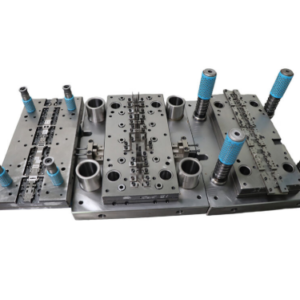
Progressive Die
Performs multiple operations in sequence within a single die.
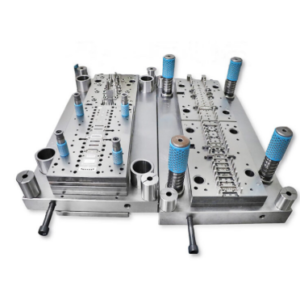
Transfer Die
Used for complex parts requiring multiple forming stages.
Single-Stage and Compound Dies
Suitable for simpler or combined operations.
Quality Control and Inspection Systems
Inspection Methods
- Coordinate Measuring Machine (CMM)
- Optical inspection
- Laser measurement
Process Capability
Automotive-grade production requires:
- Cp ≥ 1.33
- Cpk ≥ 1.33 or higher
Standard Compliance
- ISO 9001
- IATF 16949
Zhengqiang Technology Group applies strict quality control systems to ensure high-performance tooling solutions. Learn more at https://www.zqatech.com/
Tool Lifecycle Management
Factors Affecting Tool Life
- Material hardness
- Production volume
- Lubrication conditions
- Operating environment
Maintenance Strategies
- Preventive maintenance
- Predictive maintenance using data
- Scheduled inspections
Lifecycle Cost Analysis
A high-quality stamping die mould reduces downtime and long-term production costs.
Common Defects and Solutions
Typical Defects
- Cracking
- Wrinkling
- Burr formation
- Dimensional deviation
Root Cause Analysis
Engineers use:
- FMEA
- Simulation tools
- Process data analysis
Continuous Improvement
Ongoing optimization ensures stable production and consistent quality.
Cost Engineering and ROI
Cost Structure
- Raw materials
- Machining and processing
- Heat treatment
- Assembly and testing
Cost Optimization
- Simplified die design
- Improved material utilization
- Automation
Return on Investment
Although initial tooling costs are high, a durable stamping die mould delivers long-term cost savings.
Applications Across Industries
Automotive Industry
Used for structural components and brackets.
Electronics Industry
Applied in connectors and shielding parts.
Industrial Equipment
Used in machinery and automation systems.
Consumer Products
Applied in appliances and electronic devices.
Global Supply Chain Advantages
China is a major hub for stamping die mould manufacturing due to:
- Advanced tooling infrastructure
- Skilled engineering workforce
- Competitive pricing
- Integrated supply chain
Industry Trends
Smart Tooling
Sensors and data analytics improve performance monitoring.
Digital Simulation
Virtual prototyping reduces development time.
High-Precision Manufacturing
Demand for tighter tolerances continues to grow.
Sustainable Manufacturing
Eco-friendly materials and processes are becoming standard.
Why Choose Zhengqiang Technology Group?
Zhengqiang Technology Group is a trusted supplier of stamping die mould, offering:
- Advanced tooling design and engineering
- Precision manufacturing capabilities
- Strict quality control systems
- Global supply chain support
With strong expertise and innovation, the company supports OEM and ODM customers worldwide. Visit https://www.zqatech.com/ to learn more.
Conclusion
The stamping die mould is a critical component in modern manufacturing, directly influencing product quality, production efficiency, and cost performance. Through advanced engineering, high-quality materials, and optimized processes, businesses can achieve reliable and scalable production.
FAQ
What is a stamping die mould?
A tool used to shape and form metal sheets into precise components.
What materials are used?
Tool steel, high-speed steel, and carbide.
How is quality ensured?
Through precision machining and inspection systems.
What affects tool life?
Material quality, production conditions, and maintenance.
Where can I find a reliable supplier?
Visit https://www.zqatech.com/
📩 Contact Us
Looking for a reliable stamping die mould supplier with advanced engineering and global delivery capabilities?
Zhengqiang Technology Group is ready to support your project.
👉 Visit https://www.zqatech.com/ today and get your quote!