- Information Classification
Alumina Ceramic Insulator for High-Voltage Applications
Alumina Ceramic Insulator: Applications, Benefits and Selection Guide for High-Voltage Systems
An alumina ceramic insulator is widely used in electrical and high-voltage systems where stable insulation,
heat resistance and dimensional reliability are required.
Compared with conventional polymer insulation, alumina ceramics can provide stable electrical insulation and
dimensional performance under demanding operating conditions.
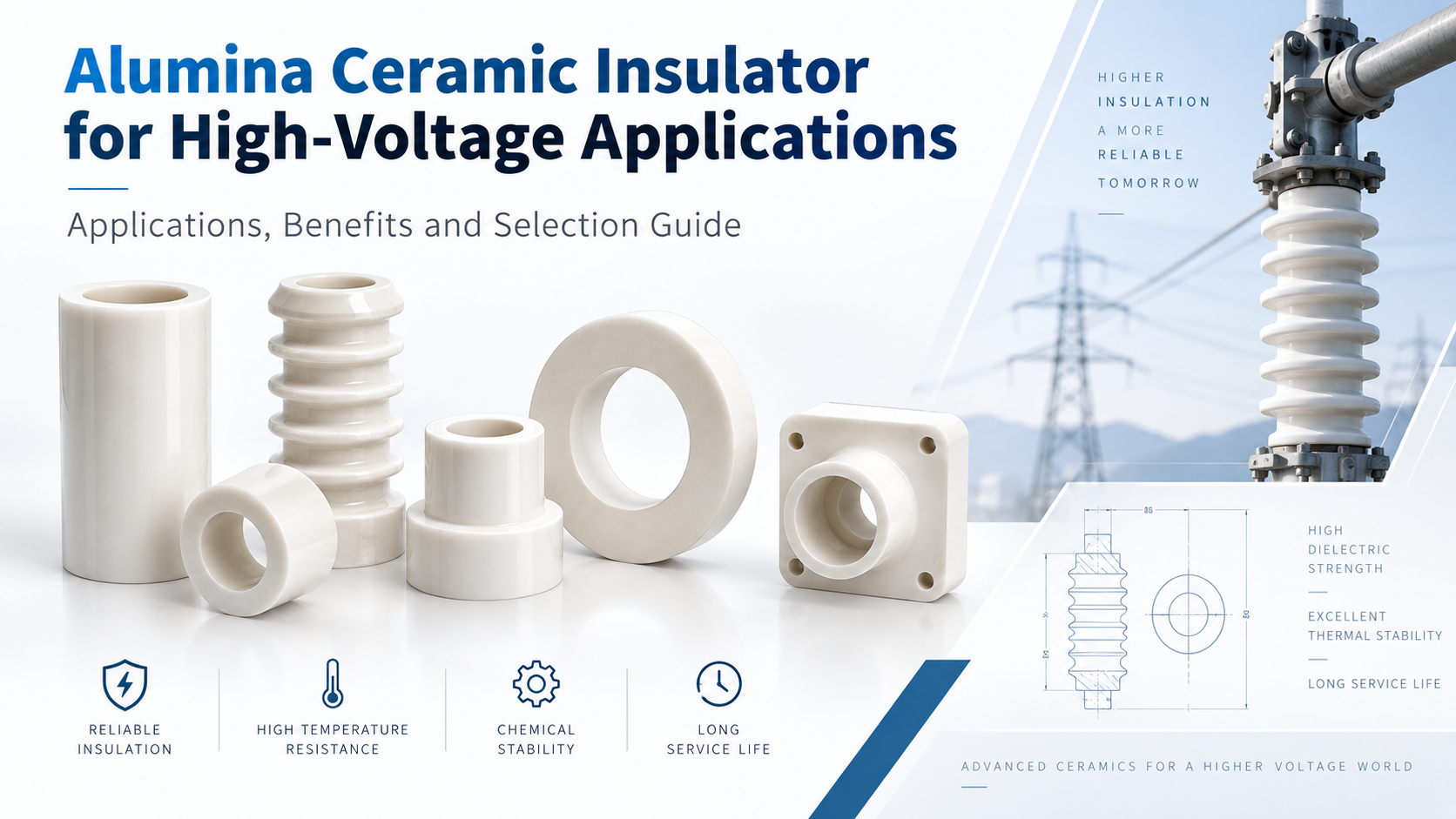
Typical applications include high-voltage connectors, EV charging assemblies, electrical terminals,
power electronics, industrial equipment and other systems where insulation performance must remain stable
under heat, voltage and repeated operating cycles.
What Is an Alumina Ceramic Insulator?
An alumina insulator is an electrical insulating component made from aluminum oxide ceramic.
Depending on the application, the ceramic can be manufactured into housings, sleeves, plates, rings,
bushings and other custom shapes.
Alumina is commonly selected because it combines electrical insulation with heat resistance,
mechanical hardness and dimensional stability.
For applications that require both electrical isolation and structural support, an
alumina ceramic insulator can provide a practical solution when conventional materials
approach their performance limits.
Key Benefits of Alumina Ceramic Insulators
1. High Electrical Insulation
Electrical insulation is the primary function of many ceramic components used in high-voltage systems.
Alumina can maintain high electrical resistivity under demanding operating conditions, helping reduce the
risk of leakage, arcing or insulation failure.
This makes it suitable for electrical assemblies where stable insulation is required between conductive components.
2. Heat Resistance
High-current and high-voltage systems can generate significant heat.
Ceramic materials are often selected when polymer components are exposed to elevated temperatures
or repeated thermal cycles.
Alumina can maintain its structural and electrical properties at temperatures that may challenge
many conventional plastics.
3. Dimensional Stability
High-voltage connectors and precision electrical assemblies often depend on consistent component dimensions.
Changes in shape, deformation or thermal expansion can affect assembly accuracy and insulation performance.
Alumina ceramics offer good dimensional stability, making them suitable for precision insulating components.
4. Wear and Mechanical Resistance
Although ceramic materials are brittle compared with metals or engineering plastics, alumina has high hardness
and good wear resistance.
This can be beneficial where an insulating component also experiences repeated contact,
mechanical loading or assembly cycles.
Common Alumina Ceramic Insulator Applications
Typical alumina ceramic insulator applications include:
- EV charging connectors
- High-voltage electrical connectors
- Electrical terminal assemblies
- Power electronics
- Industrial electrical equipment
- Heating systems
- Sensor assemblies
- Custom high-voltage insulation components
Alumina Ceramic Insulators in EV Charging Connectors
EV charging systems are moving toward higher power levels, which increases the importance of electrical insulation
and thermal management inside charging connectors.
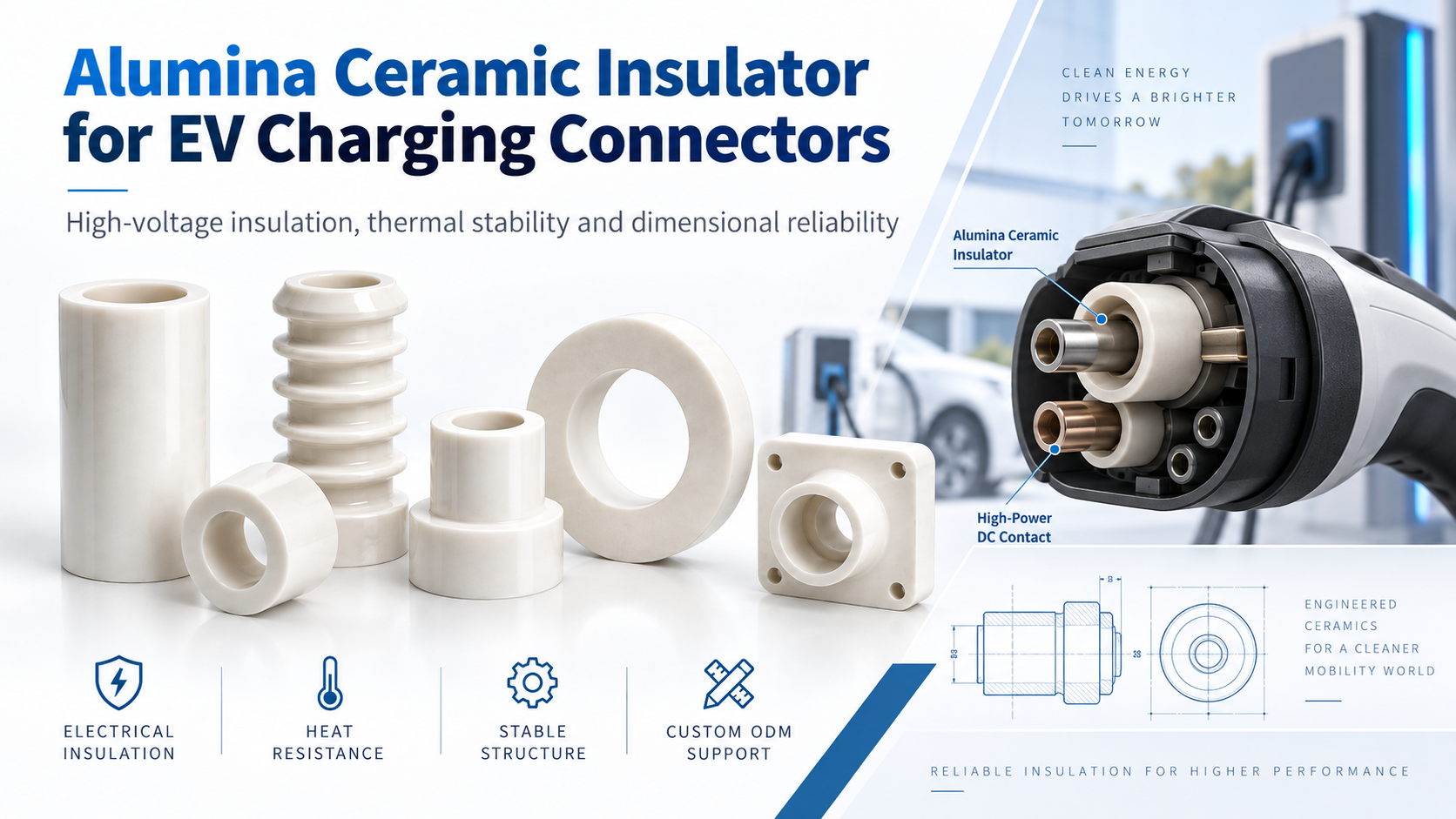
In high-current charging assemblies, an alumina ceramic housing or insulating component can help provide electrical isolation
while maintaining dimensional stability under demanding operating conditions.
For connector designs where conventional polymer insulation approaches its thermal or electrical performance limits,
alumina ceramic can provide stable electrical insulation and dimensional performance under demanding operating conditions.
For example, custom alumina ceramic housings may be used around conductive interfaces, terminals or internal connector structures
where insulation, heat resistance and mechanical stability are required together.
High-Voltage Ceramic Insulator Design Considerations
Selecting a high voltage ceramic insulator involves more than choosing the ceramic material.
The final component design should consider the complete electrical and mechanical system.
Important factors include:
- Operating voltage
- Current level
- Required insulation distance
- Operating temperature
- Thermal cycling
- Wall thickness
- Mechanical load
- Mating component dimensions
- Surface finish
- Assembly method
For custom applications, engineering review should be based on the actual drawing, electrical requirements
and operating environment rather than only a standard material data sheet.
Alumina Ceramic Insulator vs Plastic Insulator
Ceramic and plastic insulators each have advantages, and the right material depends on the system requirements.
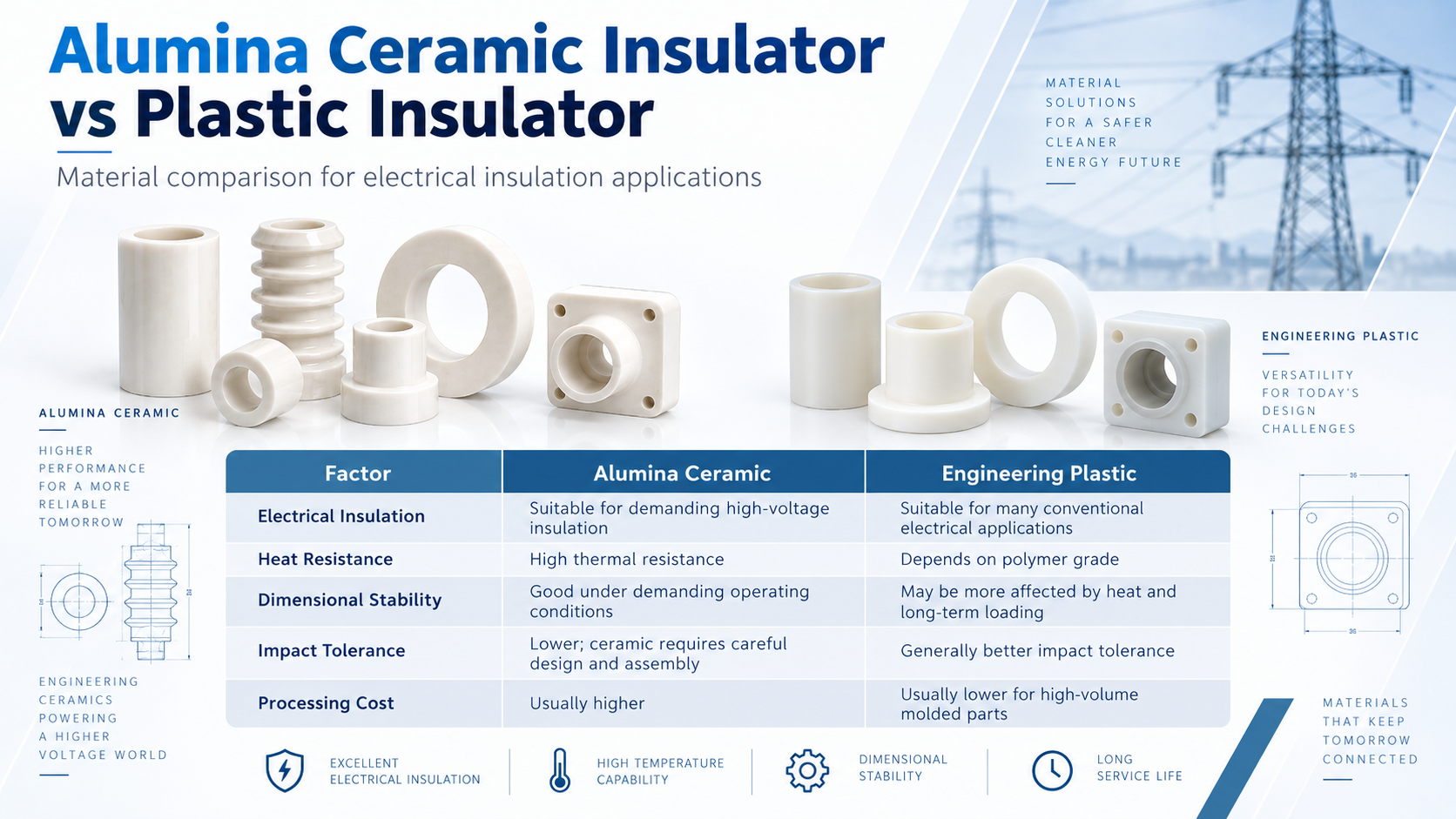
| Factor | Alumina Ceramic | Engineering Plastic |
|---|---|---|
| Electrical Insulation | Suitable for demanding high-voltage insulation | Suitable for many conventional electrical applications |
| Heat Resistance | High thermal resistance | Depends on polymer grade |
| Dimensional Stability | Good under demanding operating conditions | May be more affected by heat and long-term loading |
| Impact Tolerance | Lower; ceramic requires careful design and assembly | Generally better impact tolerance |
| Processing Cost | Usually higher | Usually lower for high-volume molded parts |
For cost-sensitive systems with moderate temperature and voltage requirements, engineering plastics may remain the better choice.
For high-voltage or high-temperature systems where dimensional stability and electrical insulation are critical,
alumina ceramic may be worth evaluating.
How to Select the Right Alumina Ceramic Insulator
When selecting an alumina electrical insulator, buyers and engineers should provide as much application information as possible.
Useful information includes:
- 2D drawing or 3D model
- Required dimensions and tolerances
- Alumina grade requirement
- Operating voltage
- Operating temperature
- Surface finish requirements
- Assembly method
- Expected quantity
- Prototype requirements
Providing these details early can help determine whether the geometry and material are suitable for prototype evaluation
and later mass production.
Manufacturing Custom Alumina Ceramic Insulators
Custom ceramic components can be produced through different forming and machining processes depending on geometry,
size, tolerance and production volume.
Typical processes may include:
- Dry pressing
- Injection molding
- Tape casting for specific flat components
- Sintering
- Precision machining
- Grinding
- Dimensional inspection
The final process route depends on the drawing and application requirements.
Prototype Evaluation Before Mass Production
For new high-voltage ceramic components, prototype evaluation is important before mass production.
The prototype stage can be used to confirm:
- Assembly fit
- Critical dimensions
- Electrical insulation requirements
- Surface condition
- Mechanical compatibility
- Application performance
This helps reduce the risk of design changes after tooling or larger production quantities are committed.
Need a Custom Alumina Ceramic Insulator?
Zhengqiang provides drawing-based ODM development for custom alumina ceramic components used in
EV charging, electrical systems and other demanding applications.
Our engineering team can review your drawing, material requirements, critical dimensions and estimated quantity
before prototype evaluation.
Related Product:
Alumina Ceramic Housing for EV Charging Connectors