- Information Classification
Alumina vs. Zirconia Ceramics: 7 Key Differences
“`html
Alumina vs. Zirconia Ceramics: 7 Key Differences for Material Selection
Alumina (Al₂O₃) and zirconia (ZrO₂) are two widely used advanced ceramic materials for industrial and precision components. Both offer excellent wear resistance, chemical stability and electrical insulation, but their properties differ depending on material grade, composition and manufacturing conditions.
This alumina vs zirconia ceramics comparison highlights the key differences in mechanical properties, thermal performance, electrical insulation and material cost.
Choosing between alumina and zirconia requires more than comparing hardness or strength alone. Engineers should also consider the operating environment, mechanical loads, dimensional requirements, electrical performance and overall component cost.
In this guide, we compare seven important differences between alumina and zirconia ceramics to help engineers, product designers and procurement teams evaluate materials for custom ceramic components.
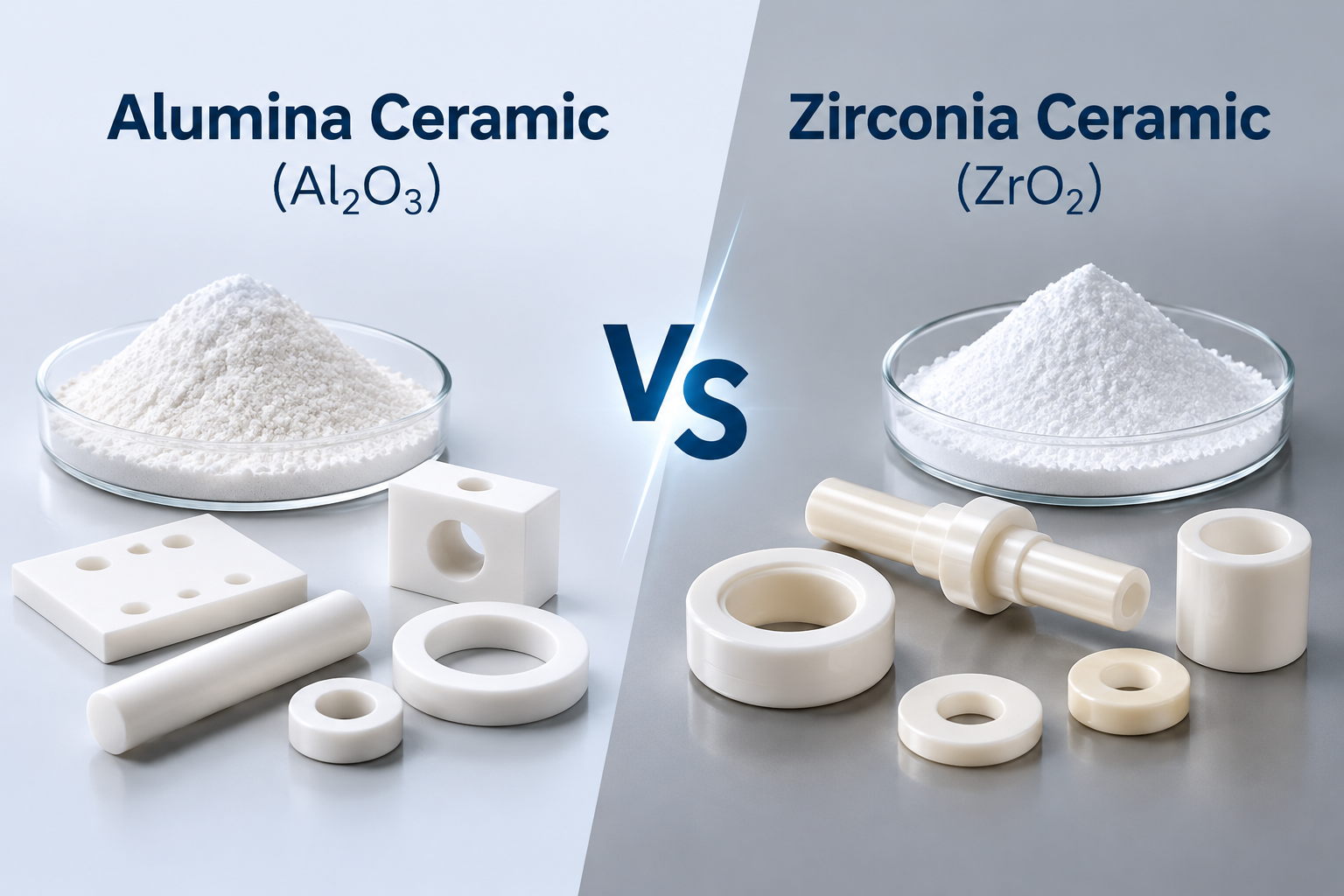
1. What Are Alumina and Zirconia Ceramics?
Alumina Ceramic (Al₂O₃)
Alumina ceramic is an aluminum oxide-based technical ceramic known for its electrical insulation, hardness, wear resistance and thermal stability. Different alumina grades are available, with properties varying according to purity, additives, microstructure and manufacturing conditions.
Common alumina ceramic components include insulating parts, plates, substrates, tubes, rings, bushings and other precision industrial components.
Zirconia Ceramic (ZrO₂)
Zirconia ceramic is a zirconium oxide-based technical ceramic valued for its combination of strength, fracture toughness and wear resistance. Its performance depends on the specific composition, stabilizing system, microstructure and processing conditions.
Zirconia is used in applications requiring durable precision components, including ceramic shafts, rings, bushings and selected wear-resistant parts.
2. Alumina vs Zirconia Ceramics: Key Differences at a Glance
| Property | Alumina Ceramic (Al₂O₃) | Zirconia Ceramic (ZrO₂) |
|---|---|---|
| Hardness | Typically high; depends on grade and purity | High; varies by composition and grade |
| Fracture toughness | Generally lower than transformation-toughened zirconia grades | Often higher in suitable stabilized grades |
| Wear resistance | Excellent in many industrial applications | Excellent in suitable grades and contact conditions |
| Thermal conductivity | Generally higher than zirconia, depending on grade | Generally lower than alumina |
| Electrical insulation | Widely used for electrical insulation | Can also provide excellent electrical insulation |
| Thermal expansion | Generally lower than many zirconia grades | May be closer to steel in some grades |
| Material cost | Often more economical for suitable applications | Often higher, depending on grade and requirements |
Important: These are general material tendencies, not guaranteed specifications. Actual values must be confirmed against the selected material grade, technical datasheet and test method.
3. Hardness and Wear Resistance
Both alumina and zirconia are suitable for many wear-resistant ceramic applications. Alumina is widely used where hardness, abrasion resistance and cost effectiveness are important. Zirconia may be preferable when a component also requires a combination of strength and fracture toughness.
Material selection should consider the actual wear mechanism, including sliding contact, abrasive particles, surface finish, lubrication and contact pressure. Hardness alone does not determine service life.
4. Strength and Fracture Toughness
One important difference is fracture toughness. Transformation-toughened zirconia grades can resist crack propagation more effectively than conventional alumina grades under suitable conditions.
This can make zirconia a useful option for precision components exposed to mechanical stress, repeated contact or demanding rotating conditions. Alumina remains a strong choice for many applications where stiffness, hardness, electrical insulation and material cost are key considerations.
Engineers should evaluate the complete component design, including edge geometry, wall thickness, stress concentrations, mounting method and operating loads.
5. Thermal Properties and Electrical Insulation
Alumina generally offers higher thermal conductivity than zirconia, although the difference depends on the grade and material quality. When heat transfer is important, the selected alumina grade and the component’s contact interfaces should be evaluated together.
Both materials can provide electrical insulation. The appropriate choice depends on the required dielectric performance, operating temperature, component geometry and surrounding environment.
For high-voltage or thermal management applications, material selection should be supported by relevant technical specifications and application-specific validation rather than by general material descriptions alone.
6. Common Applications of Alumina and Zirconia Ceramics
Typical Alumina Ceramic Applications
- Electrical insulating components
- Ceramic substrates and plates
- Industrial tubes, rings and bushings
- Wear-resistant components for industrial equipment
- Custom ceramic parts for automotive and electrical applications
Typical Zirconia Ceramic Applications
- Precision ceramic shafts
- Wear-resistant rings and bushings
- Rotating components for selected pump applications
- Precision components exposed to mechanical contact
- Custom ceramic parts requiring a suitable combination of strength and toughness
The examples above describe common application areas, not a guarantee that every grade is suitable for every operating condition.
7. How to Choose the Right Ceramic Material
Before selecting alumina or zirconia for a custom component, engineers should review the following requirements:
- Operating conditions: Temperature, pressure, speed, moisture and chemical exposure.
- Mechanical requirements: Loads, impact risk, friction, wear mechanism and expected contact conditions.
- Electrical requirements: Insulation, voltage and relevant dielectric specifications.
- Dimensional requirements: Critical dimensions, tolerances, flatness, roundness and surface finish.
- Assembly conditions: Mating materials, clearances, contact areas and mounting methods.
- Production requirements: Annual quantity, sample evaluation, inspection criteria and target cost.
There is no single best material for every application. The correct choice depends on the required performance of the finished component and the suitability of the available material grades.
Custom Alumina and Zirconia Ceramic Components
Zhengqiang provides custom alumina and zirconia ceramic component solutions for industrial and automotive applications. Material selection and component development can be evaluated according to customer drawings, specifications and application requirements.
Explore our custom ceramic components, including alumina ceramic components for EV charging connectors and zirconia ceramic shafts, to learn more about selected application areas.
When requesting an evaluation, please provide the component drawing or 3D model, critical dimensions, operating conditions, required material properties and estimated quantity. These details help support an initial engineering and ODM review.
For additional material background, refer to the aluminium oxide overview and the zirconium dioxide overview.
Frequently Asked Questions
Is alumina harder than zirconia?
Hardness depends on the material grade and test conditions. Alumina often has high hardness, while suitable zirconia grades offer a combination of strength and fracture toughness. Compare actual datasheet values before making a selection.
Which is better for wear-resistant components, alumina or zirconia?
Both can provide excellent wear resistance. The best option depends on the wear mechanism, mechanical loads, contact conditions, surface finish and selected grade.
Can alumina and zirconia both provide electrical insulation?
Yes. Both materials can be used as electrical insulators. The appropriate grade should be selected according to the required electrical properties and operating environment.
How do I request a custom ceramic component?
Provide a 2D drawing or 3D model, required dimensions and tolerances, application conditions, material requirements and expected quantity. These inputs help the supplier evaluate material suitability and manufacturing feasibility.
Request an ODM Evaluation
Choosing the right ceramic material begins with understanding the component’s actual operating requirements. If you are developing a custom alumina or zirconia ceramic component, prepare your drawing, application details and quantity requirements for an initial ODM evaluation.
Contact Zhengqiang to discuss your custom alumina or zirconia ceramic component project.